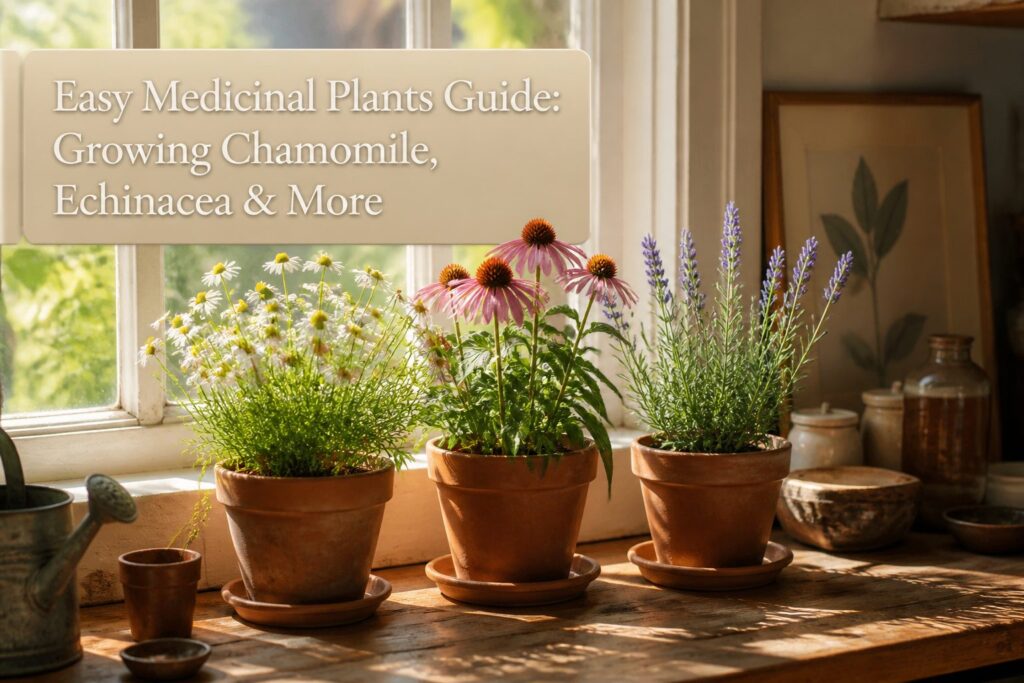
An easy medicinal plants guide is a list of herbs you can actually grow without quitting your job to tend them, but the real condition is patience: echinacea roots need two to three years before first harvest, and lavender rots the moment its feet stay wet.
I sow chamomile seeds barely covered, since light triggers germination, and thin the seedlings to six inches once true leaves appear. Most of these plants punish pampering; chamomile in particular grows fewer flowers the more fertilizer you give it.
[link-whisper-related-posts]Chamomile
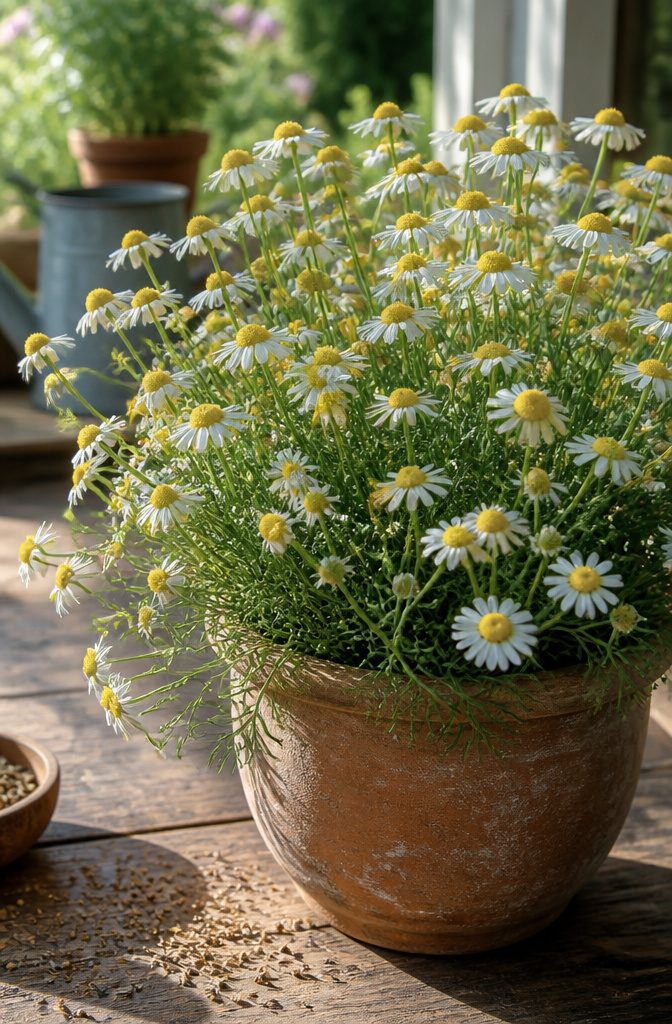
Chamomile lands on most easy medicinal plant lists for two honest reasons: the tea actually works as a calming herb, and the plant does not ask much of you.
German chamomile is the annual most people mean, a lacy, self-seeding thing that finishes its whole life in one season.
I sow mine straight into soil that has warmed past the last frost, barely covering the seeds because light helps them germinate.
Thin to about six inches once the seedlings show true leaves, then mostly stay out of the way. Chamomile tolerates poor soil and dry spells better than pampering; too much fertilizer leaves you with lush leaves and few flowers.
The harvest window is the open flower, not the bud and not the brown remains.
Morning after dew dries is the usual advice, and it matches what you will notice yourself: the petals hold their oils better before midday heat pulls them away.
Clip the flower heads with a short stem, handle them gently, and spread them in a single layer somewhere warm with moving air.
Most dried herbs keep their potency for one to two years, though the color fades faster than the effect. Store in glass out of light, and the straw-yellow brew will still settle your stomach a year from now.

EASIER SEED STARTING: Our Burpee SuperSeed tray with 36 flexible pop-out cells is designed to simplify indoor seed starting for all your favorite vegetables, flowers and herbs. Just add seed starting mix, seeds, water and light to get growing! Rows are labeled alphanumerically for seedling identification with included Plant-o-Gram diagram. Tray dimensions: 11.5" x 10-3/8" x 2-1/4"

EASIER SEED STARTING: Our Burpee SuperSeed tray with 8 extra-large flexible pop-out cells is designed to simplify indoor seed starting. Just add seed starting mix, seeds, water and light to get growing! Perfectly sized for starting seeds in the windowsill: 11.5" x 5-3/16" x 2-1/4". Rows are labeled alphanumerically for seedling identification with included Plant-o-Gram diagram.

Calendula
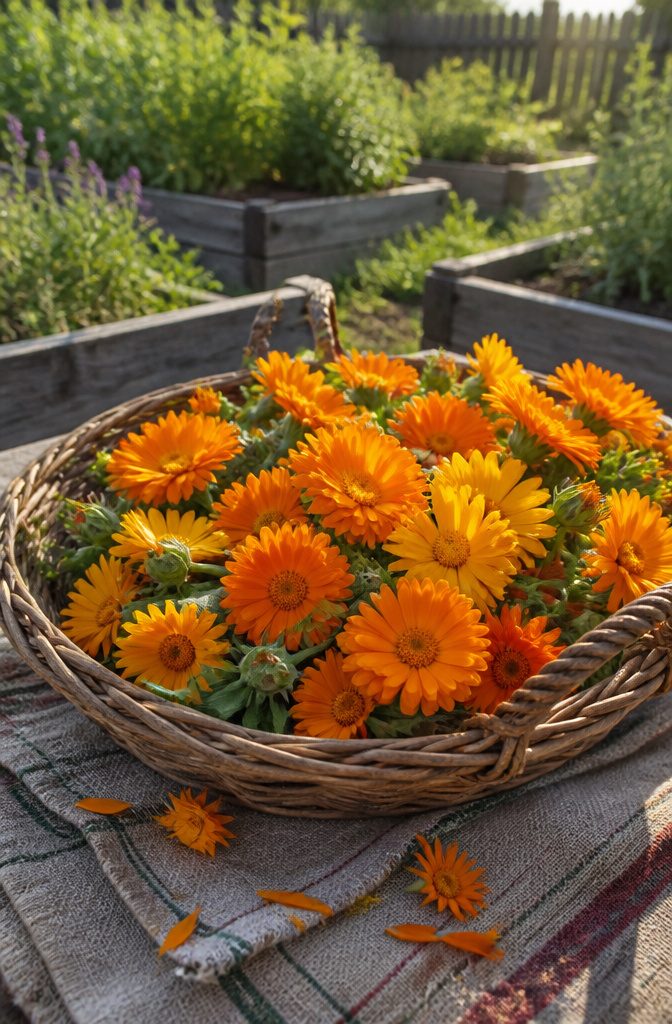
Calendula petals hold color and resin best when the morning dew has dried but the midday sun hasn’t yet hit the flowers.
That narrow window, roughly 9 to 11 a.m. in most growing zones, is when the sticky orange and yellow florets pull cleanly from the green base.
I learned to harvest into a shallow basket so the petals don’t steam and mold; a deep bowl traps too much moisture.
The plant is an easy annual, started from seed directly where it will bloom once soil temperature stays above 60°F. It tolerates poor soil and light frost, which makes it forgiving for renters working a single season in borrowed ground.
Dried petals keep their potency for one to two years in a sealed jar away from heat; after that the resins fade and the color dulls to straw.
For a simple skin oil, cover dried petals with a neutral carrier and set the jar in a warm cabinet for four to six weeks.
Strain through muslin and the resulting calendula oil works as a direct rub for dry hands or a base for salve.
The wax-to-oil ratio is a judgment call; I stop adding beeswax when a cooled spoonful holds its shape but melts at skin temperature.

START YOUR HERB GARDEN WITH 2280 CHAMOMILE SEEDS: This pack includes 2280 chamomile seeds for planting, perfect for beginners and experienced gardeners. Germinates in 7-14 days with minimal care, making it a top choice for creating a thriving herb garden full of fresh blooms.

The Best Value - Organo Republic German Сhamomile Seeds Pack contains 0.5 g or 5,900 of Non-GMO heirloom chamomile seeds. German Сhamomile (Matricaria chamomilla) is known for its medicinal properties, making it an ideal addition to aromatherapy and skin care.

High Germination Rate: Chamomile seeds sprout in 7‑14 days at 68‑86°F when sown 1/4 in deep and misted; enjoy up to 95 % success in USDA 3‑9 for chamomile flowers in herb gardens or containers.
Echinacea
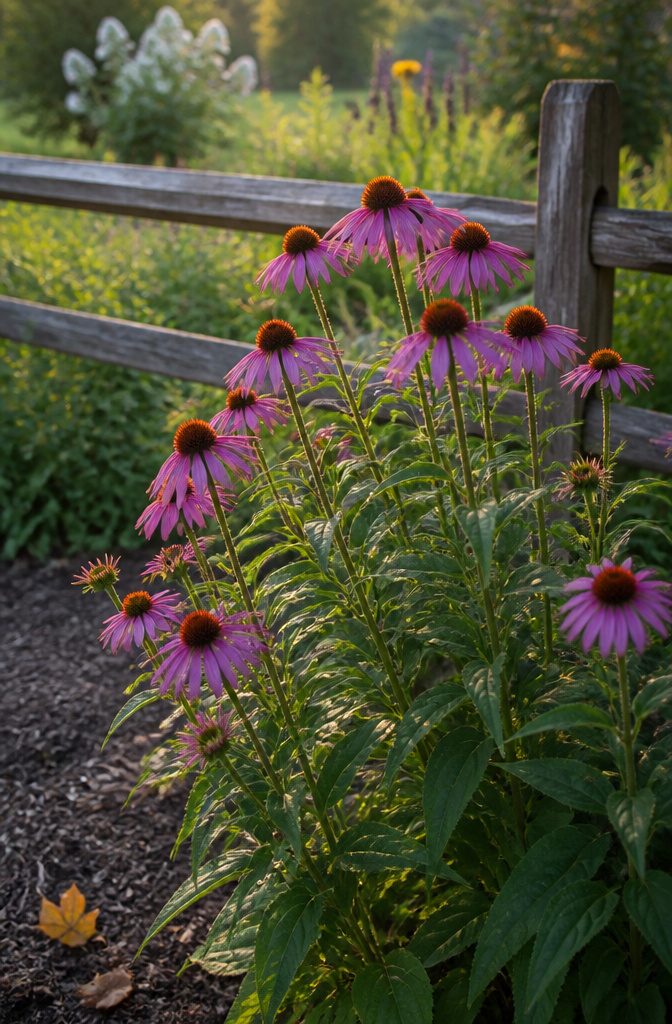
Echinacea earned its spot in my garden because it asks so little and stays so long. The plant is a hardy perennial, and its traditional use for immune support is what keeps me digging roots each fall.
Two paths get you started.
Seed takes patience, since the roots need 2 to 3 years before first harvest. Division of an established clump is the faster route if you know someone with a mature plant or find one at a local swap.
The root harvest itself happens in fall after the top growth dies back. That timing matters: the active compounds settle into the roots once the aerial parts brown and wither.
I dig on a dry morning, after dew has evaporated, and work gently to keep the root bark intact. The plant handles rough weather and poor soil without complaint, which makes it forgiving for a first-timer working a weekend budget.
The wait is the real cost here. Buying root stock skips the timeline but doubles the upfront spending, and for a plant this unfussy, seed or a divided clump feels like the smarter play.

When received, the plant will be in seasonal condition with appropriate foliage. If shipped between November 1st and March 1st, the plant may be dormant and trimmed. Plant is fully rooted in the pot ready for immediate planting. Hardy in USDA zones 5-10, Due to varying agricultural regulations, we do not ship to the following states: AK, AZ, CA, CO, ID, MT, NV, OR, UT, WA and HI

The Best Value - Organo Republic Echinacea Seeds Pack contains 5.5 g or 1000 of Non-GMO heirloom echinacea seeds. Echinacea (Echinacea purpurea) is known for its medicinal properties, is a popular ingredient in teas, and other natural remedies.

Garden Use: The sturdy stems and unique, cone-shaped flowers of Echinacea make it a visual highlight in garden beds and an excellent choice for fresh cut flower arrangements.
Peppermint
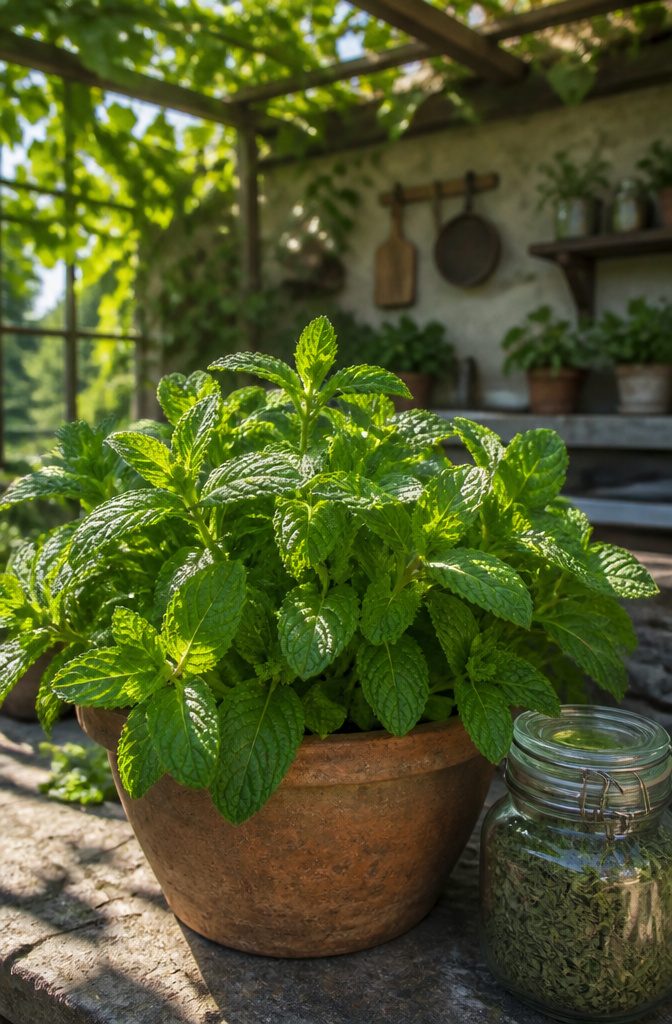
Peppermint earns its spot in any easy medicinal plants guide through sheer stubbornness.
The roots spread aggressively under the soil, sending up new shoots wherever they find an opening. A bed left alone turns into a mint monoculture in two seasons.
Containers solve this completely. A 12-inch pot on a patio or balcony keeps the roots corralled and the plant still produces more leaves than most households can use.
Harvest stems just before the flower buds open, when the oil concentration peaks and the flavor stays bright rather than bitter.
Strip the leaves, dry them in a single layer out of direct sun, and store in a jar for winter tea.
The traditional use is digestive: a strong cup after a heavy meal still works better than most over-the-counter options for simple bloating. The plant handles cold winters and returns reliably, though the leaves turn coarse by late summer.
Indoor growing is possible with adequate light.
A south-facing window or a basic grow light keeps the plant compact and productive through winter months. Without enough brightness, stems stretch thin and the leaves shrink to nearly flavorless specks.

Comes as a 2-pack of live potted plants measuring 2-5 inches tall

100% Natural: Custom blend for Lavender plants container growing; no artificial ingredients

🌿 Exceptional Growing Medium: Our Lavender Potting Mix is meticulously crafted with premium ingredients like Canadian Peat Moss, Charcoal, Worm Castings, Perlite, Sand, Pumice, and Lime, providing the ideal balance of nutrients and moisture for optimal Lavender growth.
Lemon Balm
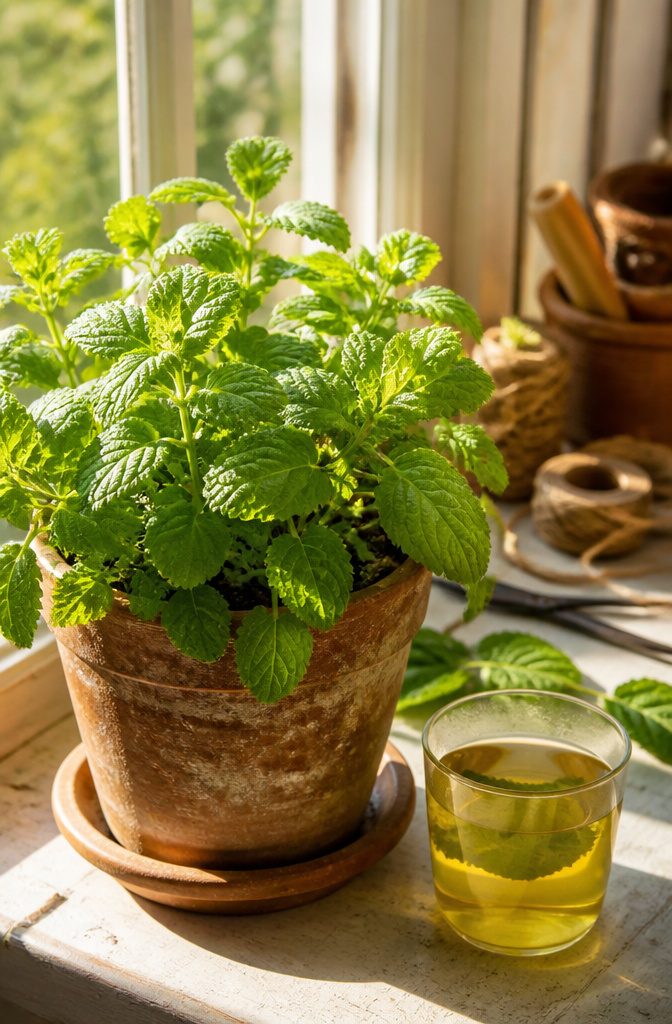
Lemon balm carries the same easygoing temperament as mint because it is a mint, just with a softer edge.
The growth habit is nearly identical, which means a container is non-negotiable unless you want a lawn full of it. A 12-inch pot with drainage holes keeps the roots contained and the plant portable.
Leaf harvest happens before the plant flowers, when the oils sit at their peak. After that point the flavor turns bitter and the calming quality fades.
I snip stems in the morning after dew dries, strip the leaves, and dry them on a screen for two weeks. The tea needs no sweetener, just a tablespoon of crushed dried leaf steeped for ten minutes.
Indoors, lemon balm wants a south-facing window or a grow light running 14 hours.
Without adequate light it stretches thin and loses scent. That is the single reason most indoor attempts fail, not watering or soil.


Unique Bloom Color: Pink Surprise calendula heirloom seeds grow 16-inch mounding plants with double peach-pink blooms. These calendula flowers seeds brighten borders and containers from spring through fall.
Lavender
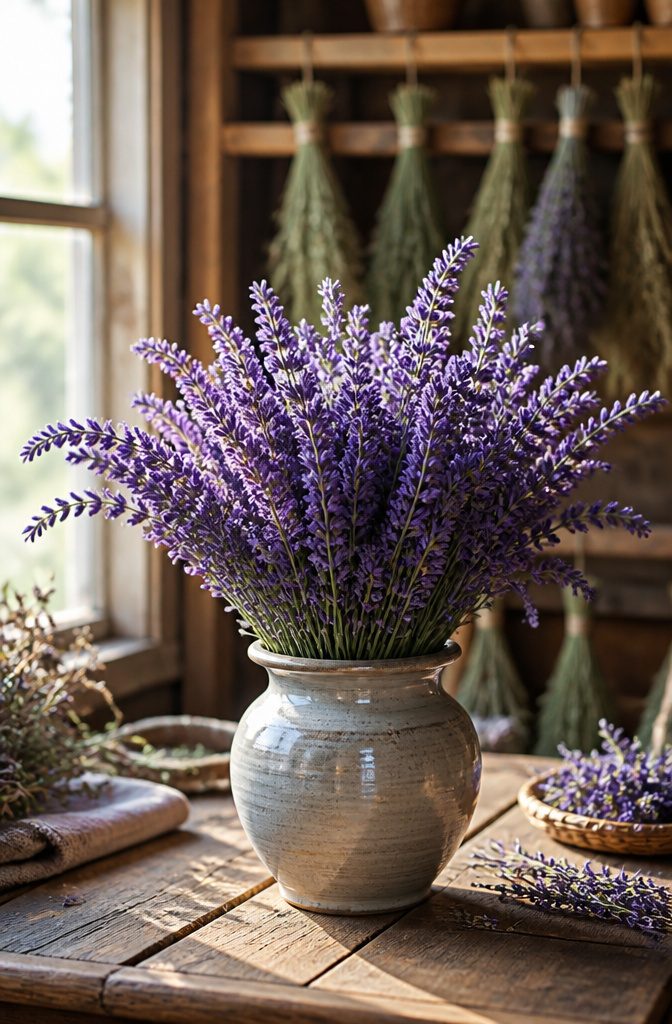
Lavender carries a long tradition as a relaxation herb, and the plant itself is a perennial in many climates, which means one afternoon of proper planting can settle it into your garden for years.
Lavender wants soil that drains fast and stays dry.
Lavender does not tolerate wet feet; roots sitting in moisture will rot before the second season. I learned to test a spot by digging a hole, filling it with water, and watching how long it takes to disappear.
If it lingers past a few hours, I either amend heavily with grit and coarse sand or choose somewhere else entirely.
The harvesting window matters more than most beginners expect.
Flower stems need cutting when the buds show color but before they open fully. Wait too long and the volatile oils begin to fade, along with the sharp scent that makes the dried herb worth keeping.
I bundle stems in small groups, hang them somewhere with good air circulation, and keep them out of direct sunlight while they dry. Sunlight degrades the active compounds and bleaches the color from the buds.
Once brittle but not crumbling, the flowers strip cleanly into jars for sachets or into oil for later use. An airtight container stored away from light preserves what the drying started.

EASIER SEED STARTING: Our Burpee SuperSeed tray with 16 extra-large flexible pop-out cells is designed to simplify indoor seed starting. Just add seed starting mix, seeds, water and light to get growing! Rows are labeled alphanumerically for seedling identification with included Plant-o-Gram diagram.

Mr. Pen seed starter tray kits come in a pack of 10, each featuring a 12-cell tray to help you grow healthy seedlings for your garden or home planting projects.

Pro Grow Lights with Advanced Chips: Equipped with 56 high-efficiency beads per tray, these LED strips simulate natural sunlight for optimal seedling growth. Adjustable brightness and timer functions let you customize lighting for every plant stage, promoting faster, healthier growth—perfect for herbs, flowers, and more
Aloe
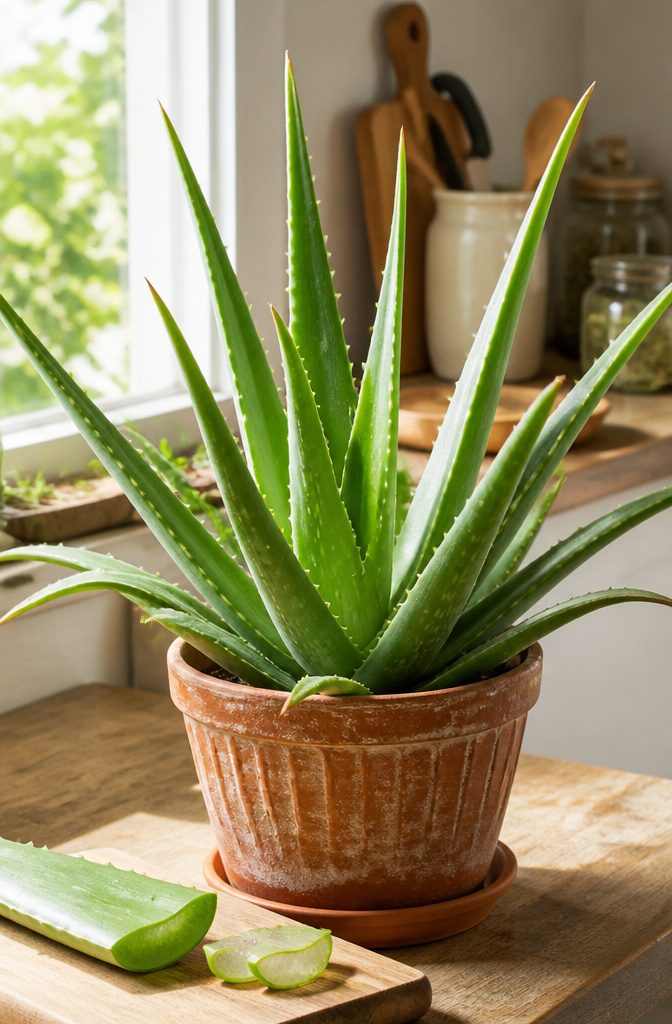
Aloe is usually the first medicinal plant people try, and for solid reasons.
The gel inside those thick, serrated leaves works on minor burns, dry skin, and the occasional kitchen scrape, so a single potted plant replaces several items from the pharmacy shelf.
A fast-draining potting mix matters more than any particular brand; standard cactus mix works, or regular potting soil cut with coarse sand and perlite so water exits quickly.
Overwatering kills more aloes than any pest, so letting the top inch of soil dry out before adding more is the rule that keeps it alive.
A south- or west-facing window supplies enough light for indoor growing, though the plant will lean and stretch if it sits too far from the glass.
Harvesting means slicing a mature outer leaf close to the base, splitting it lengthwise, and scraping the clear gel with a spoon.
The yellow latex layer just under the skin can irritate, so rinsing the gel briefly is worth the extra thirty seconds.

Beautiful - Large color packets of German Chamomile (Matricaria chamomilla) seeds. Chamomile has sweet-smelling daisy-like flowers that bloom all summer. Minimum of 200mg (about 1575 seeds).

High Germination Rate: Chamomile seeds sprout in 7‑14 days at 68‑86°F when sown 1/4 in deep and misted; enjoy up to 95 % success in USDA 3‑9 for chamomile flowers in herb gardens or containers.

USDA Certified Organic by Oregon Tilth
How I Start From Seed
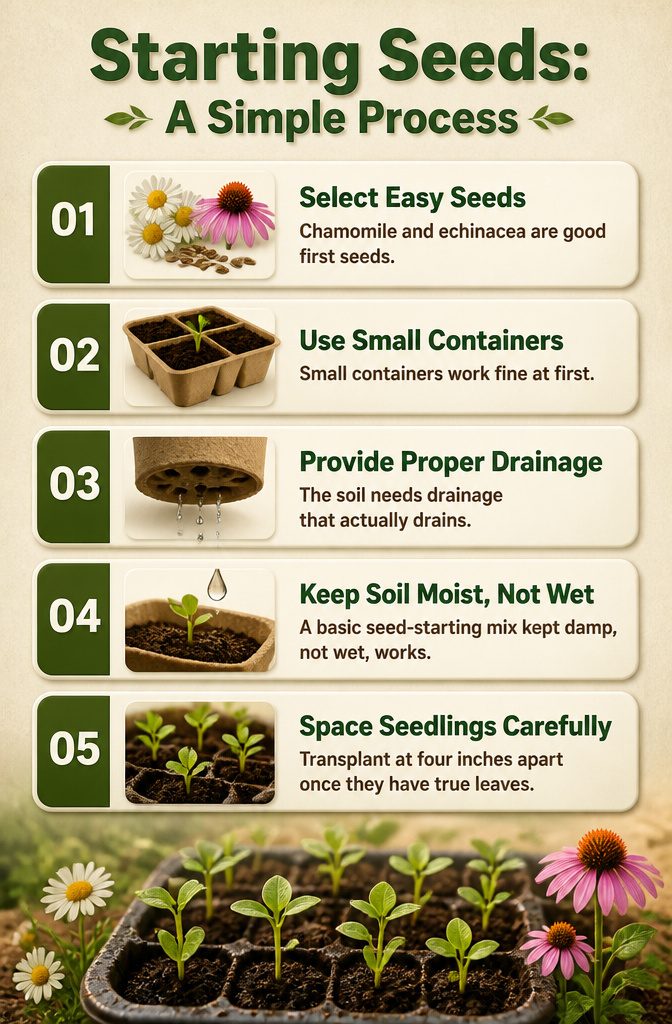
Chamomile and echinacea are good first seeds because most people already use them: chamomile for evening tea, echinacea if you buy tincture already.
Both are well-documented, forgiving starters, and that matters more than growing something exotic you can’t confirm is safe.
Small containers work fine at first, but the soil needs drainage that actually drains. A basic seed-starting mix kept damp, not wet, works; too much water kills seedlings fast.
Most seeds sprout within a week or two with proper care, but "proper care" mostly means leaving them alone in a warm spot instead of hovering.
Spacing seedlings feels wasteful when you’re staring at 48 cells and twenty seeds.
I sowed thinly, thinned ruthlessly, and transplanted the survivors at four inches apart once they had true leaves. Watering from below, setting trays in a shallow pan for ten minutes, kept the stems from rotting at the soil line.
That first year taught me enough to add lemon balm and calendula the next season.
Start with a few easy, versatile plants, then expand as you learn their uses and your own habits. The garden grows with the knowledge, not ahead of it.

Drought-tolerant: This plant is able to withstand periods of drought, making it a low-maintenance addition to the garden. It's a great choice for gardeners who want a beautiful and carefree plant.

The Best Value - Organo Republic Echinacea Seeds Pack contains 1 oz or 9,300 of Non-GMO heirloom echinacea seeds. Echinacea (Echinacea purpurea) is known for its medicinal properties, is a popular ingredient in teas and natural remedies, adding both beauty and wellness to your garden.

Abundant Supply: Contains over 2,300 Purple Coneflower (Echinacea) seeds; ideal for creating vibrant, pollinator-friendly garden spaces
When and How I Harvest
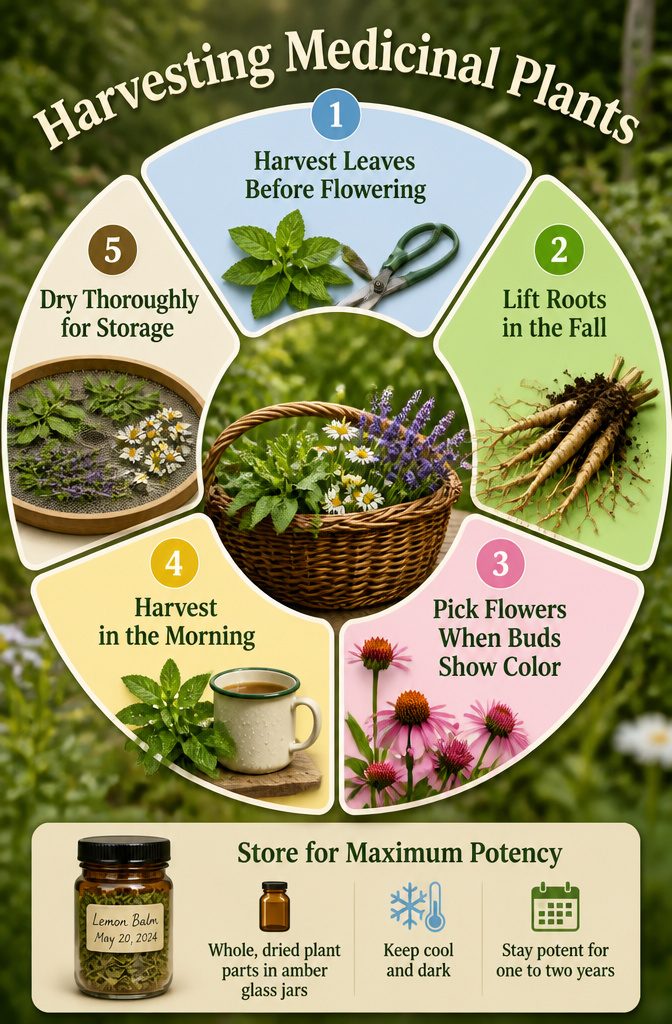
Leaves pull easiest before the plant shifts energy into flowering, when the stems are still pliable and the chemistry stays concentrated in the foliage.
Roots are a fall job; you wait until the top growth has fully browned and died back, then loosen the soil and lift them carefully so the thin lateral branches don’t snap.
Flowers go into the basket the moment the buds show color but haven’t fully opened; that window holds the volatile oils before heat and light start breaking them down.
Morning harvest, after dew has dried but before the sun climbs high, gives you the cleanest material with the least field heat. Dirt shortens shelf life, so a gentle rinse and immediate drying matters.
I spread leaves and flowers in a single layer on screens or mesh in a dark, dry room with decent air flow, turning them once a day until they crackle between your fingers.
Roots need more time, usually sliced thin first so the centers don’t stay moist and mold.
Storage dictates how long that effort pays off. Whole, dried plant parts in amber glass jars, kept cool and dark, stay potent for one to two years; cut or powdered material degrades faster.
A labeled date on the lid saves you from squinting at faded leaves and guessing whether they still have punch left in them.

Unique Purple Blooms – Features eye-catching star-shaped lavender flowers that add a tropical flair to any garden.

Two (2) large live plants – big, healthy, ready to grow, premium herb plants, 4” to 8” tall plants, in 4” pots. NON GMO No Neonicotinoids

💧 Cold Stratification Seed Prep: Lavender seeds germinate best after 2-4 weeks of cold stratification. Place seeds in a moist paper towel or sand inside a sealed bag and refrigerate before planting, then sow seeds lightly covered with soil.
What I Do With the Harvest
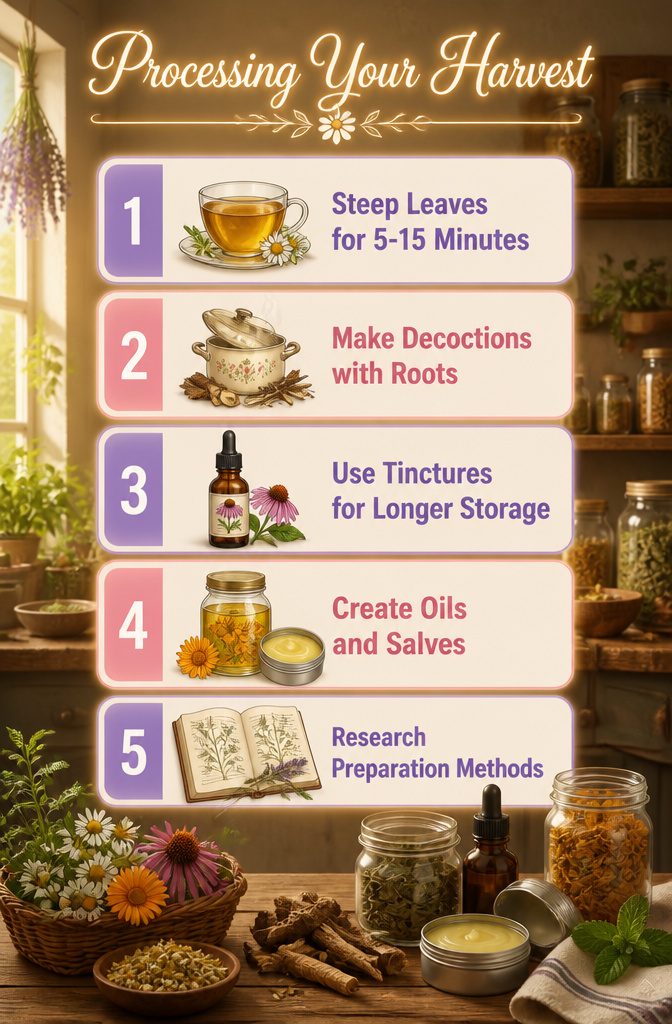
The first thing I learned is that hot water takes five to fifteen minutes for leaf and flower teas, but roots and bark need a longer simmer in what’s called a decoction.
My early chamomile went bitter because I treated every plant the same and boiled the flowers like I would ginger root.
Tinctures became my fallback for anything I wanted to keep beyond a month. Alcohol extracts the compounds and preserves them without refrigeration, which matters when your counter space is limited.
Oils and salves handle the topical side, calendula especially, though I ruined my first batch by infusing fresh flowers instead of dried ones. The moisture bloomed mold inside a week.
Researching the proper preparation for each specific plant saved me more bad batches than any single tip. Echinacea root works as a decoction or tincture; the flowers barely carry the same properties.
Peppermint tea wants a quick steep and a covered jar, or the volatile oils escape with the steam. Start with one method per plant before you branch out.

Bright Double Blooms: Ball's orange calendula seeds grow 20-inch upright plants with rich 3-inch double orange flowers. Ideal flower seeds for planting in beds, borders, and cut flower gardens.

Beautiful - Large premium packet of Pink Surprise Calendula (Calendula officinalis) seeds. Delicate peachy pink petals on double flowers with shorter stems are excellent in containers or along borders. Blossoms invite a flurry of beneficial pollinators to your garden. Adaptable to cool, sunny conditions and stunning as cut flowers. Enhance your outdoor space and experience the joy of cultivating beauty right at your doorstep! Minimum of 750 mg per packet (about 75 seeds).
Growing Conditions That Actually Work
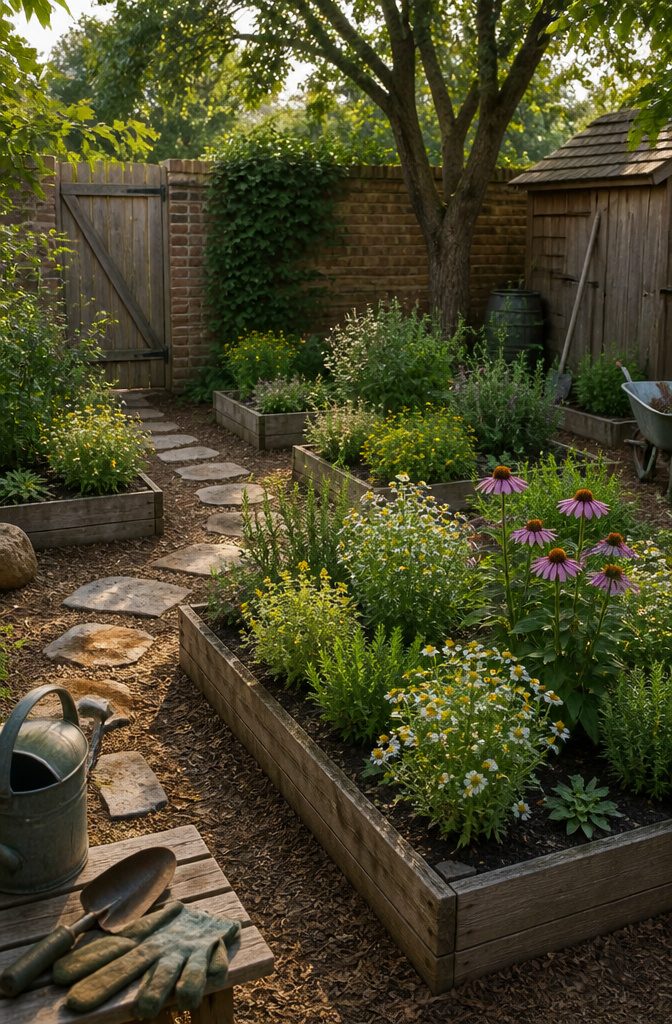
Most medicinal plants sit in the same growing family as culinary herbs, which means the same rules apply.
Well-drained soil and ample sunlight are the baseline for the majority of them. Chamomile and echinacea will sulk in soggy ground faster than they’ll complain about heat.
Some plants break the pattern. Ginseng and goldenseal want shade, not sun, and they’ll let you know with yellow leaves if you park them on a bright balcony.
Native plants have the edge here: a species that already belongs in your region skips the hard acclimation period.
Container growing opens the door for renters and anyone working with concrete instead of yard.
A pot on a patio or a windowsill planter handles more medicinal varieties than most people assume, provided the drainage hole is actually doing its job.
The match between plant and person matters more than chasing the hardest herb on the list.
If your mornings run toward tension headaches, lemon balm in a partial-shade container by the kitchen window outperforms a full-sun echinacea patch you forget to water.
Start with what your body asks for and what your light actually gives you, then buy the seed.
Why I Grow Organic
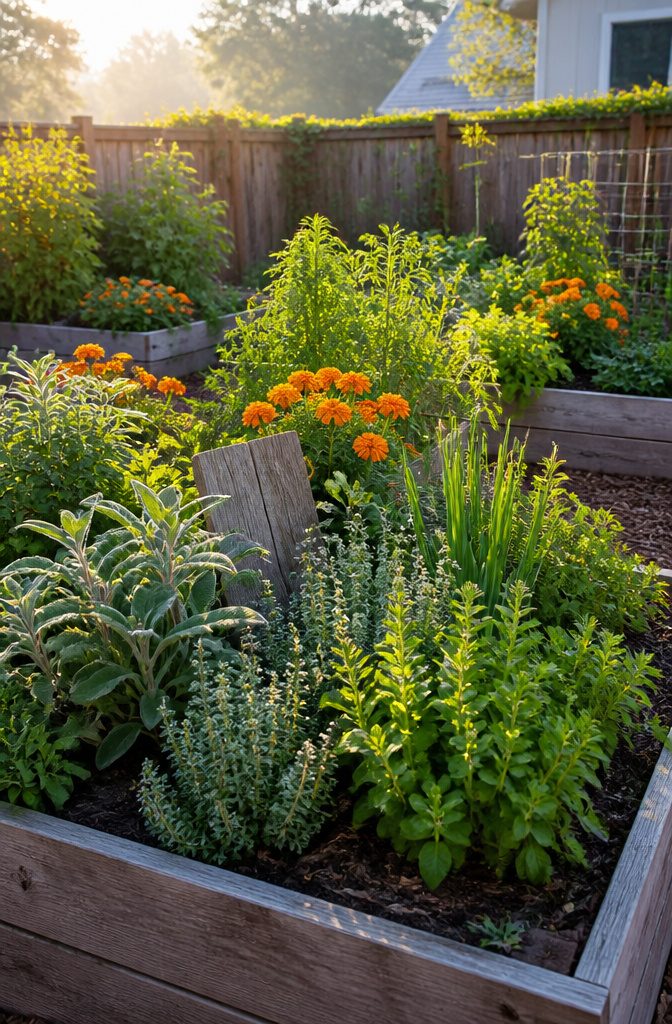
Synthetic sprays have no place on plants headed for your teacup or salve jar. The residue lingers, and for internal use that risk is not worth any shortcut.
Healthy soil does the real work instead: compost and organic matter feed the roots directly, and the plants grow sturdy enough to handle minor pest pressure on their own.
When something does show up, hand-picking beats spraying every time; it takes ten minutes with a morning coffee and leaves the leaf clean.
Companion planting fits this same logic. Marigolds near the base of echinacea draw pests away from the part you harvest, and the pairing costs nothing extra.
Monastic gardens worked this way for centuries, mixing physic plants into kitchen plots where monks could walk out and gather what they needed fresh.
That tradition matters because freshness is potency: a chamomile bloom dried the same day it opens carries oils that warehouse stock lost months ago.
Growing your own closes that gap, and the connection to those older practices is a quiet bonus, not the reason you started.
What I Watch Out For
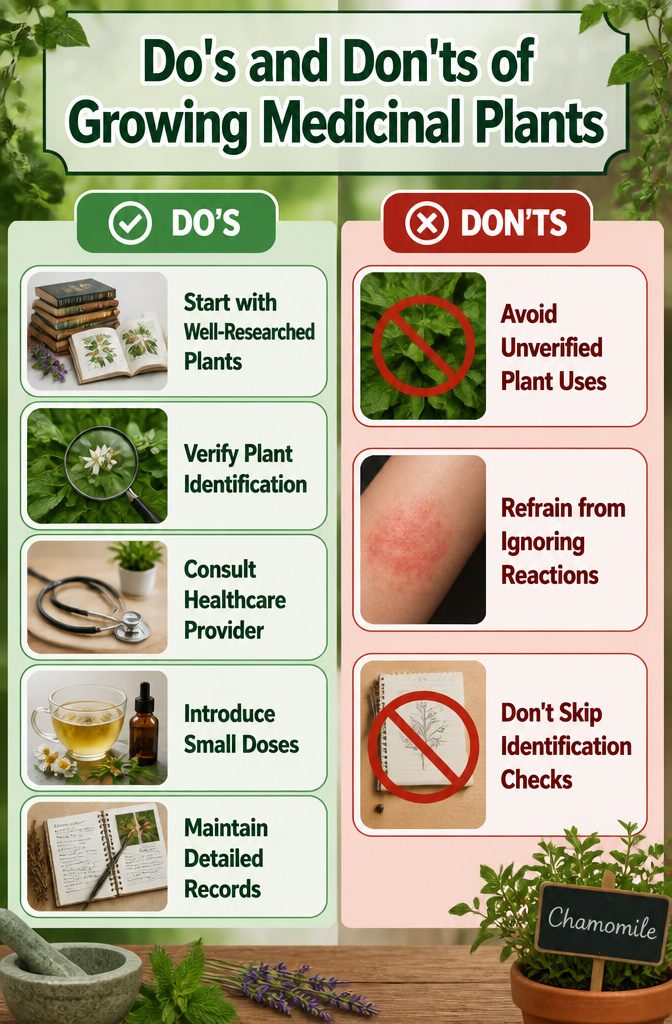
Start with well-researched, commonly used plants before growing anything you plan to ingest or apply to skin. The physiological effects are real, and traditional use does not guarantee safety for every body.
Proper identification matters more than most beginners expect. Some plants carry toxicity in parts that look nearly identical to safe varieties, so verification against a reliable guide saves trouble later.
Drug interactions are the risk I underestimated early on.
Chamomile, for instance, can amplify the effect of blood thinners; echinacea may interfere with immunosuppressants. A conversation with a healthcare provider comes before any regular use, not after symptoms appear.
Small first doses matter.
Half a cup of a new tea, a single drop of tincture, then a day of waiting. Reactions do not always arrive within minutes.
Record-keeping turns a hobby into something repeatable and safer.
My current notebook tracks what was planted where and when, harvest dates and weather conditions, preparations made, and any effects noticed. Photographs of plants at maturity sit beside dried samples for identification verification.
Sources are logged for quality assurance. The practice improves results over seasons, but more immediately it prevents the dangerous guesswork of "I think this was the chamomile bed."
Frequently Asked Questions
What are the best medicinal plants to grow at home?
Chamomile, calendula, echinacea, peppermint, lemon balm, lavender, and aloe are the best choices for a home garden.
Each one asks little of the grower while delivering real, documented uses: chamomile for calming tea, calendula for skin oil, echinacea for immune support, peppermint for digestion, lemon balm for tension, lavender for relaxation, and aloe for minor burns and scrapes.
Start with two or three you will actually use before expanding.
How do I grow medicinal plants indoors?
Adequate light is the single factor that makes or breaks indoor growing. Peppermint, lemon balm, and aloe all thrive inside with either a south-facing window or a basic grow light running 14 hours for the mints.
A 12-inch pot with drainage holes contains aggressive spreaders like peppermint and lemon balm, while aloe needs fast-draining cactus mix and infrequent watering. Without enough brightness, stems stretch thin and leaves lose both flavor and medicinal oils.
How long does it take for medicinal plant seeds to germinate?
Most medicinal seeds sprout within one to two weeks if kept damp and warm. Chamomile germinates faster with light, so barely cover the seed.
Echinacea demands more patience, since the roots need 2 to 3 years before first harvest even after the seedling appears. Watering from below, setting trays in a shallow pan for ten minutes, prevents the stem rot that kills many first attempts.
What are the best practices for harvesting medicinal plants?
Harvest leaves before the plant flowers, flowers when buds show color but have not fully opened, and roots in fall after the top growth browns and dies back. Morning, after dew dries but before midday heat, preserves volatile oils best.
Dry in a single layer with moving air, then store whole dried parts in amber glass away from heat and light; they stay potent for one to two years. Cut or powdered material degrades faster.
What are the easiest medicinal herbs to grow?
Chamomile and calendula top the list for annuals, while echinacea and lavender reward the patient grower as perennials. Chamomile self-seeds and tolerates poor soil, calendula handles light frost, and echinacea powers through rough weather with almost no attention.
Peppermint and lemon balm are equally forgiving but require containers to stop them from taking over every nearby bed. Match the plant to your light, your habits, and what your body actually needs.
What are the 10 most useful medicinal herbs?
Each has decades to centuries of traditional use and modern documentation behind it.
Chamomile calms, calendula heals skin, echinacea supports immunity, peppermint aids digestion, lemon balm eases tension, lavender promotes relaxation, and aloe soothes burns. Start with what you will use, not what sounds exotic.
What are the 20 medicinal plants and their uses?
Chamomile tea settles the stomach and nerves; calendula oil and salve handle dry or irritated skin; echinacea root supports immune function; peppermint tea relieves bloating; lemon balm tea eases tension; lavender aids relaxation and sleep; aloe gel treats minor burns and scrapes.
Growing a few plants you use beats growing twenty you cannot identify with confidence.
What are the 10 approved medicinal plants?
There is no single official list of approved medicinal plants in the United States.
Each has substantial traditional use and modern study behind it, but approval status varies by regulatory body and intended use. Proper identification, understanding of preparation methods, and consultation with a healthcare provider come before any regular medicinal use.