These 11 small flower bed ideas run from a weekend build with cedar or redwood to a few pots you rearrange like furniture, and the one that fits you depends on whether you own the dirt or are working around concrete, shade, or a landlord.
A curved stone retaining wall leads the eye around a corner and makes the space feel larger than its footprint, but a renter on a balcony might get more use from a wooden frame raised bed on legs that drains straight through and travels when the lease ends.
[link-whisper-related-posts]1. Wooden Frame Raised Bed
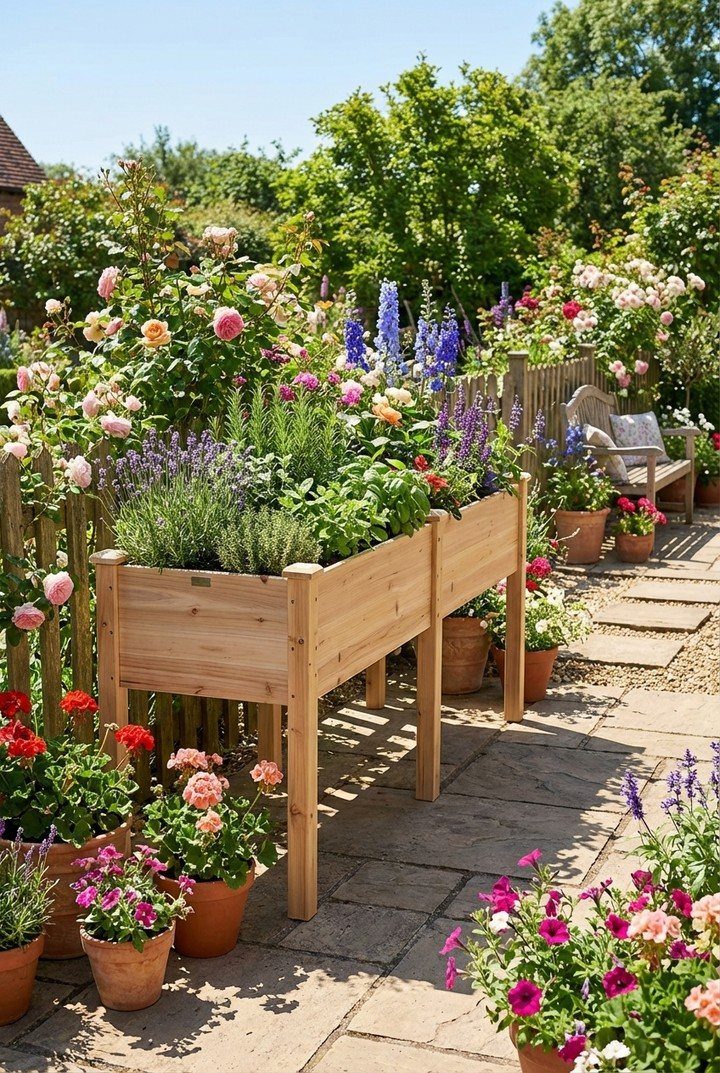
A wooden frame raised bed lifts your planting surface off the ground and buys you control over the soil that goes in. That matters when the dirt in your yard is compacted, drains poorly, or just tired.
I built one for a patio years ago because the only outdoor space I had was concrete.
The box sat on legs, so I never worried about drainage pooling underneath; water ran straight through. Better water retention above, fewer weeds, and I pulled maybe a handful all season.
Wood keeps the rustic look simple.
Fill it with quality soil rather than digging into what is there, and you are growing in a weekend. City renters on balconies get the same benefit: contained plants, contained mess, and you take it with you when you leave.

PLANT EARLIER, PICK LATER: The greenhouse cover closes over the bed like a small cold frame, holding in the day's warmth and keeping wind and light frost off young plants, so the growing season starts sooner in spring and runs longer into fall

Material: Cat hammock bed consists of linen fabric and natural wooden frame. The fabric is breathable enough to promote airflow and makes puppy feel cooler in hot weather. Sturdy frame provides more stable support, preventing the bed from shaking or tipping over

🧸【ULTRA-SOFT PLUSH SURFACE】- This cozy cat bed features a thick, furry cushion that provides a warm and exceptionally soft nest-like feel, offering your pet a deeply comforting and inviting place to rest and relax.
2. Wildflower Garden
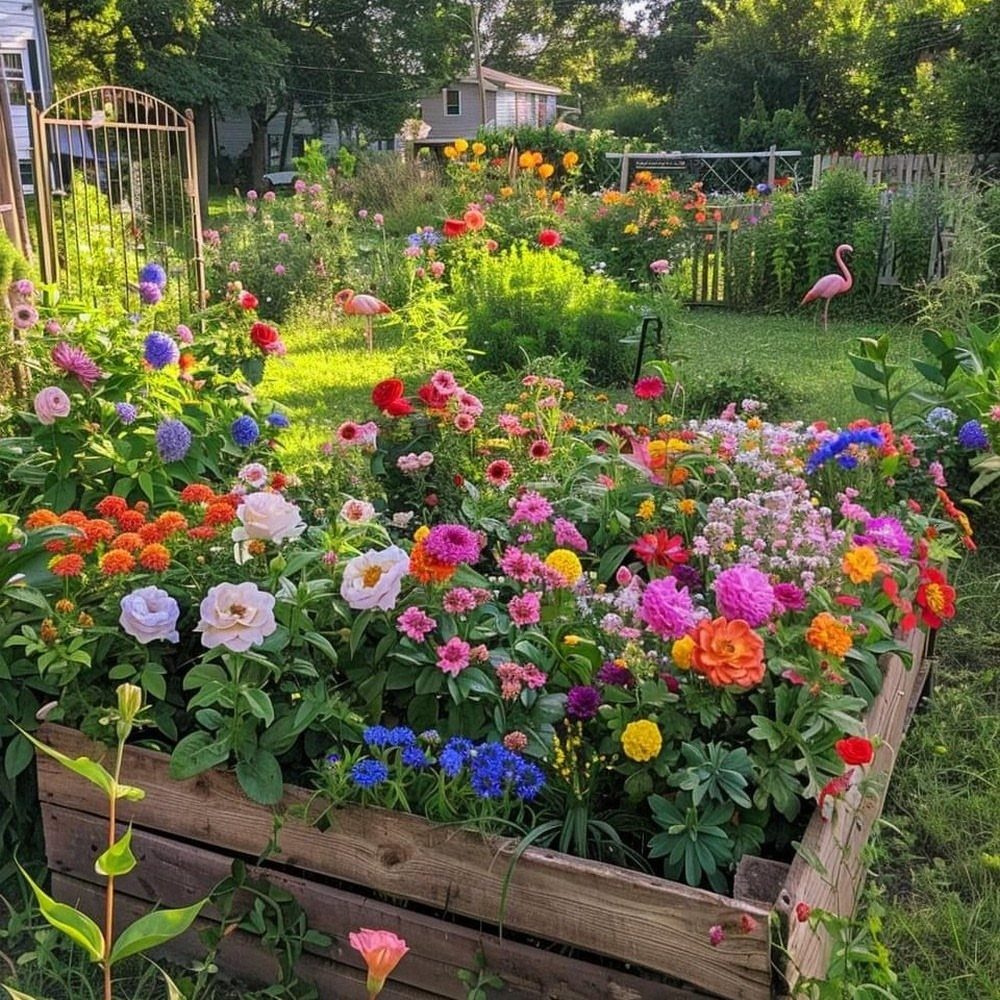
Wildflower gardens look accidental, but the balance takes planning. Mix heights so larkspur and salvia do not bury the smaller stuff at the edges, where short plants need to sit to stay visible.
Once it establishes, the garden mostly runs itself.
Seeds drop, plants reseed, and pollinators arrive without invitation. I have watched beds that needed cutting back once a year and little else.
This suits anyone who wants color without the weekend deadheading schedule. Year one asks for patience while the mix finds its places, and later years need some editing so one species does not take over.


Wild flower seed packets include a beautiful selection of 11 flowers seeds including; Bachelor Button, Cornflower, Calendula, Cosmos, Zinnias, Dwarf Sunflower, African Marigold, Sweet Sultan, Indian Paintbrush plants, Clasping Coneflower and Flanders Poppy.

Pollinator Seed Mix: This Blend Of Wildflower Seeds Will Attract Beautiful Hummingbirds And Butterflies To Your Outdoor Garden And Feed Them All Season Long; Blooms In Spring, Summer, And Fall Until Frost
3. Succulents Flower Bed
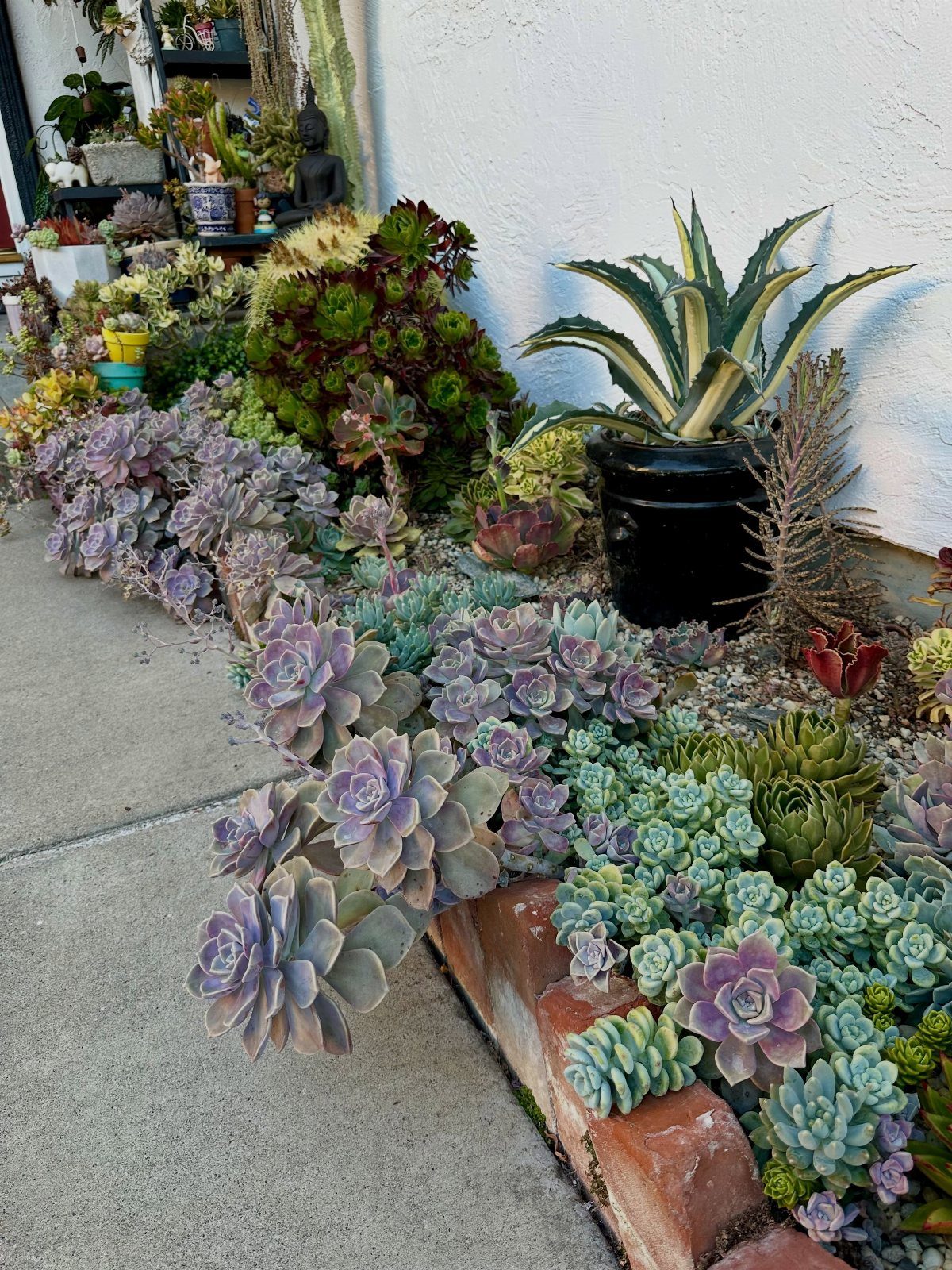
Their leaves and stems hold their own water, so a bed of them handles dry spells that wipe out thirstier plantings mid-summer.
Layer rosettes of echeveria against rocks or bricks, and the texture does the work; you are not waiting for blooms.
Narrow brick-edged beds along walkways stay tidy with almost no attention. The plants need well-draining soil, so amend heavy clay or build up a mound before you set them in.
Drought resistance is the point, not drought proofing.
They still want water in prolonged heat, just far less of it. A bed like this suits the homeowner who travels weekends or simply forgets to hose.

Durable Cedar Construction – Made from natural cedar wood with thickened panels for enhanced stability and weather resistance. Designed to resist warping and decay, offering reliable performance through multiple seasons of outdoor use.

✨【PP Material&Lightweight】Our raised garden bed made with high-quality reinforced PP material ,offering outstanding durability and all-weather adaptability in a lightweight design, perfect for all your outdoor gardening tasks.

LARGE PLANTING SPACE: 8.4 cubic feet of space can support your choice of flowers, succulents, vegetables, and more
4. Native Plant Flower Bed
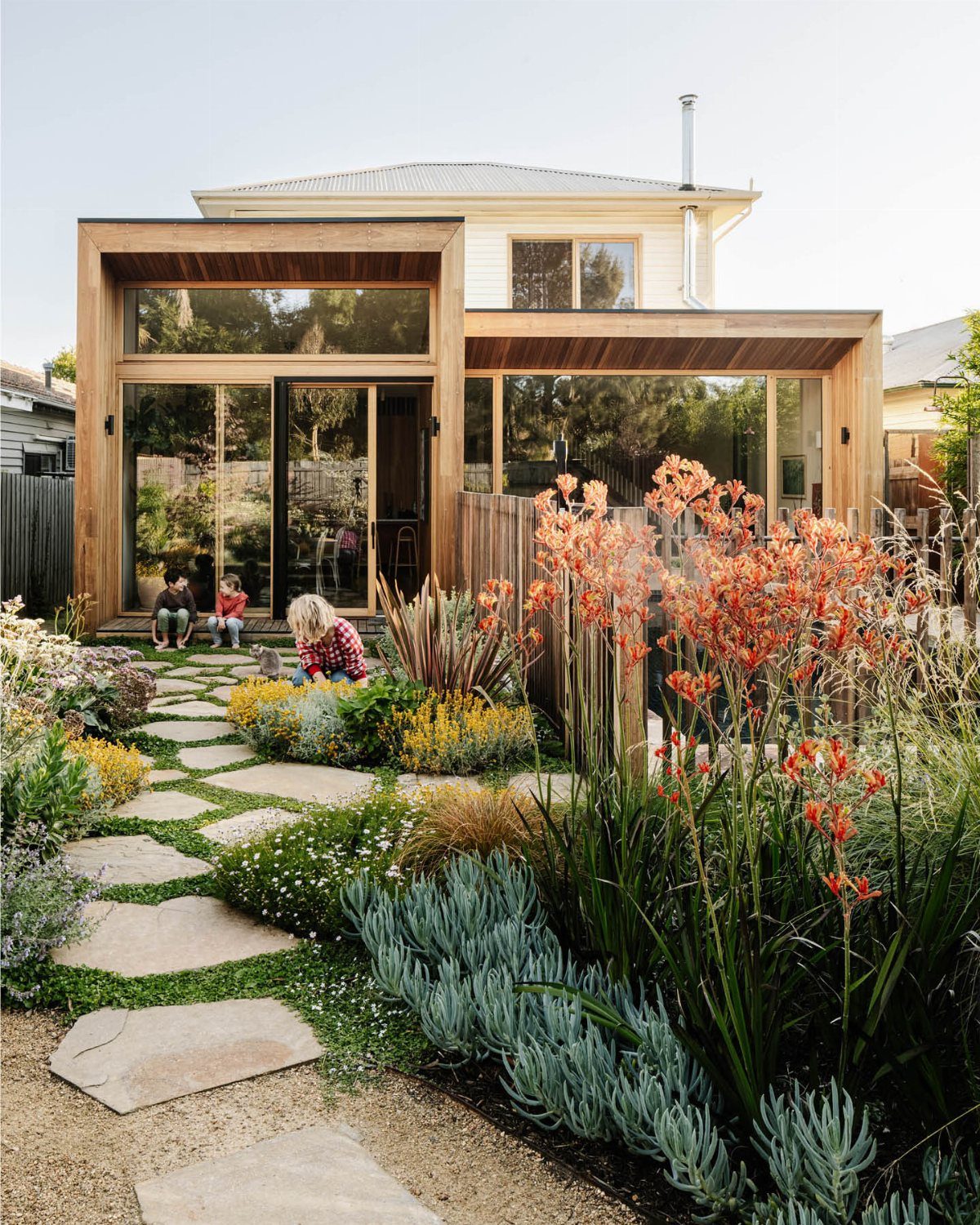
Native plants grow where they evolved, so they handle your local rainfall, your soil, your pests without the coddling that imports demand.
Kangaroo paw in a dry climate, coneflower in the Midwest, bluebells in shade; the right plant for the place replaces the fertilizer schedule.
Check what is actually native to your county, not just your country. A plant sold as native may be a cultivar bred for looks and stripped of the nectar that local pollinators need.
The children on that porch are the point in a way: this is the garden you keep while parenting, working, living. It asks less and gives more over time because the plants were already built for your conditions.

5. Pots Flower Bed
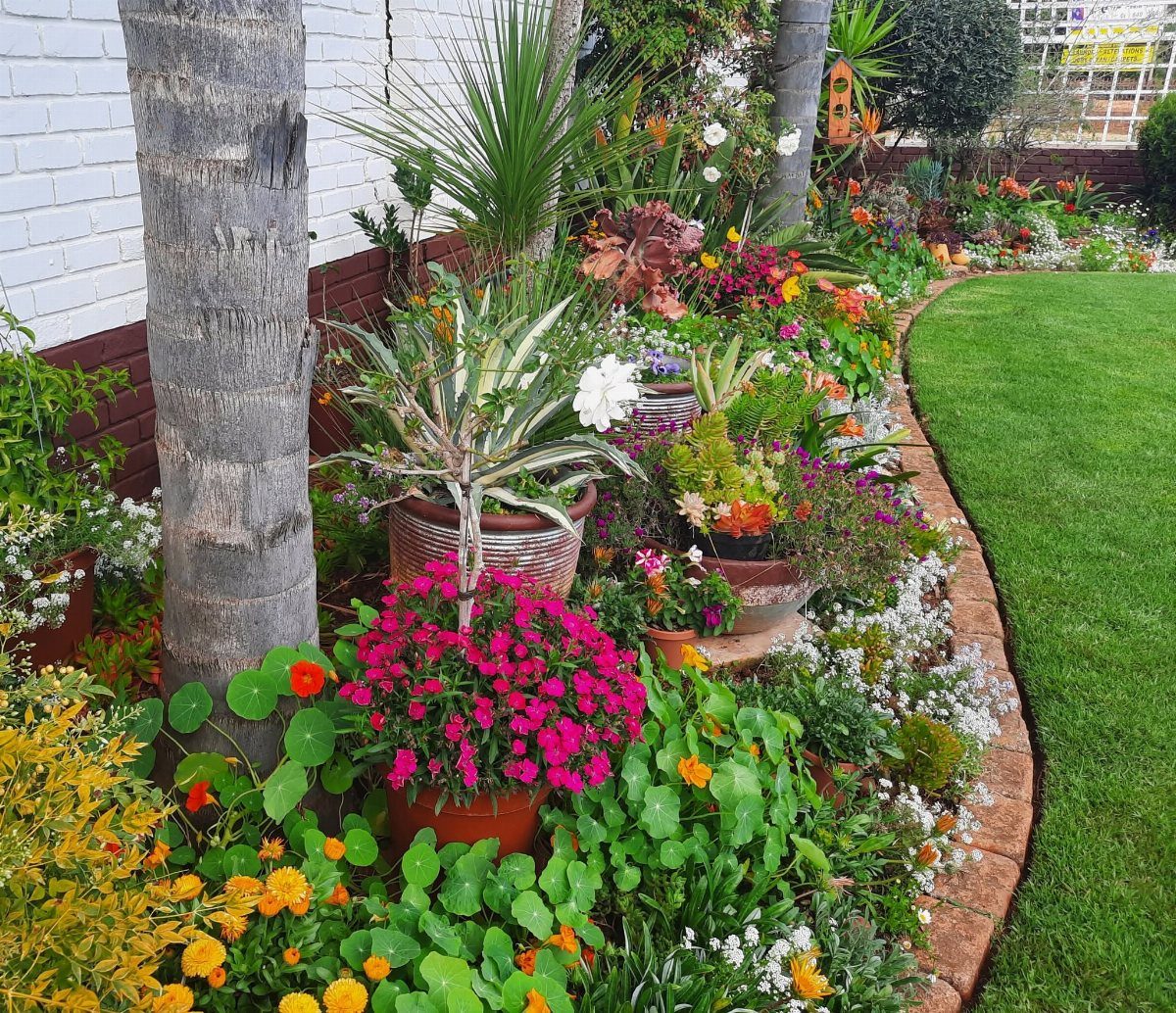
Pots let you rearrange a flower bed the way you move furniture. Group terracotta and glazed containers along a border, tuck annuals and succulents together, and the whole composition shifts when one plant fades or one pot cracks.
Natural materials weather better than plastic and look less like afterthoughts. I prefer unglazed terracotta for herbs because it breathes, though it dries faster and needs more frequent watering in high summer.
This is the flexible option for renters, for anyone testing a spot’s sun before committing to ground planting, or for beds where the soil is beyond fixing. Move the pots, take the garden with you, start again.

Multifunctional Design: This garden planter is separated into two growing areas for different plants or planting methods. The baffle can be removed to form a bigger growing area.
6. Edible Flower Beds
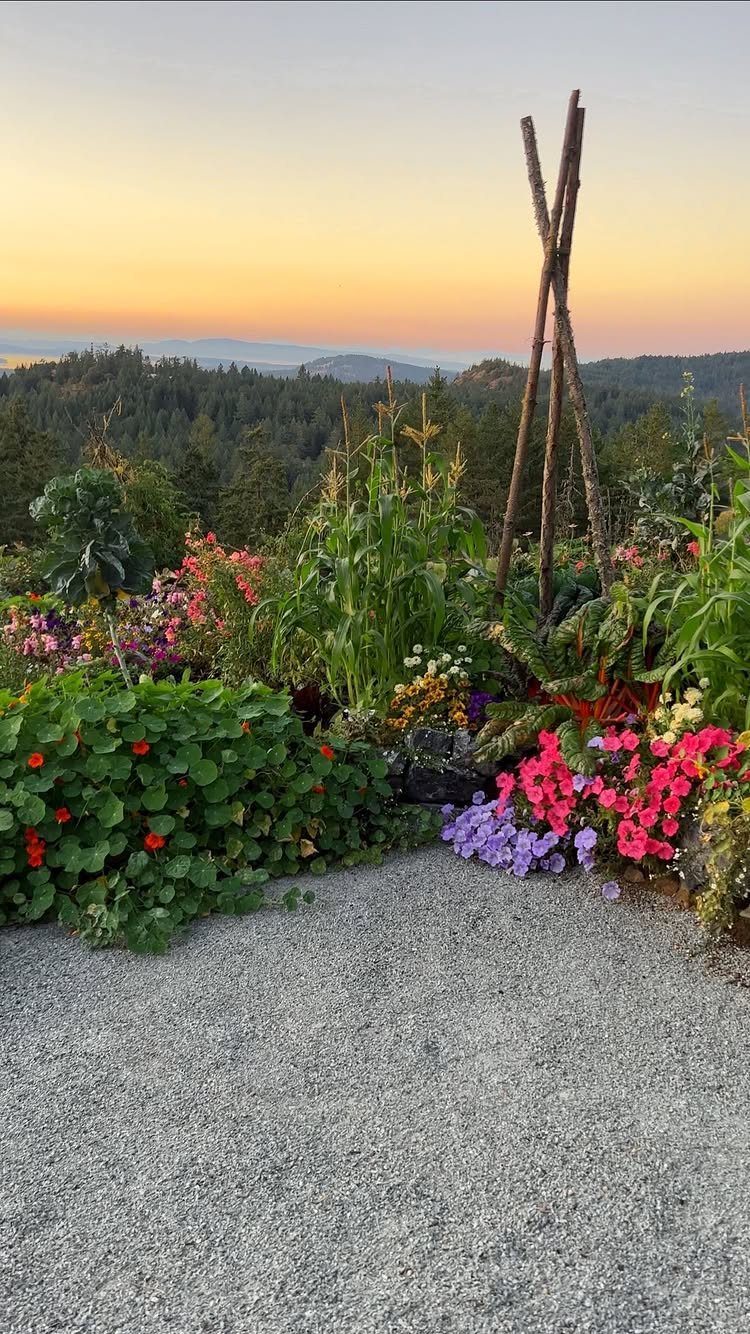
Nasturtiums and calendula read as ornamentals until you tell guests the petals are edible.
Nasturtiums bring pepper to a salad; calendula petals color rice or soups. Both reseed where they are happy, calendula especially, so a single packet of seed can mean years of return.
I like this for households with children who put everything in their mouths. At least half the garden is safe when they do.
Productivity stays modest: a few petals garnish a plate, they do not feed a family.
Plant them at the front of a bed where you will see the blooms and remember to harvest. Pair with chard or corn if you want the bed to work harder.
7. Garden Ladder Planter
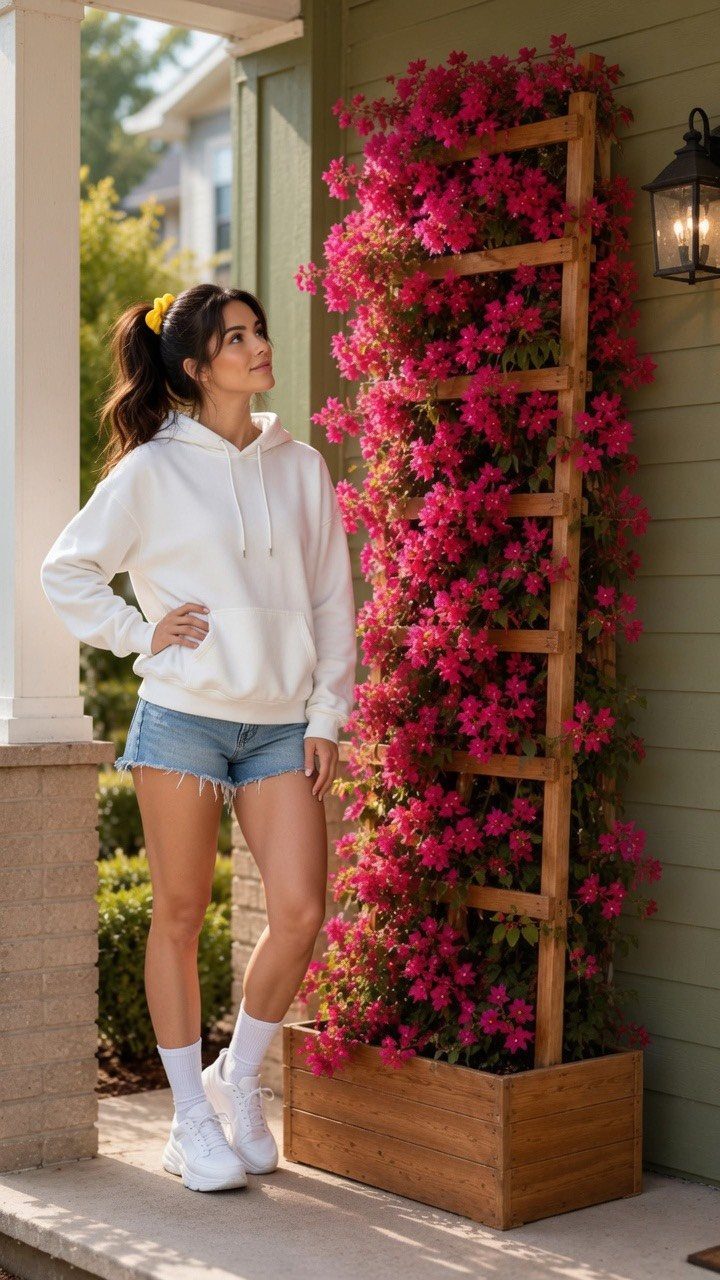
Vertical growing buys back floor space on a porch or patio where every square foot counts. A ladder planter leans plants upward in tiers, so trailing blooms hang at eye level and climbers have something to grip.
Build it as a single unit, planter box at the base with trellis rising behind it.
Train clematis or morning glory up the rails, fill the box with something lower, and the whole structure reads as one piece rather than a ladder repurposed.
Cedar or redwood holds up to weather without paint; pressure-treated works cheaper if you seal the cut ends where water settles.
I would set this against a wall that gets morning sun and afternoon shade, since container soil overheats faster than ground. Water more often than an in-ground bed; the small soil volume dries in a day of heat.

[ Fir Wood Raised Garden Bed ]: Made by ScienGarden, this raised garden bed is crafted from fir wood for a sturdy yet lightweight structure. The polished wood surface is finished with water-based paint, giving this elevated garden bed a natural look while helping protect the planter box during outdoor use on patios, balconies, decks, porches, and backyards.
8. Fairy Garden
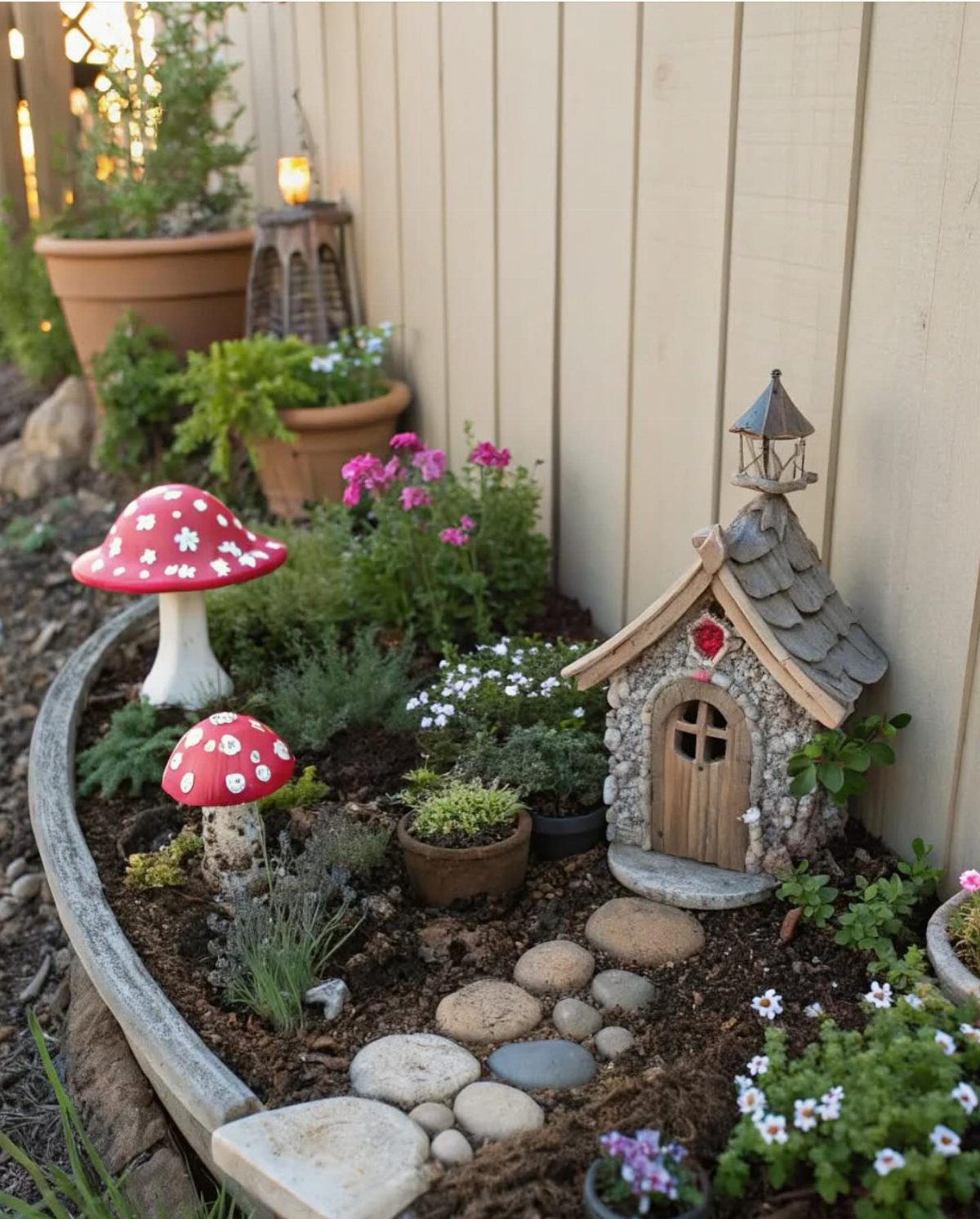
A fairy garden shrinks the scale so the whole bed becomes scenery.
Pebble paths, a stone cottage, and small plantings that read as trees let children tend something that feels like play while adults still get a planted bed to maintain.
A curved edge against the fence softens the boundary and makes the miniature world feel enclosed rather than pressed against a wall.
Low ground cover between the hardscape stays small without constant shearing; baby tears or moss work where there is moisture, creeping thyme where it is drier.
This is the bed for a corner that gets partial shade and casual attention. The figurines are the hook, but the plants still need weeding and water; do not let the whimsy sell you on zero maintenance.


QUANTITY: Each packet contains 150 seeds, providing an abundant supply for filling shade gardens with vibrant color.
9. Illuminated Stone Border Bed
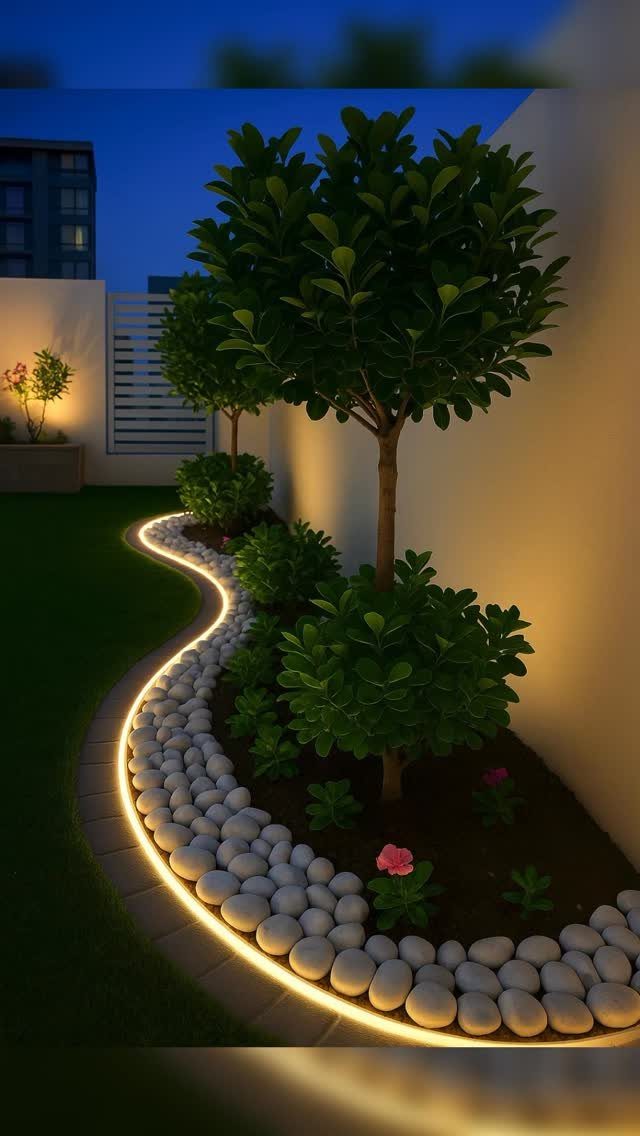
White stones catch the last daylight and then carry the LED glow after dark, so the bed keeps its shape around the clock.
The strip sits at the edge, not buried, which means checking the weather rating before you buy; outdoor-rated IP65 or higher handles rain and sprinkler spray.
The curve follows the wall without touching it, leaving a maintenance gap for cleaning and air flow.
Small trees at the back need room for roots over time, so plan the width to match what the tag says at maturity, not what fits now.
Power comes from a low-voltage transformer on a timer, or solar if the spot gets enough afternoon sun to charge. Either way, the light is accent, not security; it shows the bed’s line, not the whole yard.

Installation Tips and Support: Ekisemio dog bed features an upgraded structural design for improved stability and weight capacity. Step 3 of assembly calls for a bit of skill...
10. Curved Stone Retaining Bed
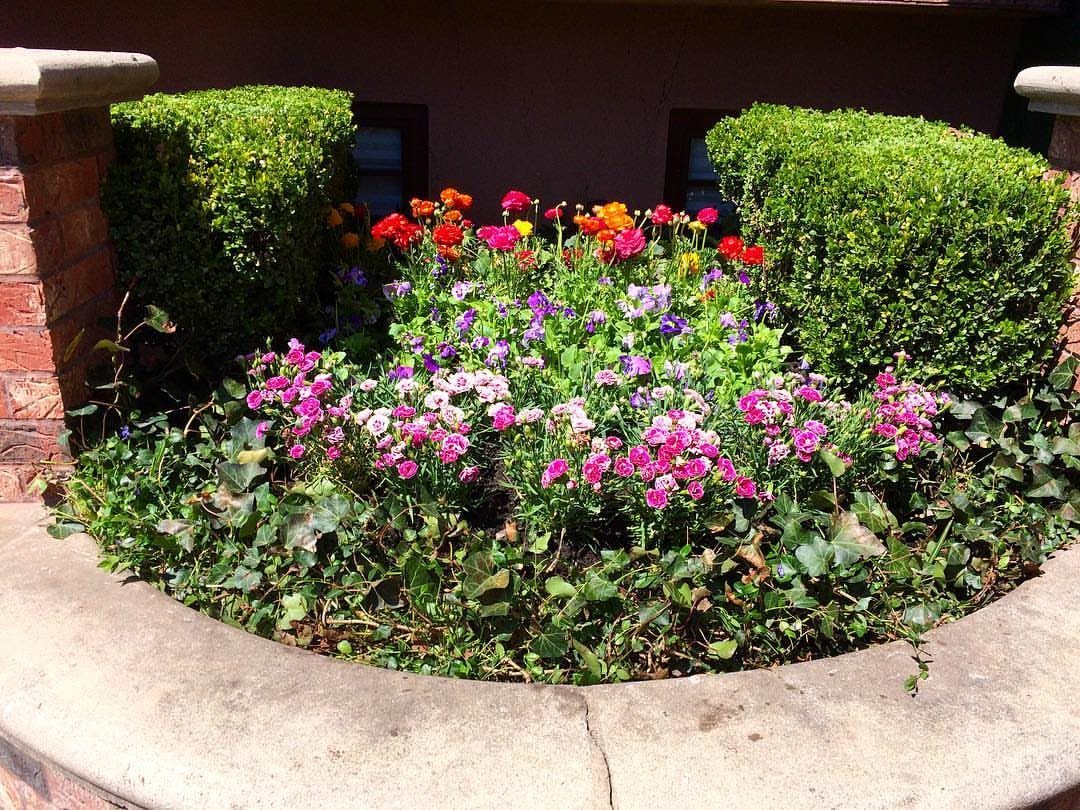
Curved stone walls do what straight edges cannot: they lead the eye around a corner and make a small space feel larger than its footprint.
Petunias fill the face, but the structure is the investment.
Build it once and swap annuals by season; the wall stays. Pink and purple varieties trail and mound without deadheading, which suits a bed this visible against the house.
Check local code before you stack stone high; some municipalities want a permit for retaining walls. The curve adds cutting time and waste, so budget extra stone over a straight run of the same length.


A Pollinator Garden in One Bag: Sow these 18 wildflower varieties (sunflower, cosmos, calendula, coneflower, zinnia, aster and more) to create a vibrant, bee- and butterfly-friendly display across garden beds, borders, containers, and meadows.

POLLINATOR PARADISE: Over 20000 wildflower seeds create thriving habitats for monarchs, bees and hummingbirds; Perfect blend of milkweed seeds for monarch butterflies and nectar-rich flowers; Creates vibrant meadows and beds while supporting essential biodiversity
11. Narrow Foundation Flower Bed
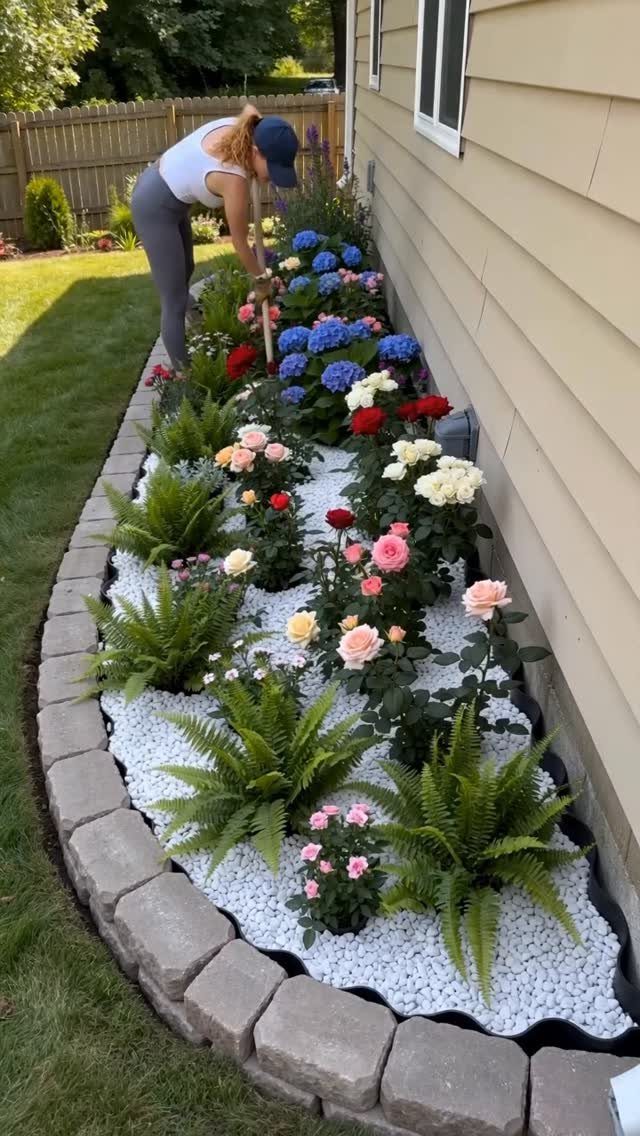
Foundation beds run along the house wall where nothing else fits, turning dead space into planted border. White gravel mulch reflects heat and stays clean against siding; it also means hand-weeding, since you cannot run a hoe through loose stone.
Retaining wall blocks edge the bed at grade level, separating soil from lawn without raising a tripping hazard.
Hydrangeas and roses want different water, so group by need or plan to spot-water; roses dry out faster against reflected heat, hydrangeas wilt when the wall bakes their roots.
Access is the limit. This bed is one person wide, so plant with mature spread in mind or resign yourself to crawling in later.
The gardener at the far end has the right idea: start from the back and work forward, so you are not reaching over fresh planting.
Soil Preparation Tips
Good soil starts before the first plant goes in.
I mix compost into the top few inches of existing dirt rather than digging it under; roots colonize the zone where biology is active, and that zone needs to be where they are feeding.
Well-draining means water moves through in hours, not days.
I check by digging a hole, filling it, and watching. If it still holds water after half a day, I work in more organic matter or build raised rather than amending in place.
Compost quantity depends on what I am starting with. Heavy clay needs more, sandy soil less; a 2–4 inch layer spread across the surface and turned in is the usual range.
I do this a week before planting if I can, so the mix settles and I do not plant into air pockets.
Plant Selection Advice
Match the plant to the hours of sun the spot actually receives, not what you wish it got. Morning sun with afternoon shade suits plants that wilt in heat; full-day direct light opens the door to most annuals and edibles.
Soil conditions matter as much as light. Well-draining ground supports different plants than clay that stays wet, and your hardiness zone limits what survives winter.
I check the tag against my zip code’s zone before I buy; a plant rated one zone warmer is an annual in my yard, not a perennial.
Native species and drought-resistant plants reduce the maintenance load, but they are not the same thing.
Native plants reseed and spread, which is economical but not tidy; if you want a manicured bed, they work better as backdrop than main feature.
Drip irrigation is worth considering if you are building from scratch. It puts water at the root zone without wetting leaves, which cuts both evaporation and fungal issues.
Watering and Maintenance
New plants need regular water while roots establish, usually the first growing season.
After that, frequency drops to what the species and your climate demand. Drought-tolerant beds and native plantings shift to occasional deep soaking rather than light frequent spritzing, which encourages shallow roots.
Mulch does 2 jobs: it slows evaporation from the soil surface and blocks light that would germinate weed seeds.
A 2–3 inch layer is enough; more than that can trap too much moisture against stems or invite rodents. I pull mulch back an inch from plant bases so it does not rot the crown.
Low-maintenance design stacks these effects.
Drought-tolerant species, natives adapted to local rainfall, and mulch layering together reduce both watering and weeding over time. The upfront work is selecting plants that match the conditions without coddling; the ongoing work becomes seasonal rather than weekly.
Design and Layout
Height, color, and seasonal interest together keep a bed from looking static. I put tall plants at the back of a border viewed from one side, or in the center of an island bed, so nothing hides behind something larger.
Color needs restraint; two or three dominant hues read as intentional, five or six as accident.
Year-round interest means mixing plant types. Evergreen structure carries winter, spring bulbs and early perennials take over, summer annuals or long-blooming perennials hold the middle months, and fall foliage or late grasses finish.
Not every bed needs all seasons; a bed designed for summer color against a house wall is a valid choice if you know it going in.
Spread matters at maturity, not at planting.
A tag that gives a mature width means the plant needs that radius once established, not in year one. I space for the future or commit to dividing and editing later.
Low-water and native plants suit organized beds if you select for behavior. Avoid vigorous spreaders, plants that need staking, and species prone to pest or disease pressure; the structure of the bed stays cleaner with less intervention.
Frequently Asked Questions
What are some ideas for a low-maintenance flower bed?
Drought-tolerant plants, native species, and a 2–3 inch layer of mulch together cut watering and weeding to seasonal tasks. Local plants already know how to live here; they do not ask for fertilizer or special watering once they are settled.
A layer of mulch on top keeps weed seeds from sprouting and keeps the ground from drying out too fast between rains. Succulents or a wildflower mix that reseeds itself are 2 specific beds that need little once established.
What can I replace a flower bed with?
Pots grouped along a border give you a movable flower bed you can rearrange or take with you, which suits renters or bad soil.
An edible flower bed with nasturtiums and calendula replaces pure ornament with something you can harvest; the petals garnish salads and soups, and both plants reseed where they are happy. Either option keeps planted color without committing to ground.