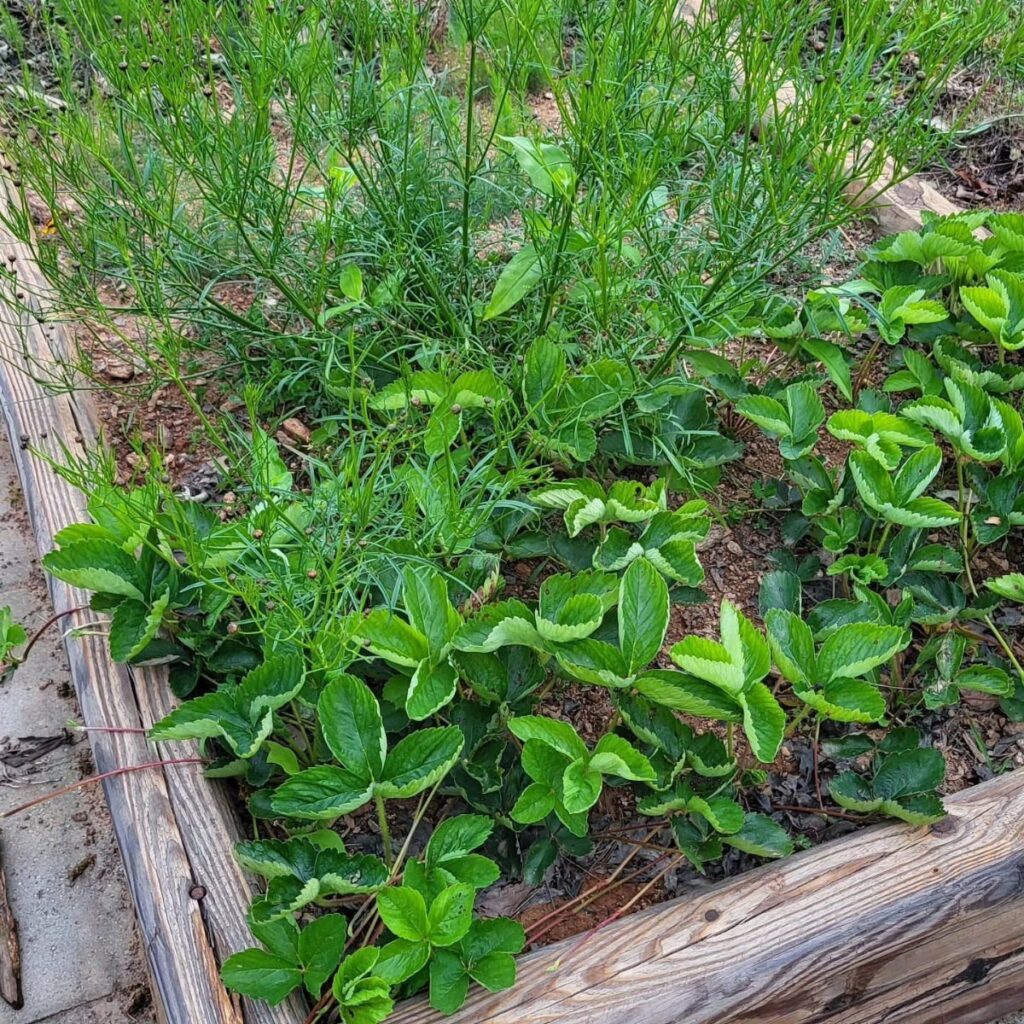
The beds ahead range from a free stack of cinder blocks you haul home to a raised wooden frame with drip lines built in, and the one that fits depends on whether you are short on square feet, fighting clay mud, or tired of birds and slugs beating you to the bowl.
Strawberry roots sit close to the surface, so a drip line or soaker hose at soil level beats overhead watering; the leaves stay dry and the fruit has a better shot at ripening without spots.
[link-whisper-related-posts]1. Drip Irrigation for Strawberries
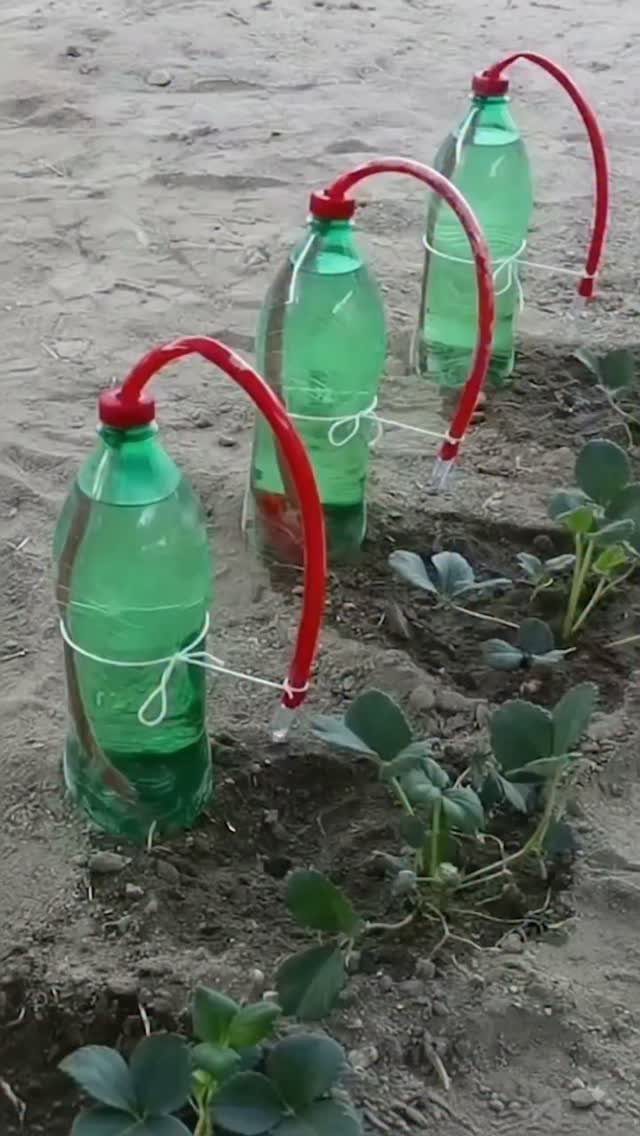
Three green plastic bottles, water-filled and fitted with red tubes, siphon moisture straight to strawberry roots while leaves stay dry. Drip irrigation beats overhead watering for these shallow-rooted plants; wet foliage invites fungal trouble that ruins fruit.
A setup like this costs only the price of tubing and a few fittings, and the bottles let you see at a glance when it’s time to refill.
For a more permanent bed, soaker hoses or drip line do the same job without the daily checking. Either way, keep the water at soil level and your berries will taste like summer afternoons instead of disappointment.
For optimizing plant health by applying water directly at the plant roots
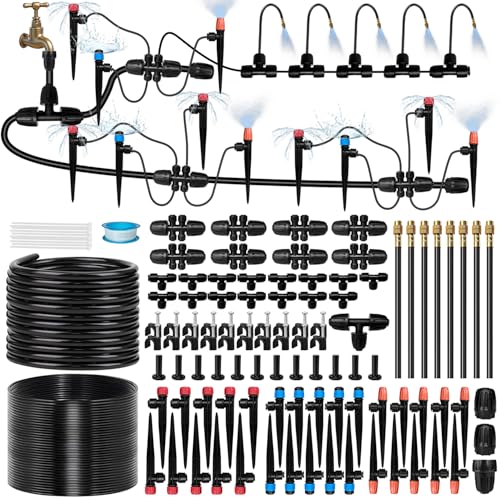
【Upgraded Tube Design & Water Saving】 Our garden watering system is upgraded to 1/2” diameter to support high water pressure. The 1/2” tee connector allows seamless splitting into 2 independent zones for customized watering schedules. By delivering moisture directly to root zones, this drip Irrigation system significantly reduces evaporation and runoff—saving more water compared to conventional sprinklers while eliminating the need for manual watering.

【What Will You Get】: The package contains 300 pieces drip irrigation parts in clear plastic box. 30 x Hose Elbows Fittings, 30 x Barbed Hose End Plug, 25 x Oblique Barbed 4-way Connector, 35 x Single barbs, 105 x Straight Barbs, 75 x Oblique Barbed Tees, 1 x clear plastic box.
2. Strawberry Plants with Flower Buds
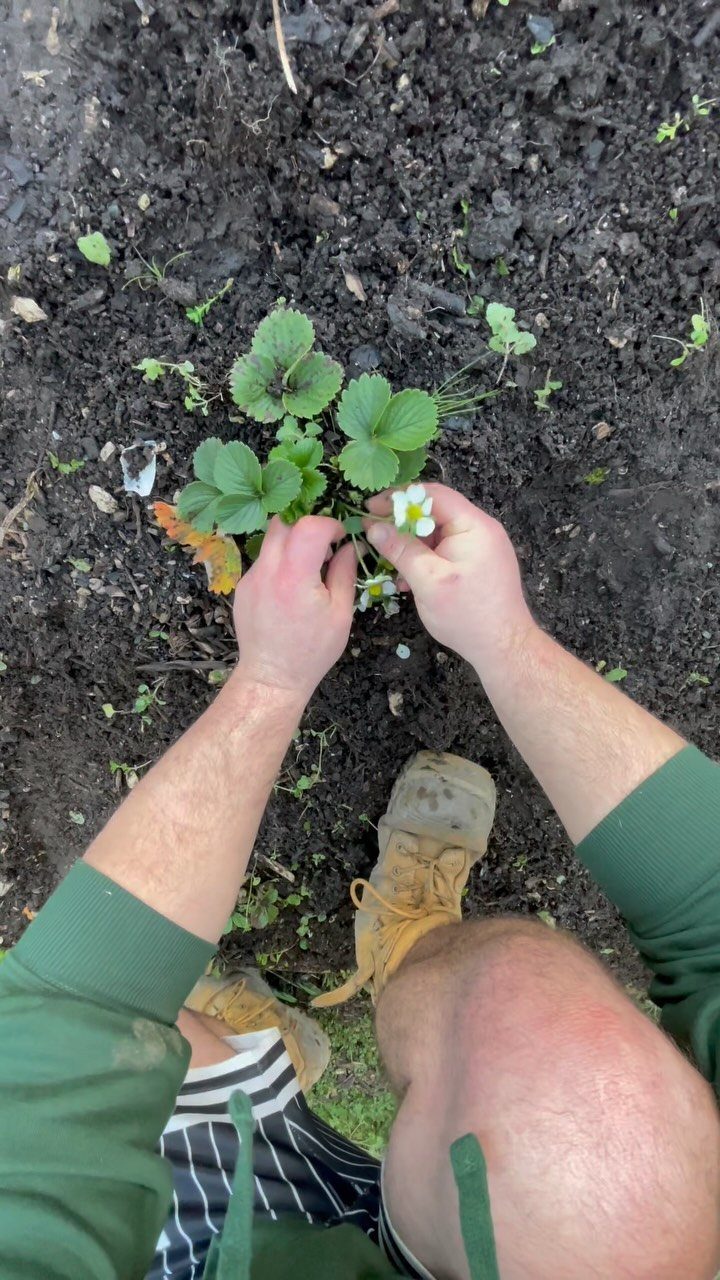
Pinching off the first white flowers that appear on new strawberry plants feels wrong, but it pays off.
Those early buds steal energy that should go to leaves and roots; remove them for a few weeks after planting so the plant builds strength before fruiting.
Small plants in dark soil are easiest to work with, the blooms pinching off clean between your fingers.
Check your variety’s guidance, some need longer, but the principle holds: a little patience now means larger, juicier berries when the real harvest starts.
Cool-season work in early spring, when plants are just settling in, calls for boots and a hoodie you do not mind getting dirty.

🍓【High-nutrient formula】Our strawberry nutrient soil utilizes a special formula that is rich in organic matter and essential nutrients, providing comprehensive nutritional support for strawberry plants, promoting healthy growth, and abundant harvest.

Planting and Growing Requirements: Before putting them outside they need to be started in a controlled environment as a plug or in a pot first. Like the red cup picture above.
3. Raised Strawberry Garden Beds
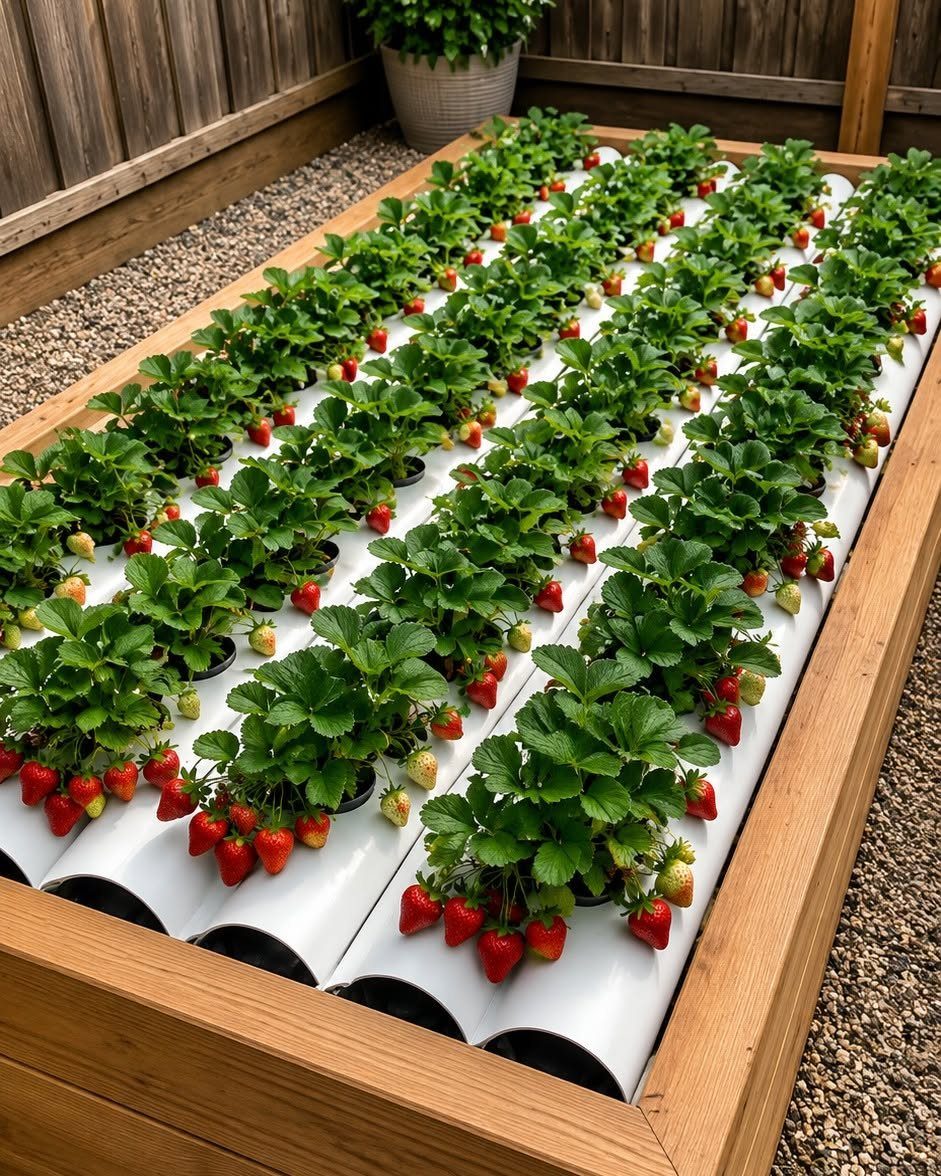
A wooden raised bed with strawberries growing from white PVC channels gives you control over the one thing that kills more berry plants than pests: bad drainage.
Roots rot in standing water, and raised beds let you build soil that stays loose and rich rather than fighting what you’ve got.
A raised bed that size holds a dozen or more plants, spaced so each can spread without choking its neighbors. The pipes here are a built-in watering system, delivering moisture evenly; fill them with water and let it seep slow.
Soil warms faster too, so you plant earlier and pick longer. pH matters for strawberries, aim between 5.5 and 6.5, test before you plant and amend with compost or an acid-loving mix if needed.

Complete Garden Bed Set: This fabric raised garden bed kit includes 1 non-woven liner, 24 straight pipes, 8 curved pipes, 8 connectors, 1 mosquito net, 10 ground pegs, and 100 cable ties. The liner measures 47.2 x 15.7 x 15.7 inch, providing ample space for a variety of plants. Even beginners can quickly set up their own vegetable garden and realize their home gardening dreams

36 PCS Garden hoops for Raised Bed : Greenhouse Hoops frame widely used indoors and outdoors, great for the yard, vegetable garden, and garden raised beds. DIY Garden Hoops Grow Tunnel Kit works well to protect your plants, seedlings, herbs flowers,strawberry in any season gardening plant.Plant support for climbing plants,plant stakes for outdoor plants,Tomato support garden stakes.

Raised Garden Bed - Add a new level of convenience to your gardening experience with the Galvanized Raised Garden Bed. Enjoy expanded yield and a more assembled garden layout with this garden accessory, each sized at 120 cm X 60 cm x 30 cm.
4. Wattle Fenced Strawberry Bed
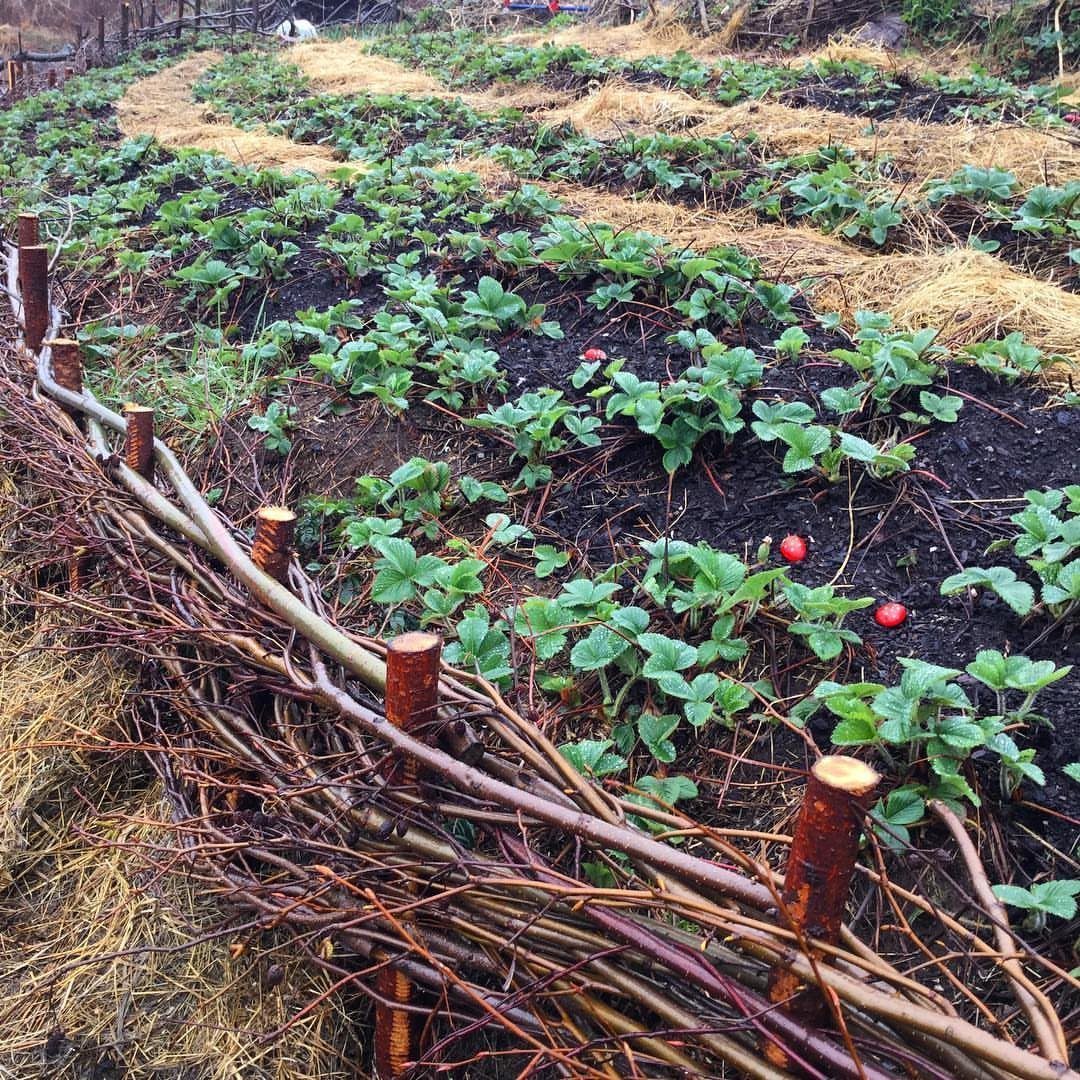
A low fence woven from branches and wooden stakes gives strawberry beds a boundary that keeps out rabbits and wandering feet without looking like hardware store aftermath.
Red-painted rocks mark plants among the green foliage, the terraced bed curving along a path. Wattle works anywhere you can find supple branches; willow and hazel bend easiest, but any green wood twists into place if you soak it first.
Weave between upright stakes driven a foot deep, pack tight enough to hold shape, loose enough to let air through.
Wattle rots eventually, faster in wet climates than dry ones, but replacing a few woven rods beats replacing a whole manufactured border.

1.Packaging: Silicone thumb knife * 2, Anti-Cut finger cover * 2, Storage bag * 1

Better Than Bobby Pins/Paperclips – No more struggling with makeshift tools! These plant pins are specially designed to be easy to insert, hold firmly, and stick up just enough for effortless removal.
5. Stacked Vertical Strawberry Planter
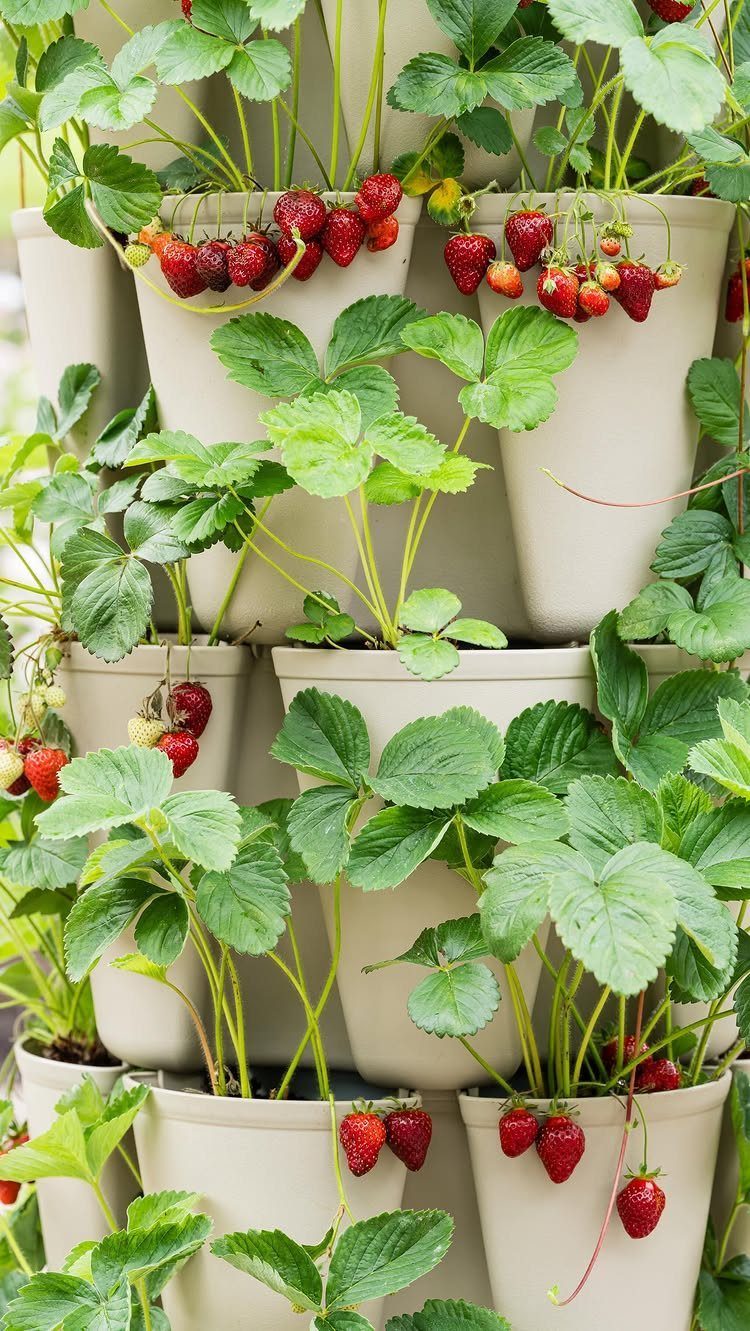
Tiered planters stack growing space upward when ground is scarce, a beige plastic tower here crammed with foliage and hanging fruit.
Each level drains to the one below, so the top stays driest and the bottom risks staying wet; choose a variety that handles moisture variation or check the lowest pockets more often.
These units suit balconies, patios, any hard surface where a bed won’t go.
Strawberries trail from every opening in a vertical stack, ripe ones dangling at eye level for easy picking. Weight adds up when wet, so verify your surface can handle it before you commit.

4X2X1FT GROWING SPACE: This oval raised garden bed measures 4 x 2 x 1 ft, providing 7+ cu. ft. of organized growing space for vegetables, herbs, flowers, strawberries and selected root crops. Its compact footprint fits naturally into backyards, lawns and small outdoor gardens while keeping plants easy to reach and maintain.

Space-Saving : This strawberry planter maximizes your gardening space by stacking 5 layers to grow more plants in a compact area. The strawberry tower planter is ideal for patios, balconies, or indoor use.
6. Netting Covered Strawberry Beds
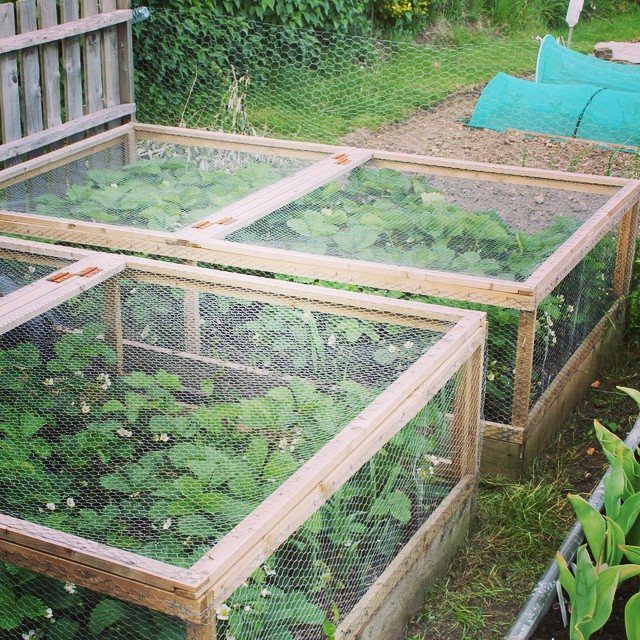
Hinged wooden frames fitted with chicken wire turn raised beds into fortresses against birds, squirrels, and anything else that thinks your berries ripen for them.
Beds that open like cold frames let you lift the whole cover for picking and weeding without fighting clips or stakes each time.
Build the frame to match your bed dimensions, attach wire with staples that won’t pull free when a raccoon tests them, and hinge at the back so the lid falls shut on its own if you forget.
Mesh size matters: half inch stops most birds, quarter inch stops smaller thieves but costs more and cuts light slightly. The flowering plants here are still setting fruit, but when red shows you’ll be glad the cage went up early.
7. Straw Mulched Garden Bed
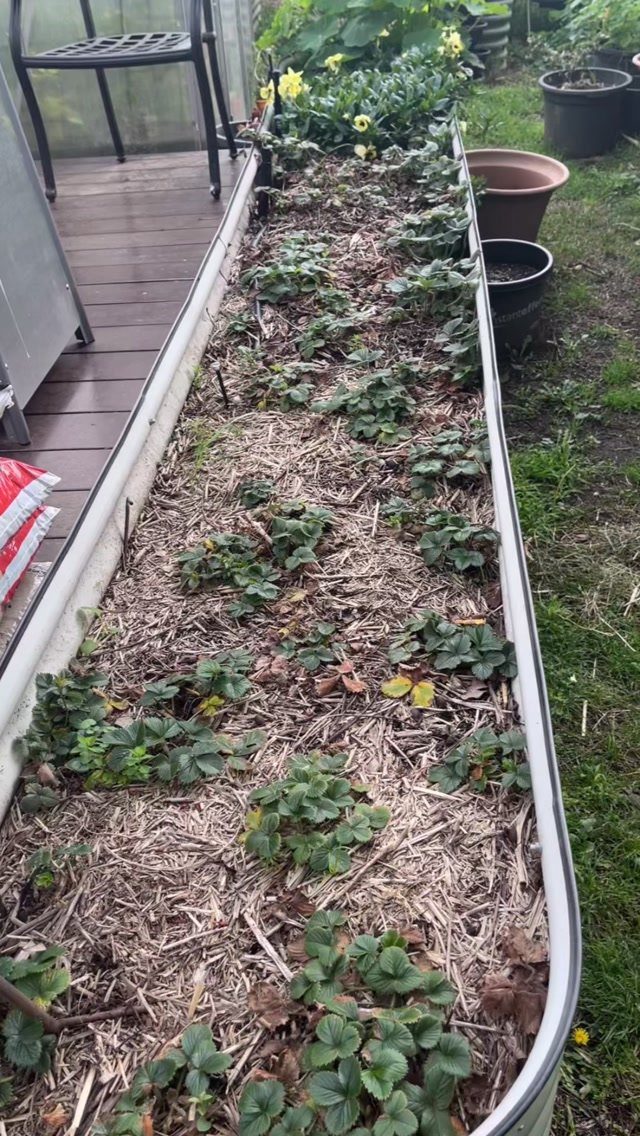
A bed of straw between your plants and the soil solves problems that plague strawberry growers every season.
Straw keeps berries clean and dry, lifting fruit off damp ground where rot and slugs find easy prey. It also locks in moisture and blocks weeds that compete for nutrients in shallow strawberry roots.
After harvest, cut leaves back to 2 inches above the crowns and lay fresh straw for winter protection. Straw mulch works the same whether your bed is framed in metal, built from timber, or dug straight into the ground.
Replace it yearly; old straw harbors disease. For June-bearing varieties, expect to renovate the whole bed after year 3 or 4.
8. Upcycled Barrel Strawberry Planter
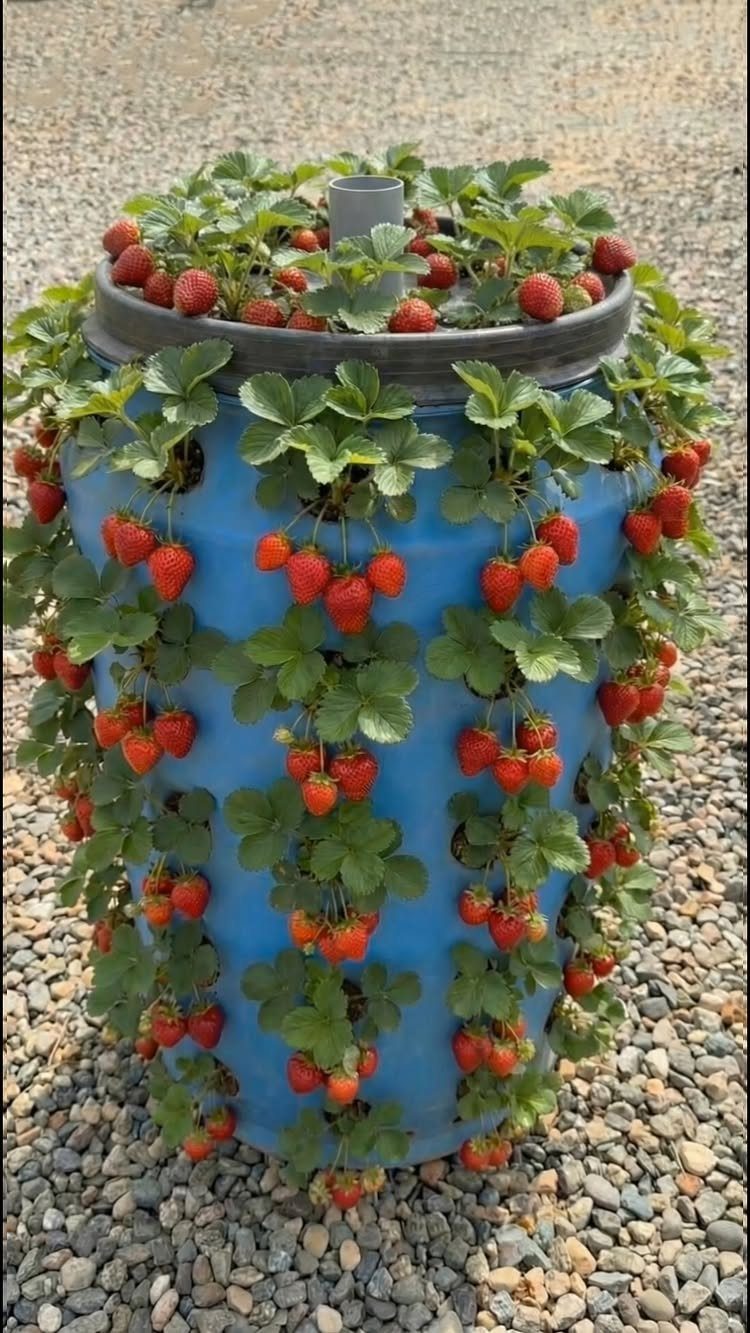
A food-grade barrel cut with staggered openings turns vertical space into a strawberry waterfall, ripe fruit spilling from every level. The central pipe top-fills water down through the soil column, so you water once and every plant drinks.
Check the barrel’s history first: former soap or fuel containers leach residue you cannot wash away. Food-grade is the only safe start.
The blue plastic here is light enough to roll if empty, but full of wet soil it stays put; plan your spot before you cut. Drainage holes in the base are non-negotiable, roots drown in standing water.
9. Cinder Block Strawberry Bed
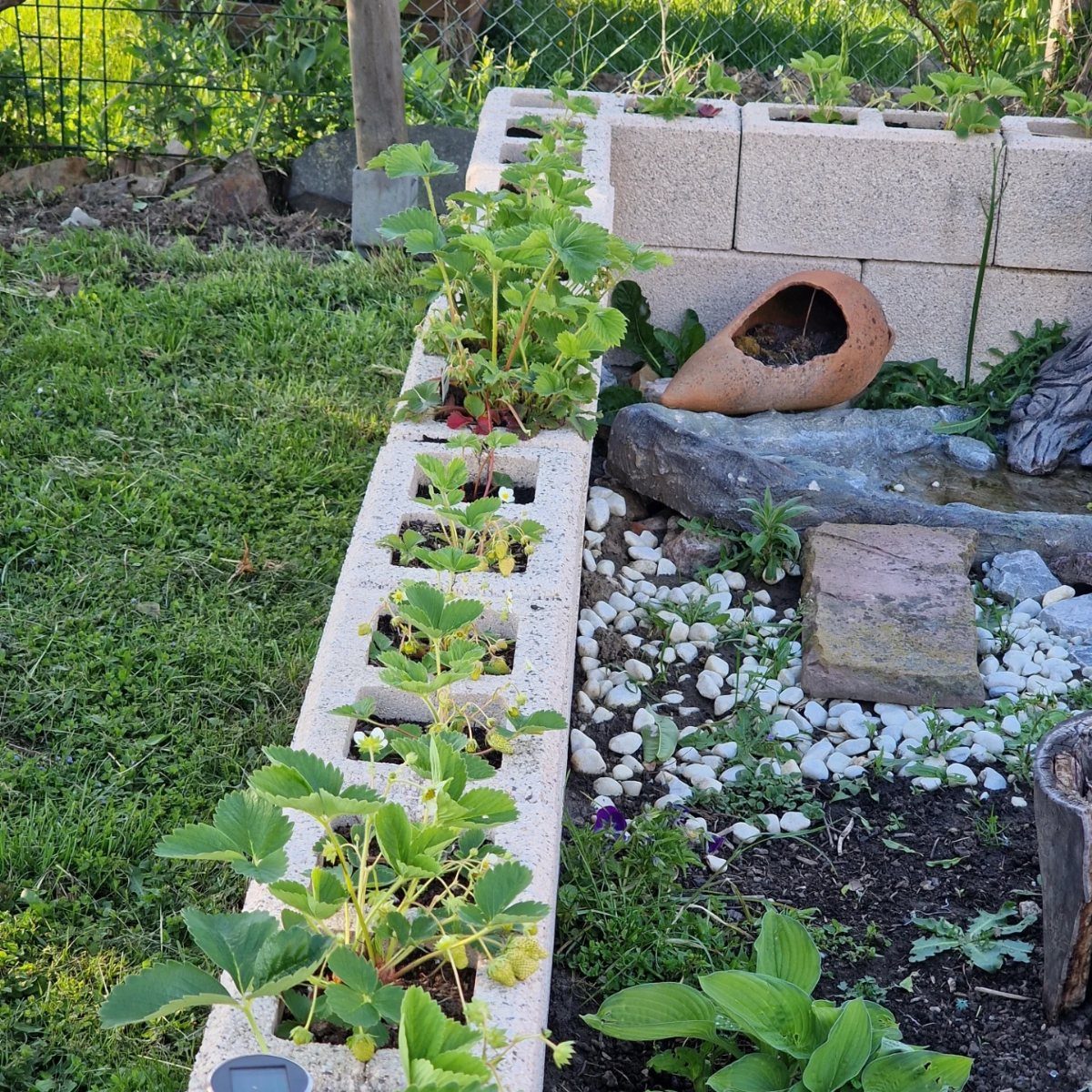
Cinder blocks line a bed with material that outlasts wood and costs next to nothing if you can source used. Each block’s hollow core holds extra soil, turning the wall itself into planting pockets for trailing berries or companion herbs.
The thermal mass warms soil early in spring, a help in short-season zones, but that same mass holds heat into summer afternoons. In hot climates, afternoon shade saves leaf edges from scorch.
Level the first course carefully; a block wall that starts crooked only gets worse. No mortar needed, dry-stacked with staggered joints is stable enough for this height.

Ample Quantity & Convenience: This kitchen tool set includes four stainless steel corer tools, providing sufficient quantity for daily kitchen tasks and allowing multiple users to work simultaneously. The set is designed to simplify the process of removing stems from strawberries and tomatoes, facilitating quick and efficient preparation of a large volume of fruits. The inclusion of multiple tools makes it ideal for family use, catering events, or professional kitchens where efficiency and convenience are prioritized
10. Plastic Mulch Strawberry Beds
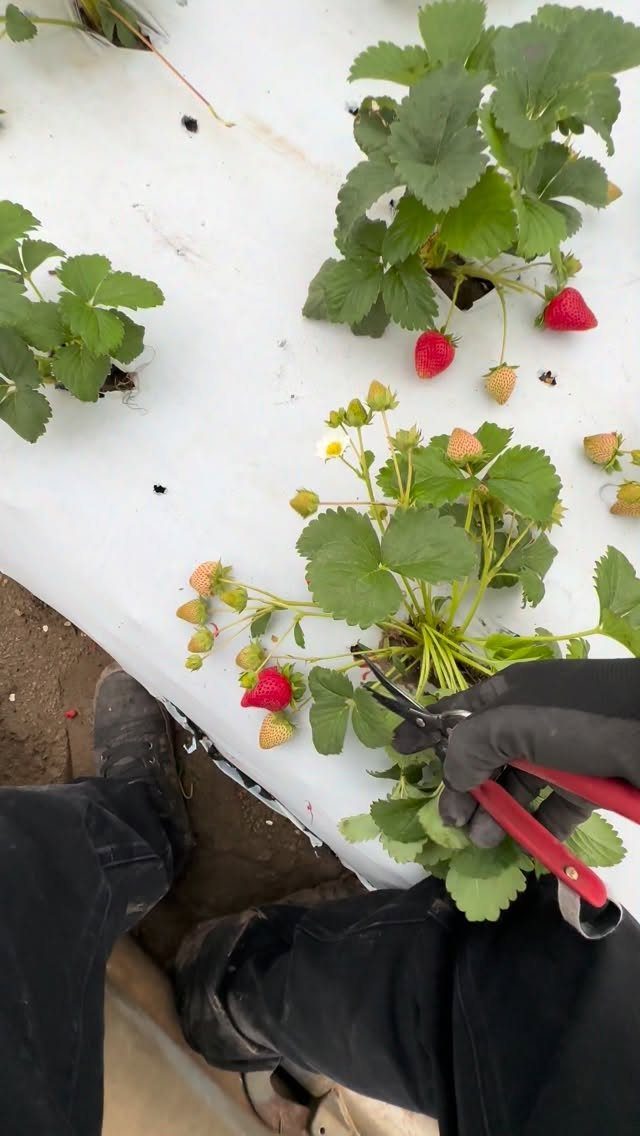
White plastic film punched with planting holes does the work of mulch without the yearly replacement, warming soil faster in spring and reflecting light up into the plant canopy.
Those shears are doing the same runner and old-leaf trimming you’ll still need to do, just reaching through the planting slits instead.
This is commercial-scale technique scaled down: lay the sheet before planting, anchor edges with soil, and cut X’s where each plant goes.
It suppresses weeds completely and keeps fruit pristine, but removal at season’s end is labor, and torn fragments persist in soil. Biodegradable black mulch exists for gardeners who want the benefit without the plastic legacy.

[ Fir Wood Raised Garden Bed ]: Made by ScienGarden, this raised garden bed is crafted from fir wood for a sturdy yet lightweight structure. The polished wood surface is finished with water-based paint, giving this elevated garden bed a natural look while helping protect the planter box during outdoor use on patios, balconies, decks, porches, and backyards.

Outdoor galvanized planter boxes size: 4x2x1 ft, Can hold garden soil and fertilizers:53 Gallon. Available in a variety of colors, you can choose the one that best suits your garden style. Moreover, you can use galvanized sheets to splice out the size and shape you want. Use your design skills and imagination, and combine this galvanized garden beds outdoor with metal plant stakes to DIY your beautiful garden
11. Vertical Wooden Planter Rack
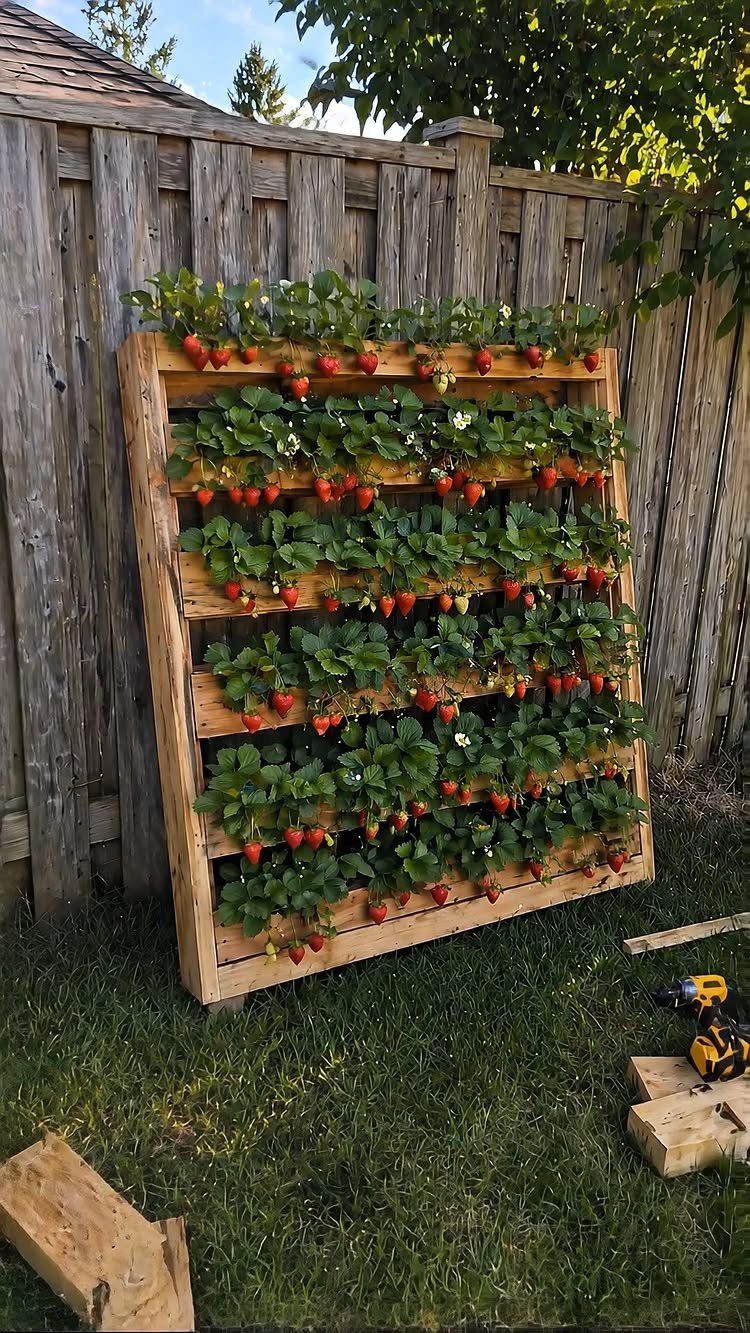
A pallet stood on end and faced with planting pockets turns fence line into picking height, no bending required. The slatted construction drains freely, which strawberries need, though the upper tiers dry fastest and want checking first on hot days.
The power tools nearby signal this was built, not bought: salvage a heat-treated pallet marked HT, avoid chemically treated MB. Back it with landscape fabric to hold soil, and angle the face slightly so gravity helps drainage.
Weight when wet demands sturdy anchoring, a leaning tower of mud and berries helps nobody. Against a fence, screw-through brackets do the job.
Best Practices for Planting
Strawberries want 10 hours of sun daily, and a sheltered spot helps spring flowers survive frost so they do not turn to mush.
I space mine 12 to 18 inches apart; tight planting invites humidity that fungi love, and strawberries need bees to move pollen between those spaced-out blooms.
Shallow roots mean the top layer of soil does the heavy lifting. I fork the soil 2 spades deep and mix in compost that has broken down to crumbly black earth before I set any plants.
Strawberries belong to the rose family, so I avoid ground where roses, raspberries, or blackberries grew before. A clean start beats fighting inherited soil disease.
Pinch off early flowers for a few weeks after planting. The plant puts energy into leaves and roots instead, and you still pick that same summer.
Left alone, runners multiply fast; one June-bearing plant can spawn 120 daughters in a season. I remove most to prevent a yard takeover.
Strawberries perform best when they are given the equivalent of 1 inch of rainwater per week.
Harvesting Strawberries
Strawberries stop ripening the moment they leave the plant, so I wait until color runs fully to the tip and no white or yellow shows.
Morning picking, while fruit is still cool, gives the best flavor and the longest shelf life.
Variety choice shapes the calendar. Short-day types flower in early spring’s short daylight and bear through summer; stacking early, mid, and late varieties stretches picking from late spring into late summer.
Perpetual types crop in waves all summer but exhaust after 2 years, while short-day plants keep producing for 4 to 5. I plant a new bed each year before an old one retires, so supply never gaps.
For June-bearing plants, removing spent flower stalks after harvest redirects energy toward next year’s buds. Day-neutral and everbearing types need frequent picking to keep fruiting; the more you take, the more they offer.
Common Strawberry Diseases
Fungal diseases find strawberries fast when air sits still. I keep my beds clear of large tree roots by staying at least as far out as the branches reach, which gives the strawberries the sunlight and air movement they need.
Higher ground also helps; berries dry faster after rain or dew, and dry berries mean fewer infections.
Aphids, slugs, and spider mites appear regularly in my checks.
Good spacing and circulation prevent the worst fungus pressure, but I still watch leaves and fruit weekly. Beneficial insects do real work here; companion flowers draw predators that handle pests before I need to intervene.
Wet foliage overnight is the enemy. Drip lines or soaker hoses, not sprinklers, keep water at soil level where roots find it and leaves do not.
Replacing Strawberry Plants
Strawberry plants wear out.
After 3 to 4 years, yields drop and berries shrink; older crowns accumulate virus and exhaustion even when they still look alive. I replace beds on that cycle, or sooner if plants flag.
Renovation buys time for June-bearing varieties.
Keep the healthiest new plants, remove the rest. This resets the bed but does not repeal aging; even renovated patches need replacement by year 4 or 5.
Perpetual varieties give out faster, often after 2 years.
My strategy: start a new bed annually, phase out the oldest. Fresh stock, whether potted cold-stored plants in summer or bare-root in fall, carries no buildup of the problems that linger in old soil.
Frequently Asked Questions
What are the best beds for growing strawberries?
Raised beds are the most reliable choice for strawberries because they fix the one problem that kills more plants than pests: bad drainage. Standing water will rot strawberry roots fast, which is why I build up instead of digging down.
A raised bed means you control the mix from day one: loose, rich soil that drains the way the plants need it to. Soil also warms faster in spring, so you plant earlier and harvest longer.
How many strawberries can I plant in a 4×8 raised bed?
In my 4×8 beds I give each strawberry plant 12 to 18 inches of its own space, which works out to about 20 to 32 plants total. Give them space now and they fill it by midsummer without choking each other.
Do strawberries grow well in raised garden beds?
They grow better in raised beds than in most ground-level soil, as long as you build the bed deep enough and keep the pH in range.
Raised beds warm earlier in spring, drain faster after rain, and let you control exactly what soil the shallow roots sit in. Test your mix before planting and amend to hit 5.5 to 6.5 if needed.
How deep do strawberry beds need to be?
I go no shallower than 8 to 12 inches of soil in a raised strawberry bed. That depth gives the roots room to spread and holds enough moisture and nutrients that the plants do not dry out or starve between waterings.
Deeper beds insulate roots better and hang onto water longer, which matters in hot climates or sandy soil where shallow beds dry out fast.
The plants themselves sit with crowns at surface level, not buried, so the depth is all about what sits below them.