These 21 ideas run from a wheelbarrow you already own to a louvered aluminum pergola, and the one that belongs to you depends on whether your yard needs structure, privacy, or just something alive outside the kitchen window.
The dividing line is not budget or skill; it is whether you want to grow food, sit and read, or just stop looking at bare dirt.
[link-whisper-related-posts]1. Raised Beds
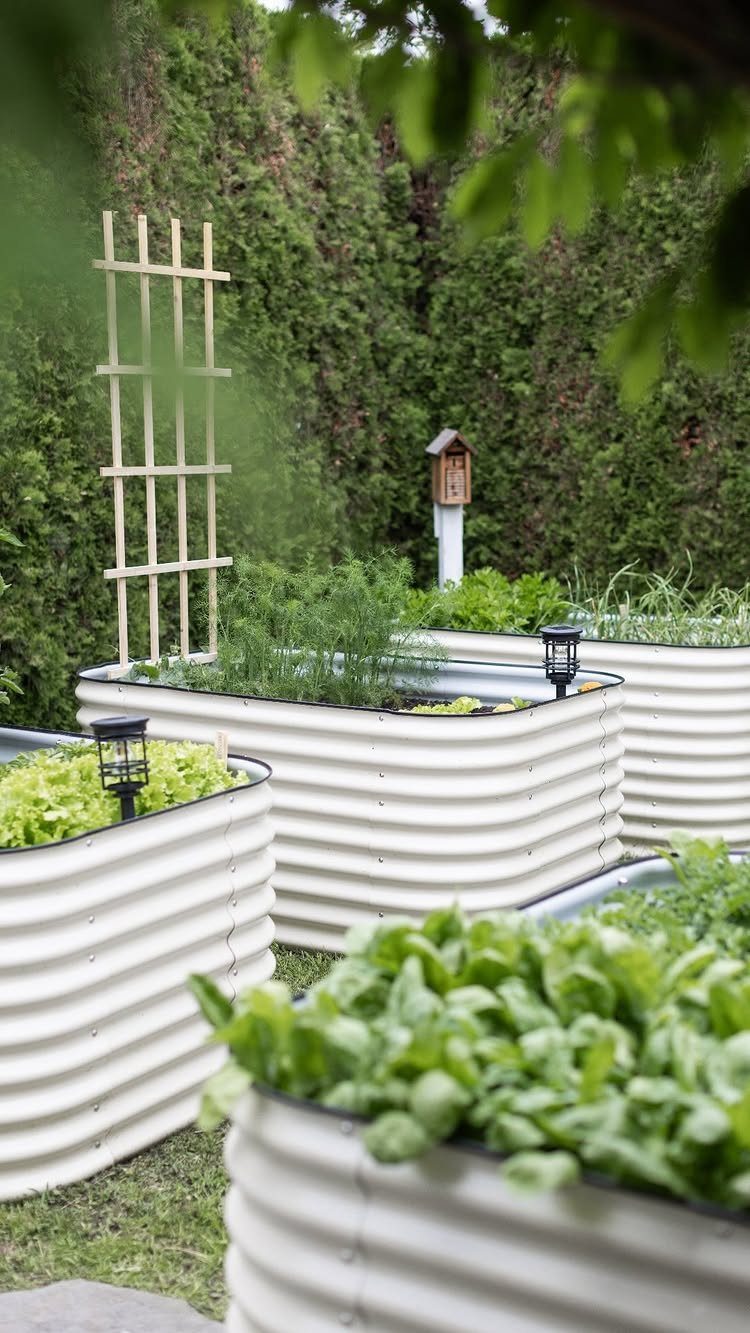
Raised beds turn lousy backyard soil into ground you can actually grow in. I like corrugated metal for the clean edge and the way it warms up early in spring, though wood works fine if you line it.
6 hours of sun is the minimum for vegetables and most herbs. Gravel between the beds keeps your shoes clean and lets you tend plants without compacting the soil.
Start with one bed, get the watering rhythm down, then add another. A single raised bed holds more than you’d think once you pack it in tight.

4X2X1FT GROWING SPACE: This oval raised garden bed measures 4 x 2 x 1 ft, providing 7+ cu. ft. of organized growing space for vegetables, herbs, flowers, strawberries and selected root crops. Its compact footprint fits naturally into backyards, lawns and small outdoor gardens while keeping plants easy to reach and maintain.
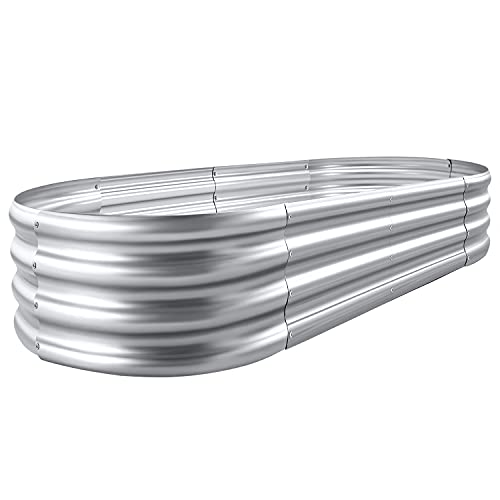
Each raised metal garden bed size: 4×2×1ft ,7.14Cu
2. Plant Selection for Scale
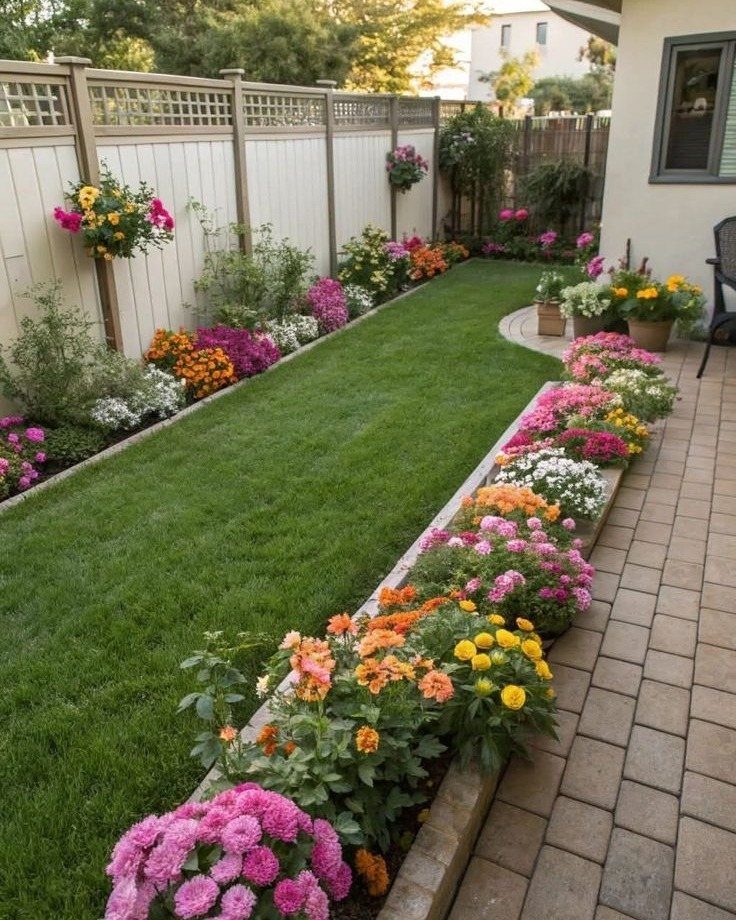
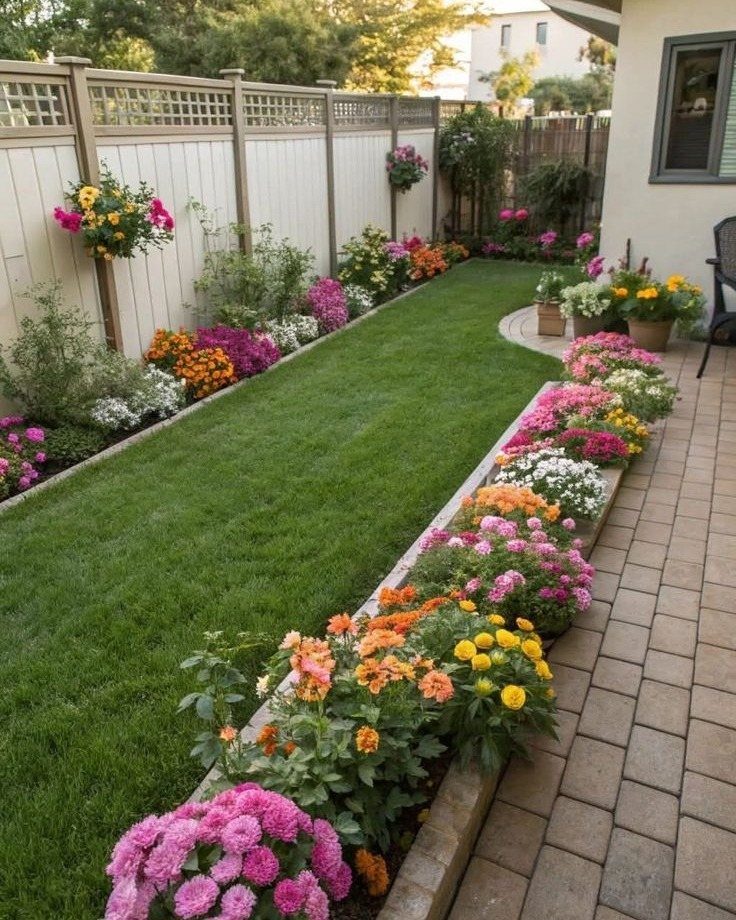
A narrow strip of grass flanked by oversized shrubs stops looking like a yard and starts looking like a maintenance problem. Plants that finish at half your fence height keep the walkway open and the beds readable from the door.
I pick 3 plants and repeat them. One grass for texture, one flowering perennial for color, one shrub for structure.
Salvia, hydrangea, moor grass: that kind of limited palette reads intentional rather than crowded. Check the mature spread on the tag, not the gallon size in your hand.
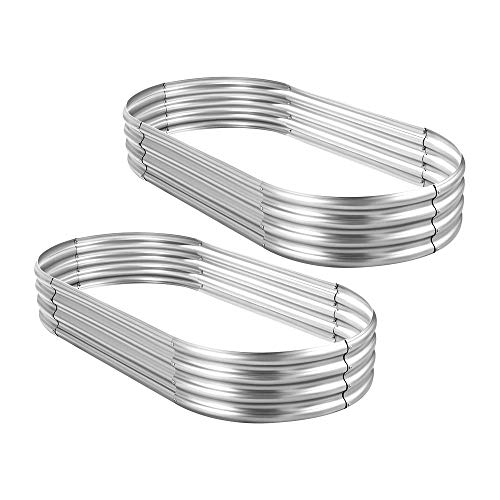
Each raised metal garden bed size: 4×2×1ft , 7Cu

Raised Garden Bed - Add a new level of convenience to your gardening experience with the Galvanized Raised Garden Bed. Enjoy expanded yield and a more assembled garden layout with this garden accessory, each sized at 120 cm X 60 cm x 30 cm.
3. Potager Garden
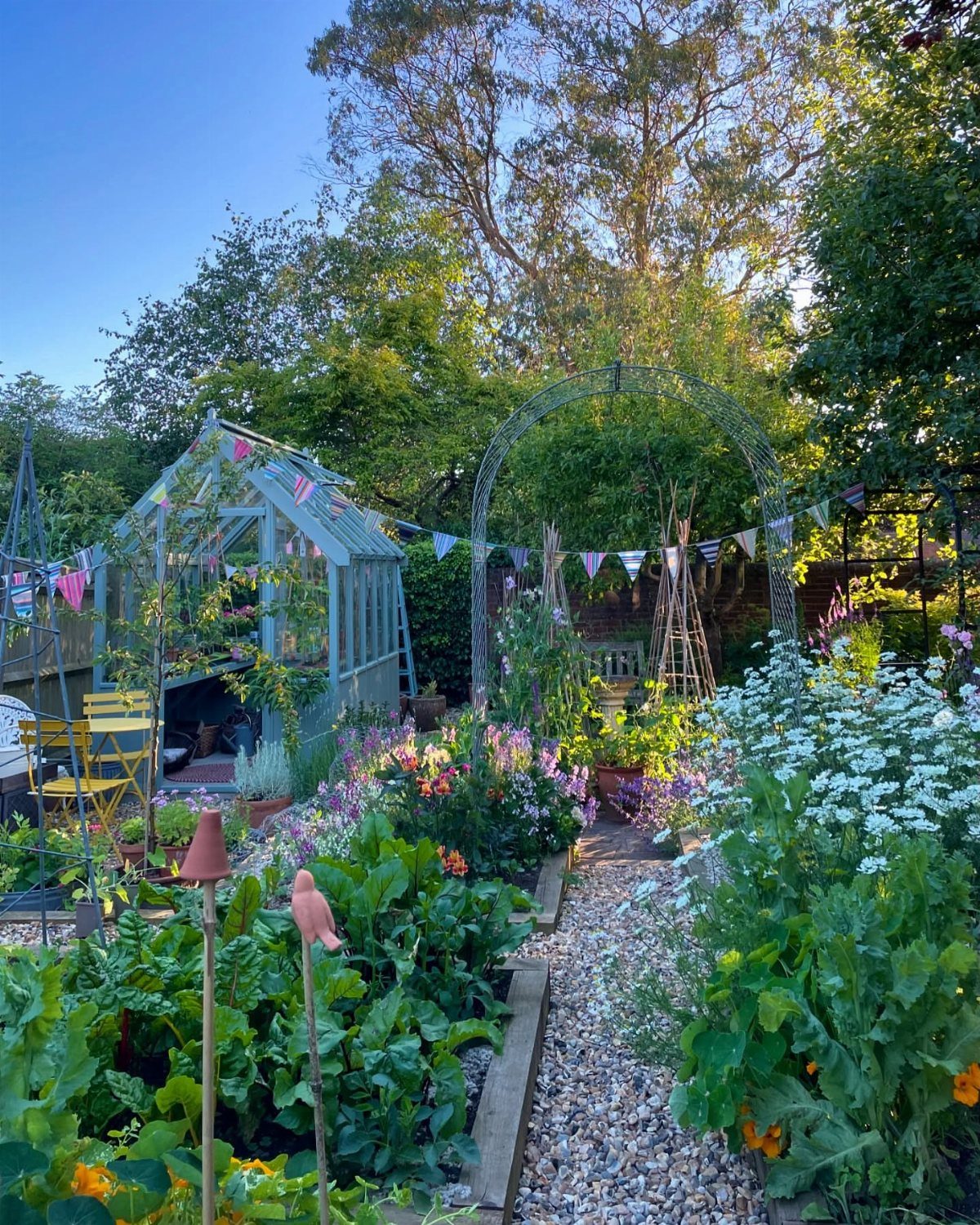
A potager mixes vegetables, fruit, and flowers in the same bed, which sounds chaotic until you see it done. Gravel paths keep the geometry clean and your boots out of the mud.
South- or west-facing spots get the 6 hours of sun that tomatoes and most fruiting plants need. I put the tallest things, pole beans or a small greenhouse, toward the back so they don’t steal light from the lower stuff.
The bunting is optional; the sitting area near the house is not, because you’ll want somewhere to rest after turning the compost.

Innovative Space-saving Design: maximize your gardening potential with our stackable wall planter system; Each piece measures 9.45" x 5.71" x 5.51" and features two pockets, The overall dimensions are 47.5"x33"x5.5" offering ample growth space for a variety of plants; Nice for Fence Balcony Wall Decor, these vertical wall planters change limited spaces into gardens effortlessly
4. Living Wall
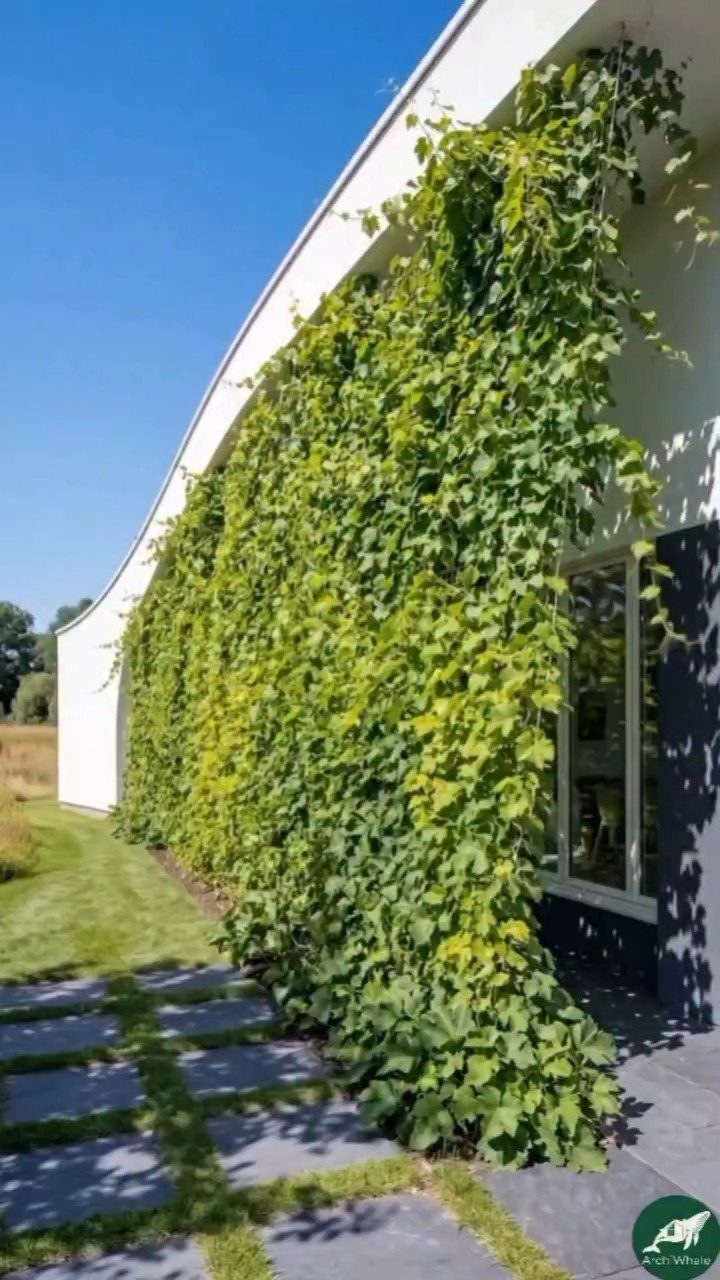
Vertical planting buys back floor space you didn’t know you had. Mounted pots or pocket planters on a fence work the same way if you do not have a wall to cover.
Herbs and salad leaves do well in pockets because you harvest often and they don’t need deep soil.
A green wall on a boundary turns enclosure into something alive. Artificial panels exist if you want the look without the watering, though I find the real thing becomes its own reminder system: wilted plants are hard to ignore.

Each pack includes 10 steel edging panels (40 inch length each, covering 33 feet total), including 2.5 inch underground stakes for strong anchoring, leaving 2 inch above ground for a clean landscape edging.
5. Divide Your Space
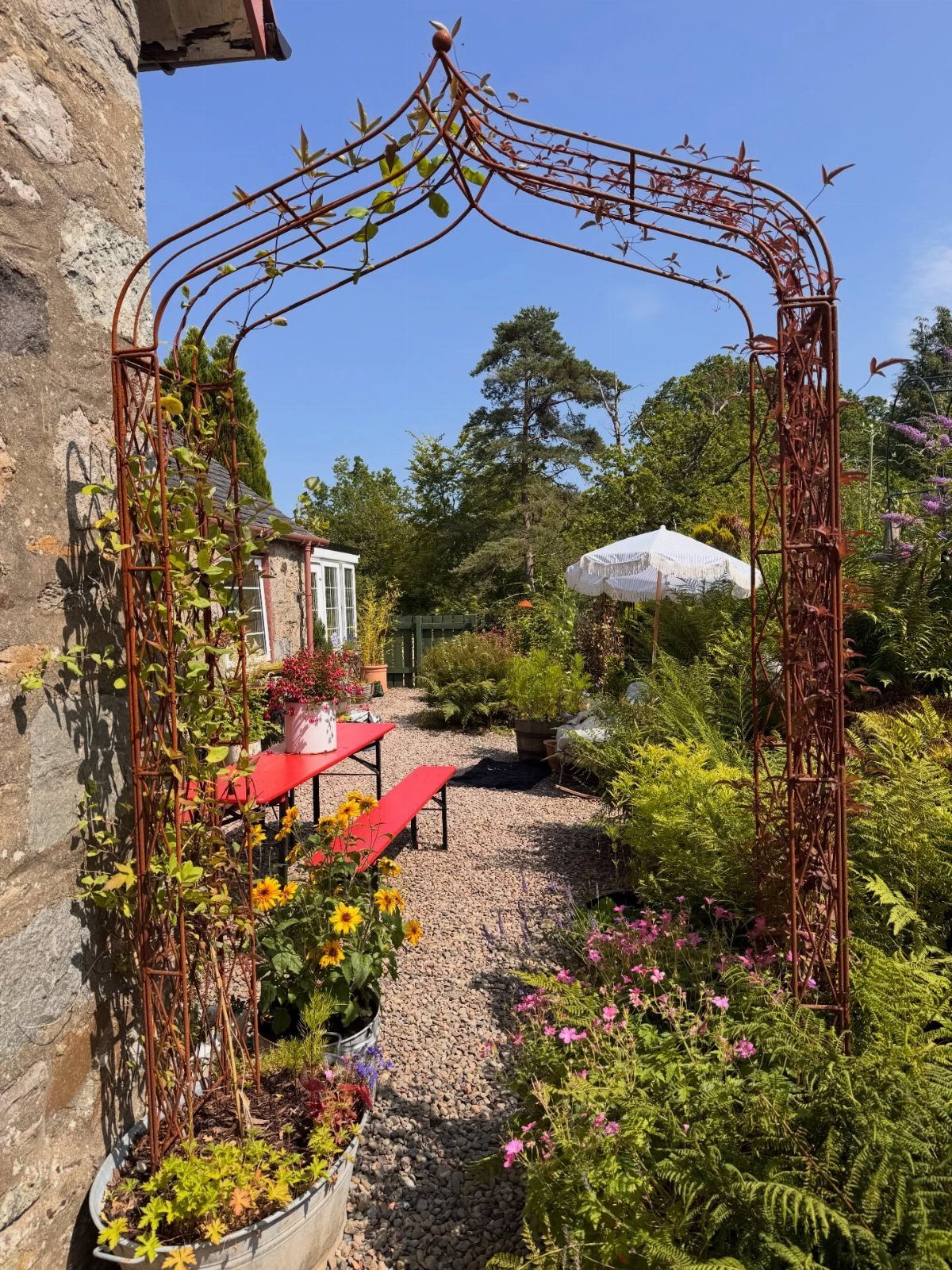
An arbor planted in the right spot makes two rooms out of one yard. A partial screen framing a dining area tells you where the eye should land.
I break small spaces with whatever I have: a bed of tall grasses, a half-screen of espaliered fruit, even a shift from gravel to lawn underfoot.
You are not hiding the whole garden, just pausing the view so you walk through instead of scanning across. A tiered yard especially benefits; each level gets its own moment instead of reading as one steep problem.
Garden designs for small gardens should aim for a ratio of around 50 per cent planting and furniture to 50 per cent paving or decking. This will help create a patio that is easy on the eye without being overcrowded.
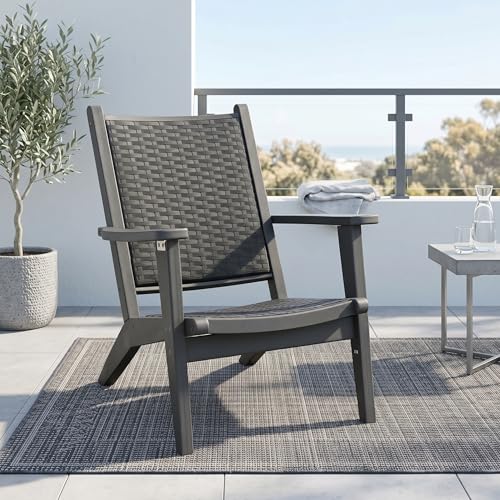
【 Complete 2-Piece Set – Chair + Matching Side Table】This set includes one oversized wicker adirondack chair and one HDPE side table (same durable material). The table is the perfect height to hold drinks, books, or a fire pit snack tray. No need to buy separately – ideal for creating a cozy outdoor conversation nook on your patio, deck, or balcony.

🍧【HEAVY DUTY】Our outdoor backless benches for fire pits are made of heavy-duty iron with a smooth, non-toxic coating. The T-shaped structure makes the fire pit benches more sturdy, with a maximum weight capacity of up to 300 lbs.
6. Outdoor Lighting
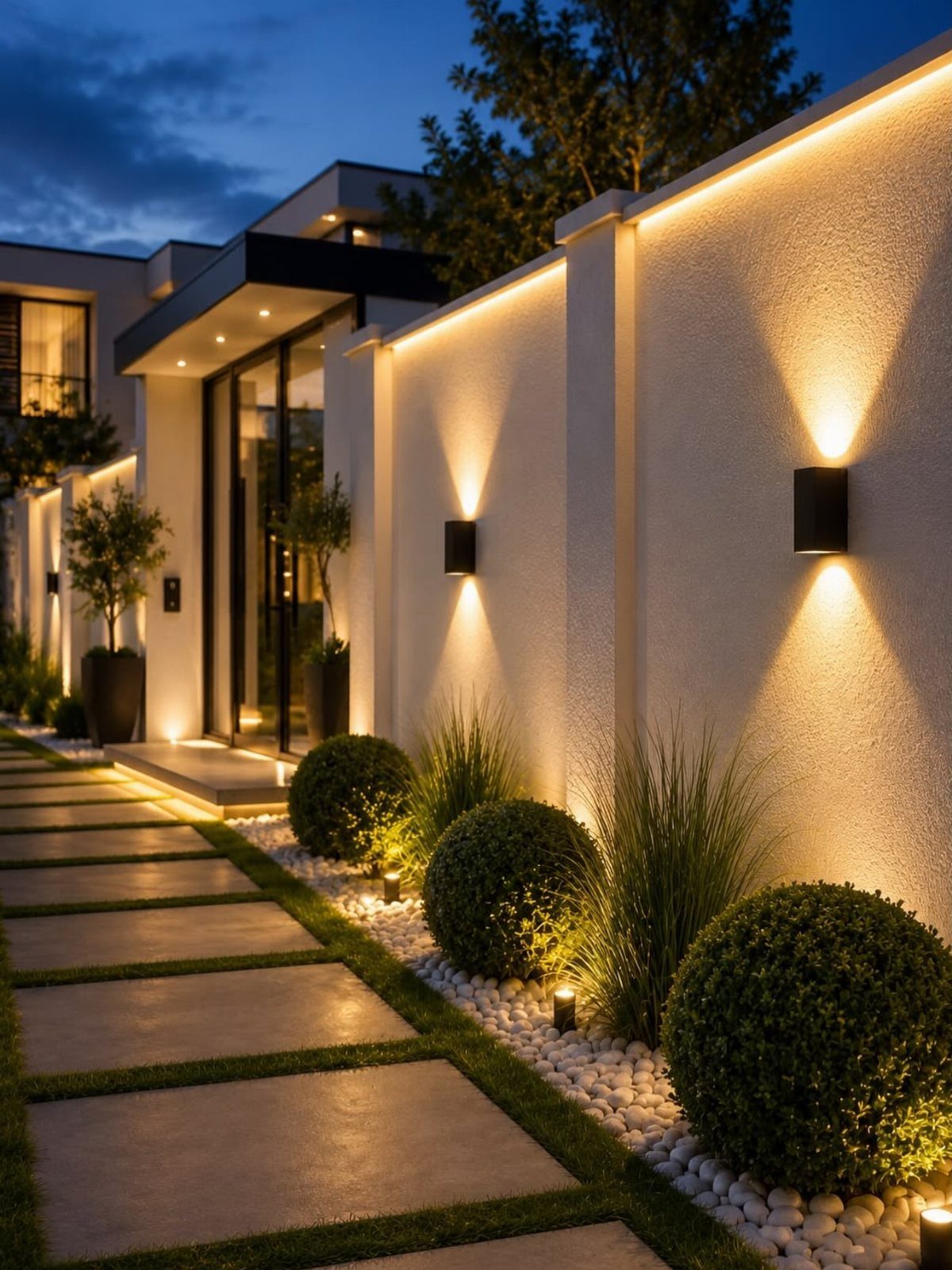
Light changes what a small yard is good for. Sconces, ledge lights, and ground spots working together is the professional version; you can get most of the effect with solar spots pushed into the ground and a string of lanterns.
Yellow-toned light is easier on moths and bats than white. Waterproof string lights last through weather you wouldn’t sit out in anyway.
I add one light at sitting height, near where I actually drink coffee or talk after dinner, rather than washing the whole space. You are extending the hours you use the yard, not turning night into day.

SPACIOUS GROWING SPACE WITH EXTRA PLANTING DEPTH:Measuring 91.5" L × 47.3" W × 22.06" H, this galvanized raised garden bed holds approximately 412 gallons of soil, providing generous planting space and extra depth for vegetables, herbs, flowers and fruits. The spacious design allows roots to grow naturally while supporting tomatoes, peppers, cucumbers, broccoli, beans, lettuce, carrots, potatoes and other popular garden plants. Ideal for backyard gardening, raised vegetable gardens and outdoor planter box projects.
7. Water Features
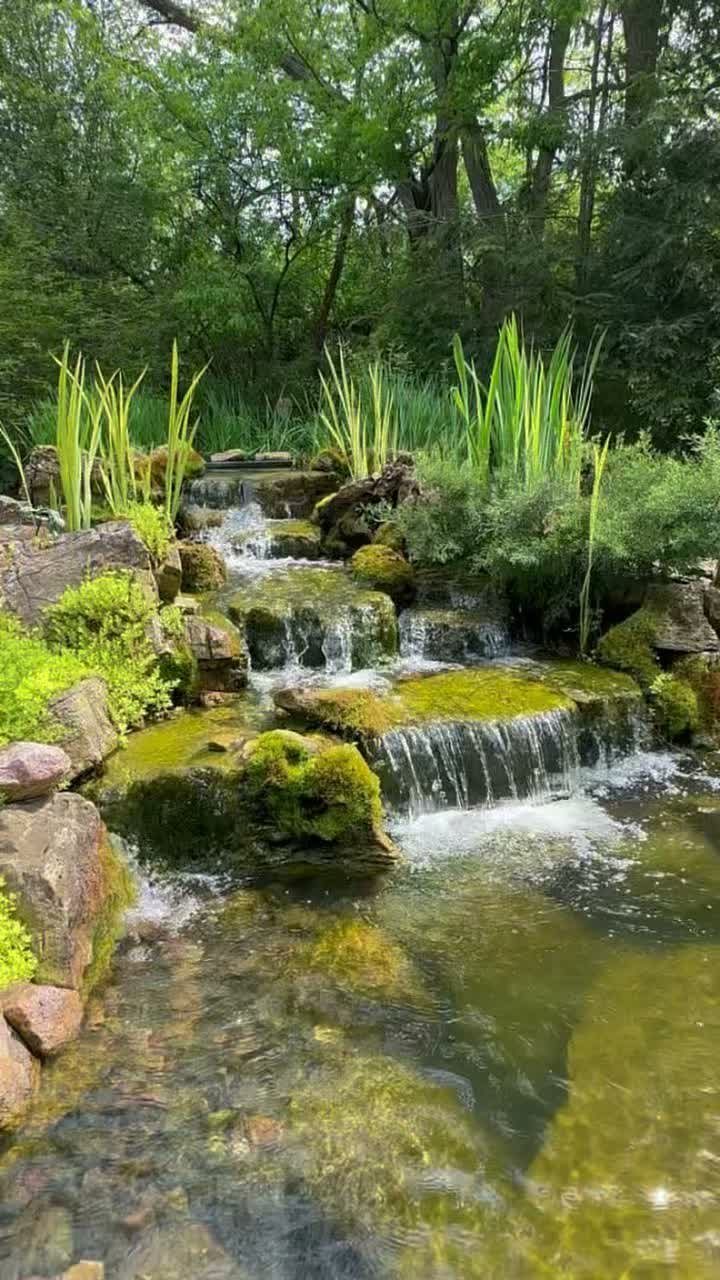
A small water feature does the work of a whole planting bed. Running water covers traffic noise and gives the yard a reason to be visited after dark.
Solar pumps need no wiring; a buried reservoir with a stack of fieldstones on top is the weekend version.
Mosquitoes breed in still water, so keep the pump running or add mosquito dunks. I put mine where I could hear it from the kitchen window; the sound mattered more than the view.
8. Native Plants
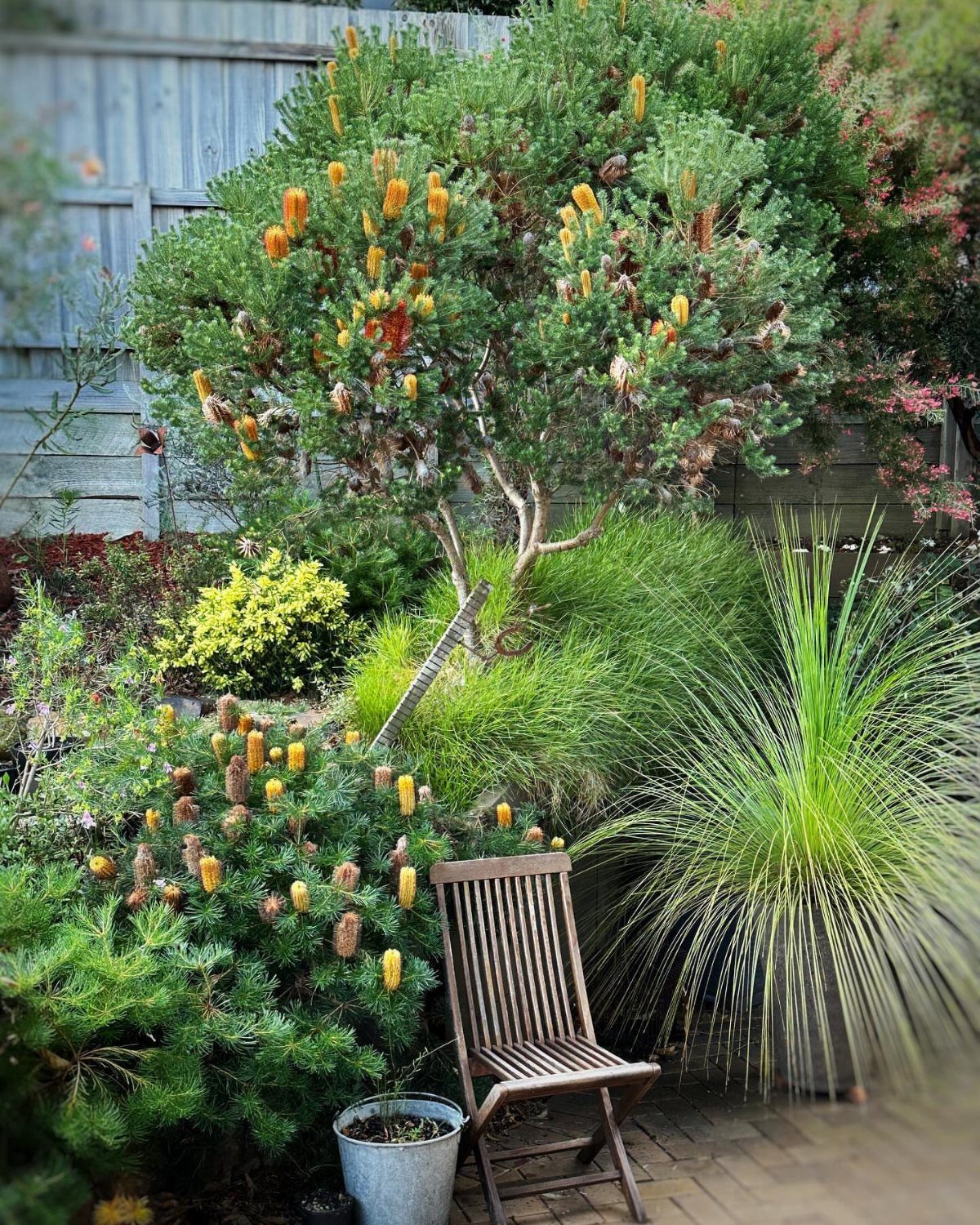
Native plants earn their keep by knowing the local weather already. No coddling through a dry July, no replacing what froze in January.
Banksia and local grasses handle poor soil and skip the fertilizer schedule that hybrids demand. The trade is bloom size; natives flower smaller and shorter.
I check county extension lists for what actually belongs here, not what the nursery labels "native-friendly." Wildlife shows up without invitation: pollinators, birds, the whole working garden.

【Reliable Weight Support】 Thanks to premium materials and secure interlocking fasteners, the entire unit can support up to 110.23 lbs when wall-mounted, giving you peace of mind that your plants are safely in place.
9. Benches That Double as Storage
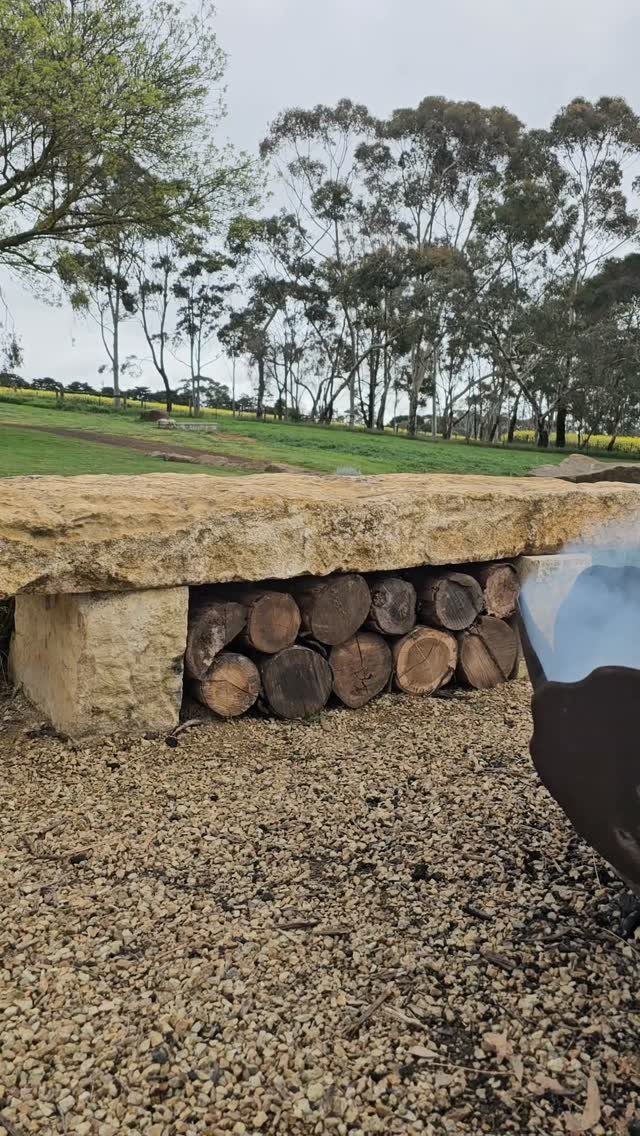
Stone benches with hollow bases hide a season’s worth of firewood, cushions, or the tools you do not want to walk back for.
A flat-topped wall built to knee height reads as seating and swallows logs underneath. Dry stone needs a skilled hand; concrete block capped with poured slab is the DIY route.
Leave gaps for air or the wood mildews. I would line the cavity with hardware cloth if rodents are active in your yard.

【Create Clean Landscape Borders with No Dig Installation】Create neat, professional-looking edges around flower beds, lawns, pathways, and garden features without trenching or heavy digging. Simply position the edging and secure it with the included spiral spikes for a fast DIY landscape upgrade.

Durable & Flexible Material GTSABWAY garden edging is crafted from premium galvanized steel, ensuring superior durability and flexibility. Easily shape it into straight lines,curves, circles, or unique contours ,without cracking,Can withstand all kinds of weather conditions, ensuring long-term durability and reliability. providing reliable Garden Border solutions.

【Rustproof Metal – Weather-Resistant for All Seasons】 Made from rust resistant galvanized steel with a durable black coating, this corrugated metal landscape edging stands up to rain, sun, snow, and extreme temperatures. Perfect for long-term outdoor landscaping in any climate.
10. Ground Cover
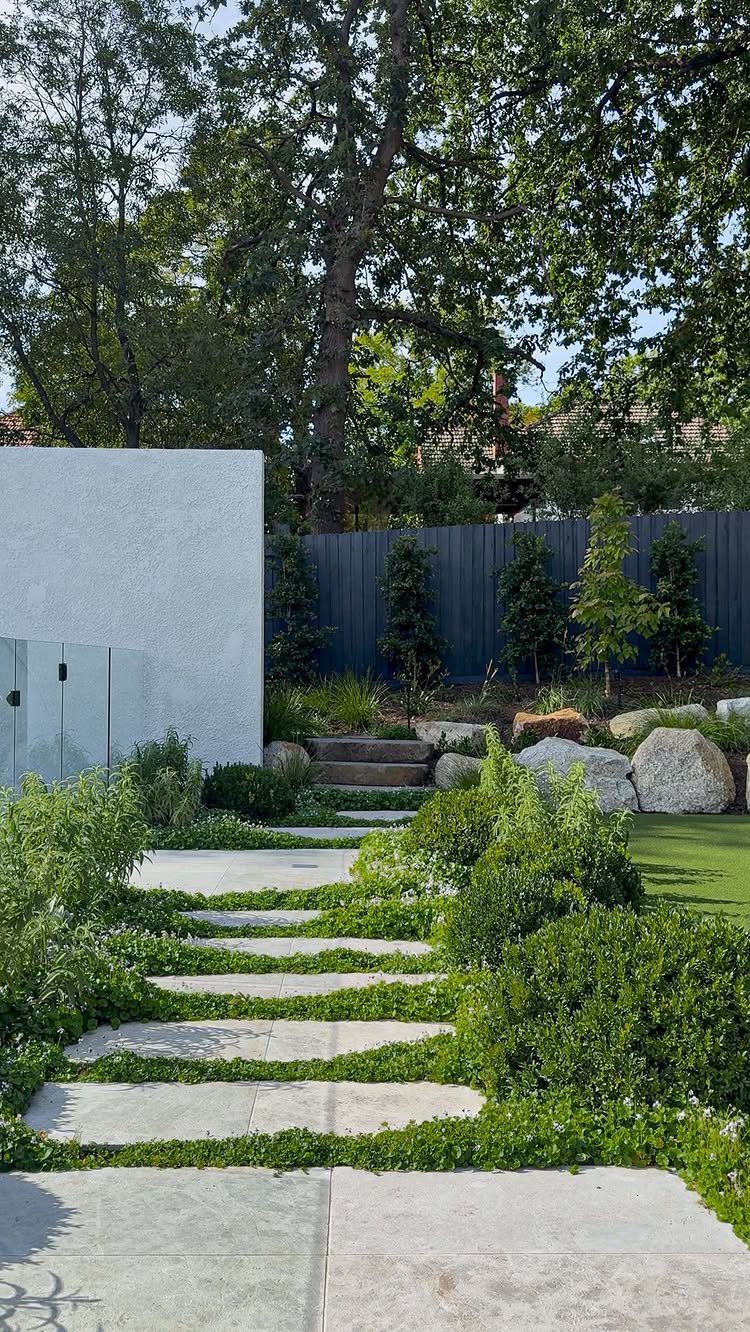
Ground cover between pavers softens hard surfaces and shrinks the weeding list. Creeping thyme tolerates foot traffic and fills the joints without swallowing the stone.
Check the spread rate before you plant; thymes and sedums crawl slowly, creeping jenny runs fast.
Pavers need a sand base pitched away from the house so water does not pool. I set mine with half-inch gaps, which looked wide at first and filled in within a season.
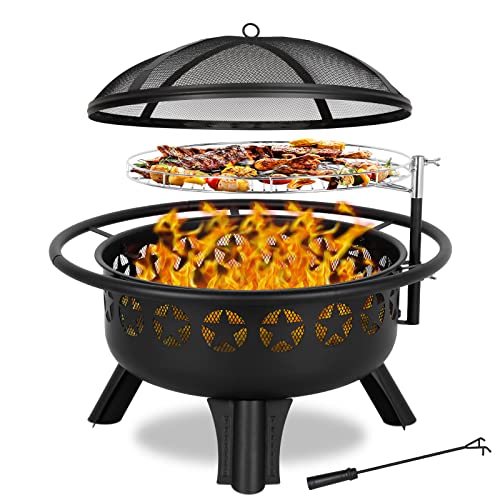
【2 in 1 Outdoor fire pit with grill】: 31” Dia x 24” H, this wood burning fire pit features a multi-functional design ideal for outdoor heating or grilling. The fire pit with cooking grate is designed with an outer ring around the central fire area allowing for easy movement. The creative pentagram vents help increase airflow for the firewood and brings a brighter flame. Air circulation burns longer and vigorously, and a mesh cover can prevent from flying sparks.

11. Gravel Garden
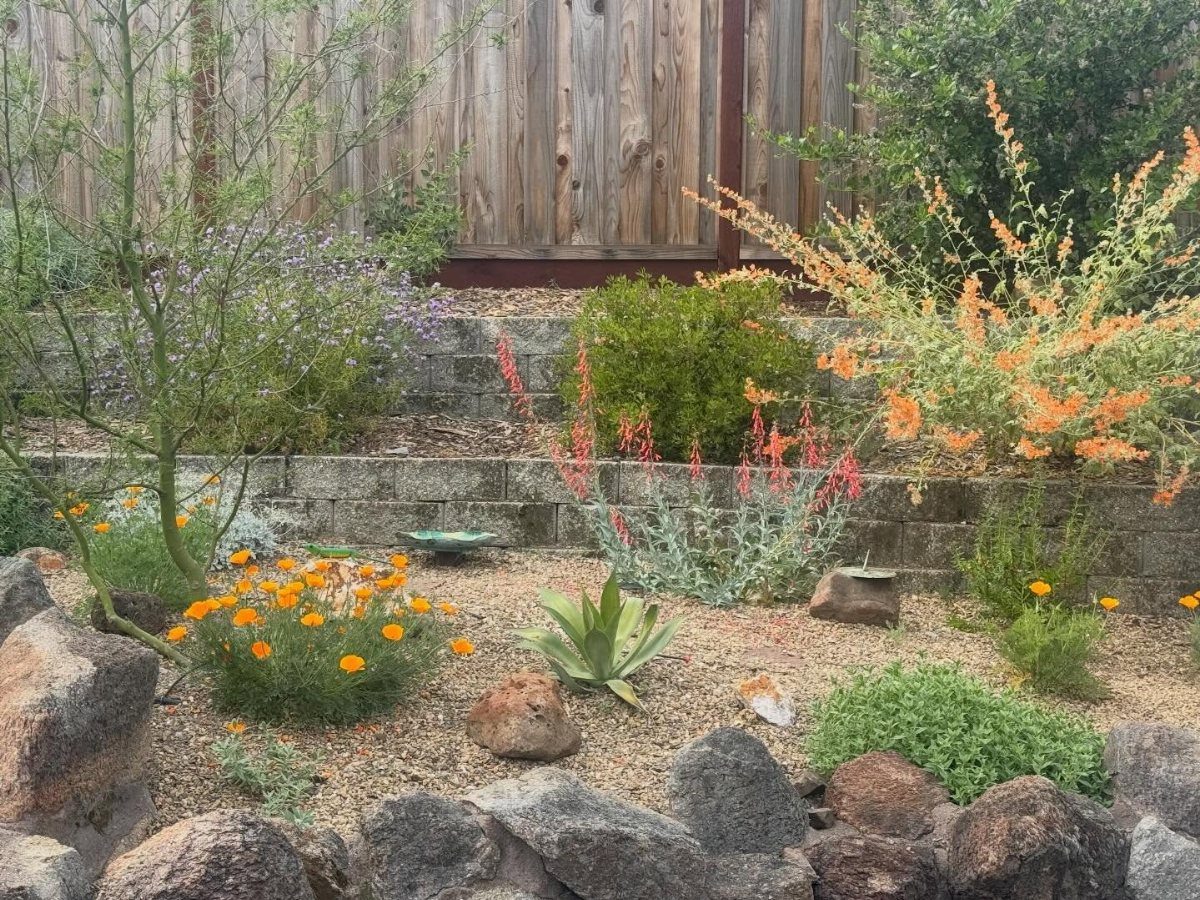
Gravel gardens replace lawn with something that never needs mowing and barely needs water. Sharp drainage in a terraced bed lets succulents and dry-country flowers thrive where turf would brown out by August.
You are committing to weeding through stone until the ground cover fills in; seeds blow in and find purchase before the mat forms.
A weed barrier underneath helps, though roots eventually punch through. I would skip this if your yard already collects leaves from neighboring trees; raking gravel is tedious work.
12. Layered Planting
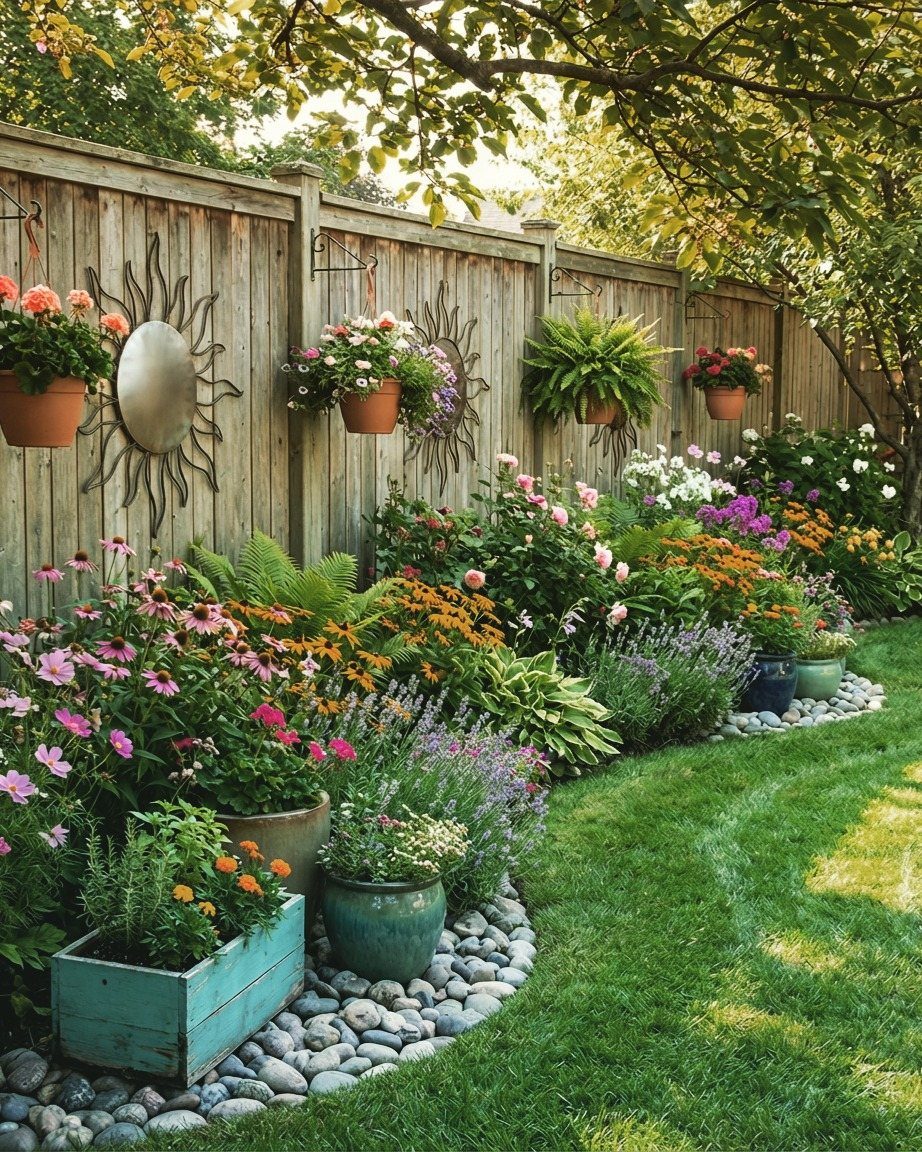
Layered planting makes a narrow border read as deep by stacking heights against the fence. Ferns at the base, mid-size perennials above, a climber or tall grass at the back: the eye travels up instead of across.
The fence becomes the backdrop; without it, the tallest layer needs to come from a shrub or small tree.
Hanging baskets and pots are portable layers you shift when something underperforms. I keep the foreground low enough to see over from the path; nothing kills a layered bed faster than a front row you cannot see past.
13. Install a Pergola
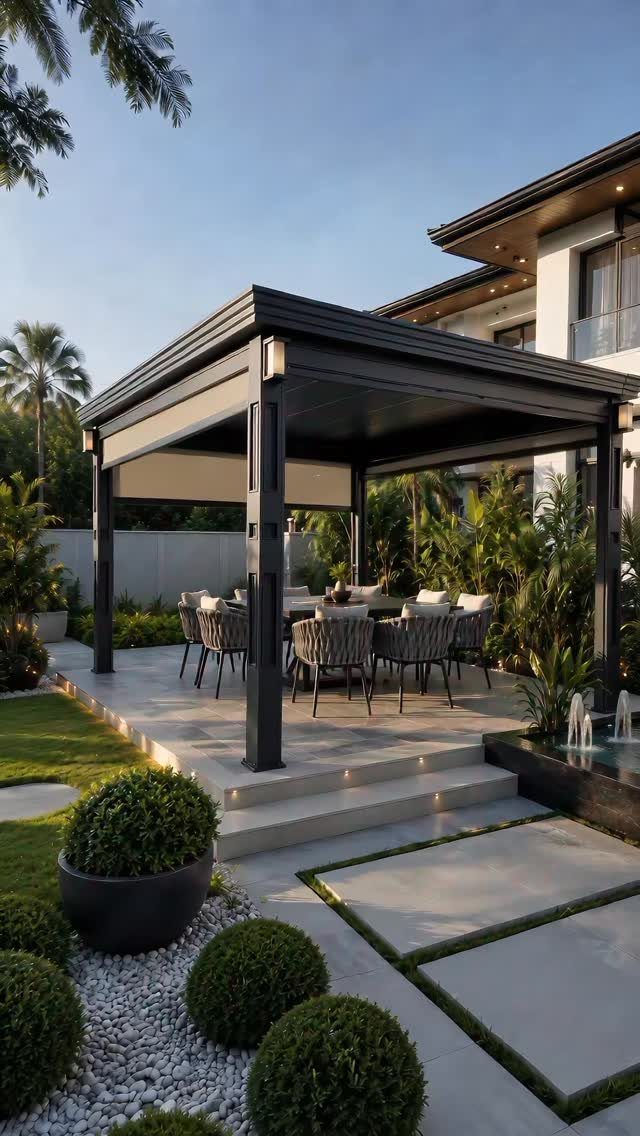
A pergola turns any patch of sun into a room you can sit in. A louvered aluminum frame in anthracite lets you angle the slats to catch morning light and block the harsh afternoon slash.
A standard kit size covers a six-seat table with walking room around it.
Set the posts on a poured concrete pad or pinned to an existing patio; freestanding needs bracing against wind. I would run low-voltage wire during assembly rather than stringing lights after, when the brackets are already buried in jasmine.
Vines up the posts soften the geometry in 2 seasons. Wisteria is traditional and heavy; clematis is lighter and easier to correct when it wanders.
14. Use of Trellises
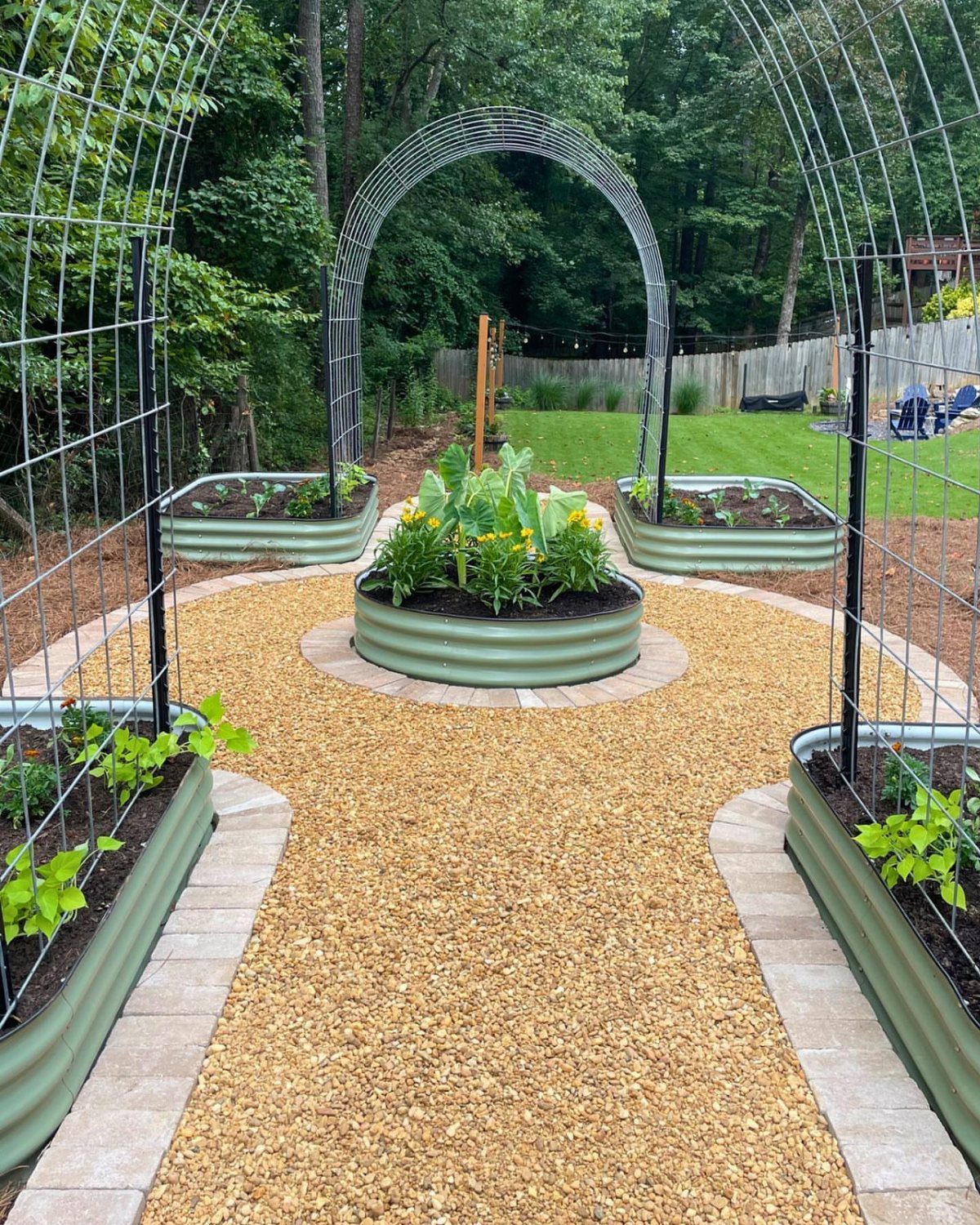
Arched trellises over a path turn a vegetable row into a threshold you walk through.
Metal arches connecting raised beds on either side of gravel are the practical core: the trellis carries the vine, the path carries you, and neither competes for the same ground.
Corrugated beds match the trellis in metal, though wood posts and cattle panel achieve the same arch for less.
Set the legs deep into packed soil or concrete footing if your ground softens in spring rain. Beans and peas find the wire on their own; tomatoes need tying every few days.
One crop per side keeps air moving. Overcrowding is the mistake you make in year one, when everything looks small in May.
15. Small Bench Surrounded by Flowers
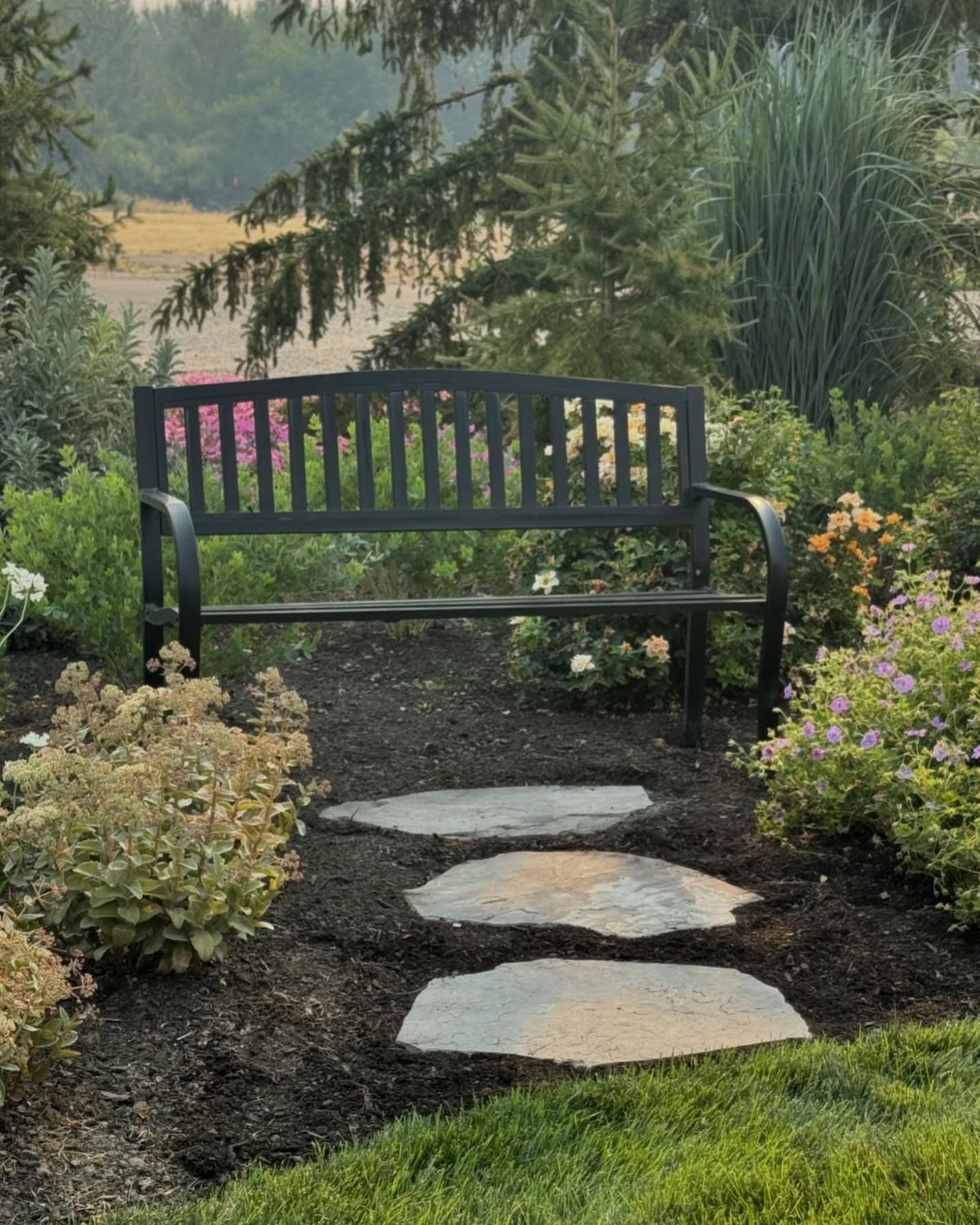
A bench placed inside the planting rather than at the edge changes how you see the garden. You are no longer looking at it; you are in it.
3 stepping stones leading in, as above, slow the approach and signal that this is a destination, not a throughway. The bench itself can be wood, metal, or poured concrete; what matters is the siting.
Back it against a hedge or tall grass so the view opens forward, and keep the foreground low enough that your knees do not knock against stems.
I would set the bench before planting the surround, so you test the sight lines from sitting height. Move it once if the sun falls wrong at the hour you actually stop working.
16. Use of Hardscape
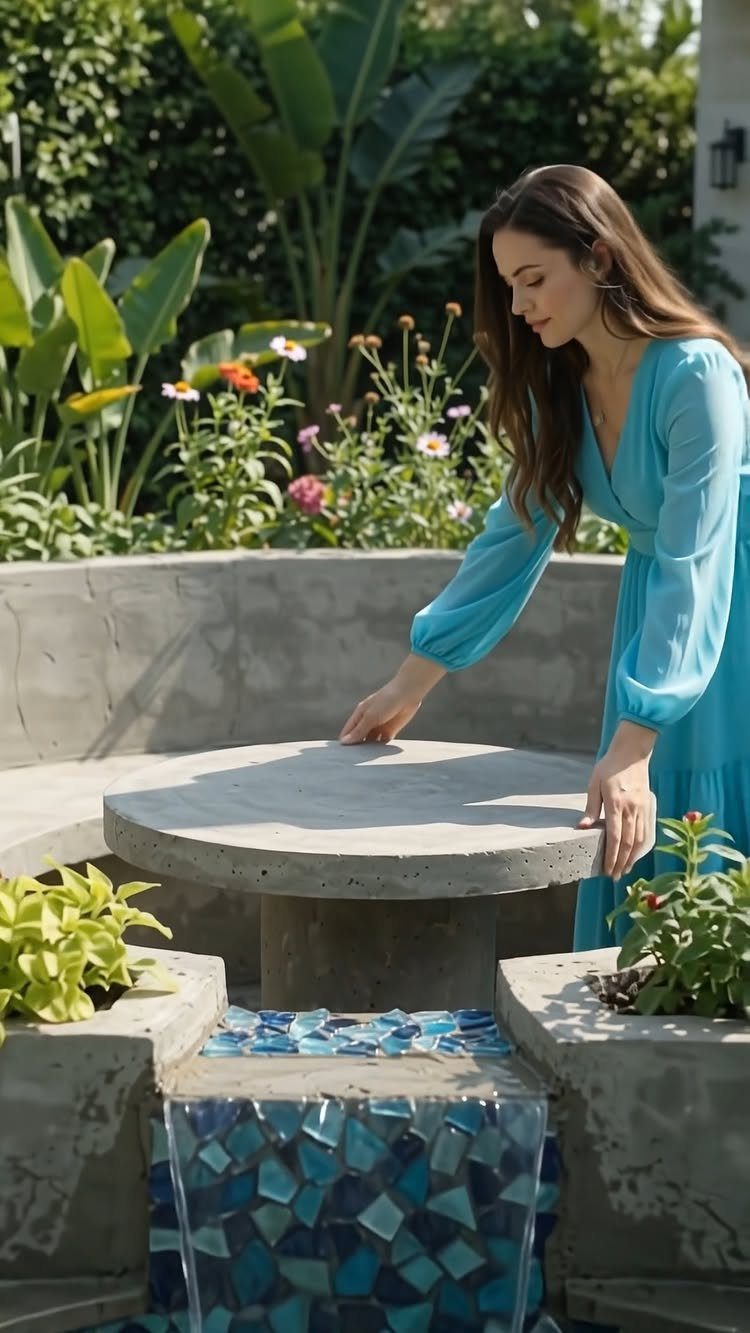
Hardscape is the bones that survive when the roses do not. Concrete, stone, and gravel give structure to a yard that shifts with every season.
Poured concrete is the DIY path if you can build forms and handle a mixer; prefab pavers lock together faster and let you adjust. Mosaic on the water feature adds surface interest without demanding the maintenance of a planted border.
I would not hardscape most of a small yard. The eye needs the contrast, and runoff needs somewhere to sink in.
17. Trained Fruit Trees Against Walls
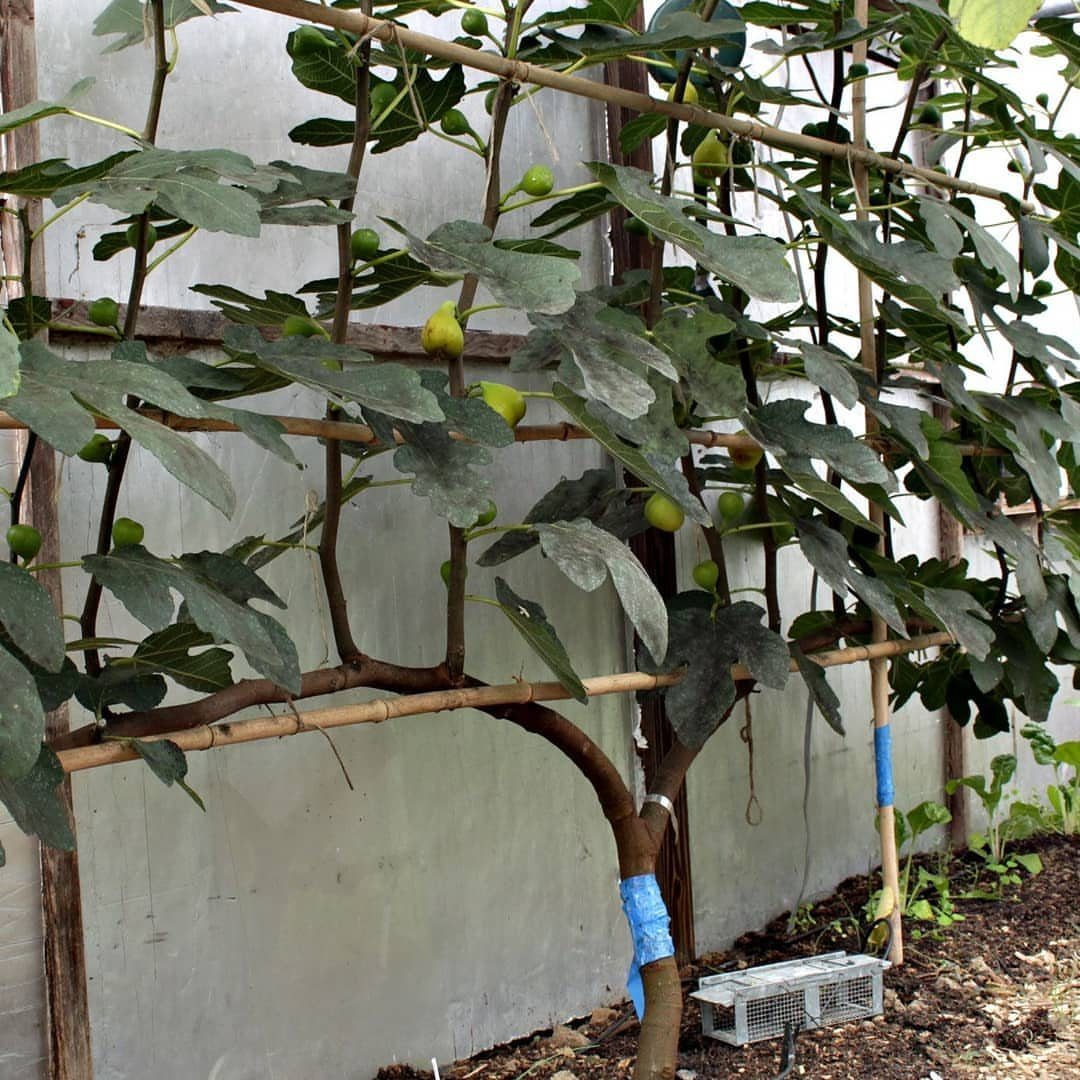
Espalier presses a fruit tree flat against a wall so it occupies inches instead of yards. Horizontal wires or bamboo, as above, hold the branches in a two-dimensional plane that catches sun and sheds rain.
Fig, apple, and pear take to this best; stone fruit is harder to keep balanced.
Start with a one-year whip and cut to the lowest wire, training two shoots left and right. The early years are shaping, not harvest, which tests the patience of anyone planting for groceries.
A wall facing south or west gives the ripening hours that fruit needs. The back side stays bare; plant nothing there that resents shade and root competition.
18. Fire Pit
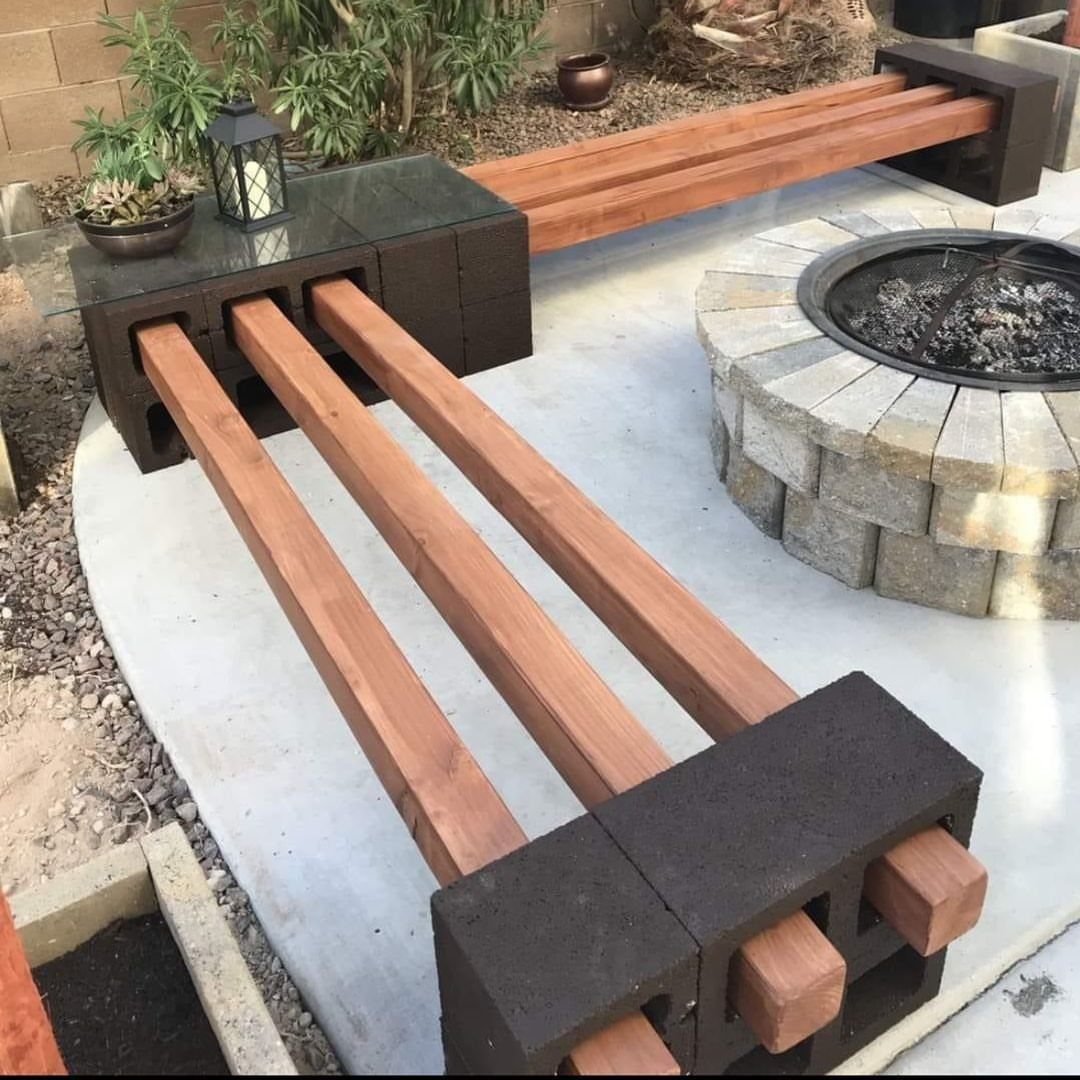
A fire pit extends the usable season at either end, minimum. A stone ring on a gravel base with DIY benches nearby is the affordable path: cinder block and timber plank, painted or left raw.
Dry-laid stone shifts in frost; a poured concrete ring or steel insert lasts longer.
Keep the pit well back from overhangs and fences, more if your area carries wildfire risk in late summer. Hardwoods burn longer and cleaner than softwood; split and seasoned to 20% moisture, they throw heat without the sparks of resinous pine.
I would store a mesh cover nearby. An unexpected wind turns a pleasant evening into a patrol for embers faster than you would think.
19. Pollinator-friendly Plants
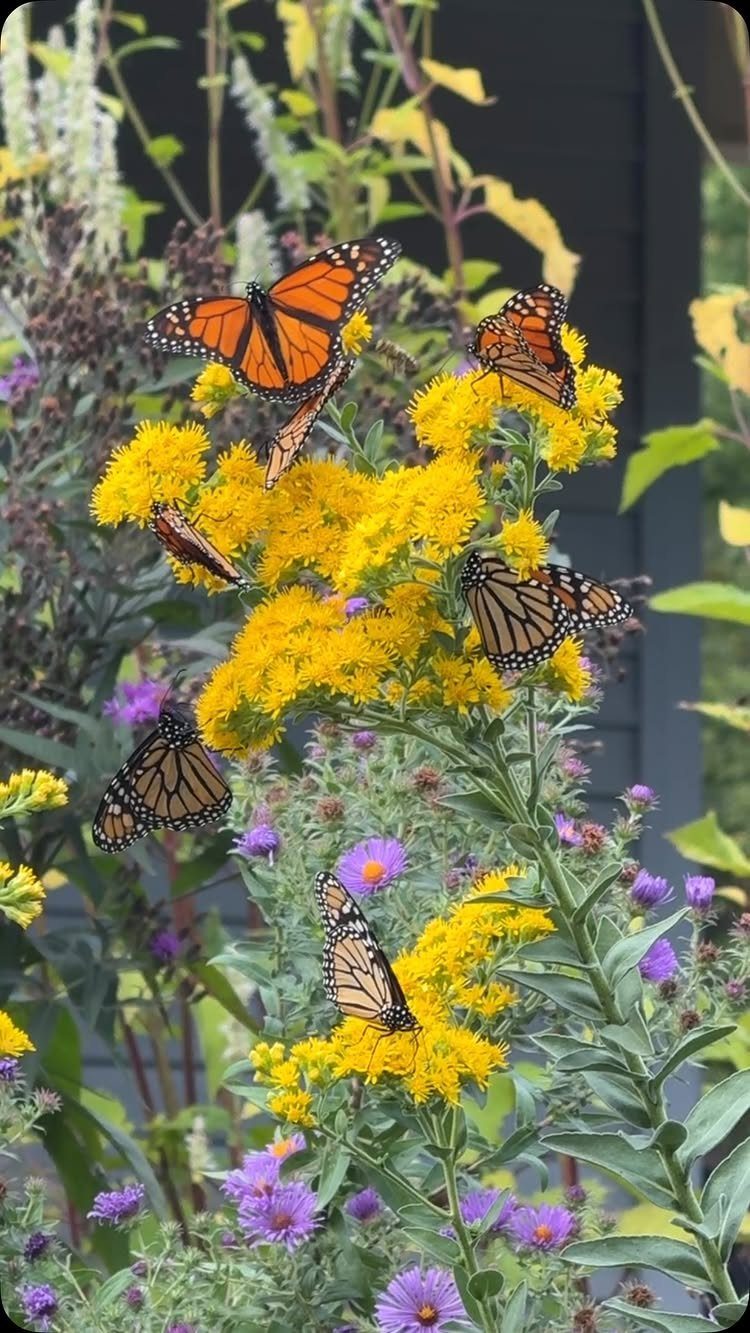
Goldenrod and aster timed together feed monarchs through late summer when earlier blooms have finished. Both are perennials that return on their own, so the planting pays off past the first season.
Check your county extension guide before buying; a plant sold as "pollinator-friendly" may not match your actual bees and butterflies.
Native strains of goldenrod stay lower and spread less than the roadside type. I would group them in drifts of one color rather than mixing every plant; insects find the mass easier to locate.
The trade is early summer: these two flower late, so add penstemon or bee balm for June coverage.
20. Fairy Garden
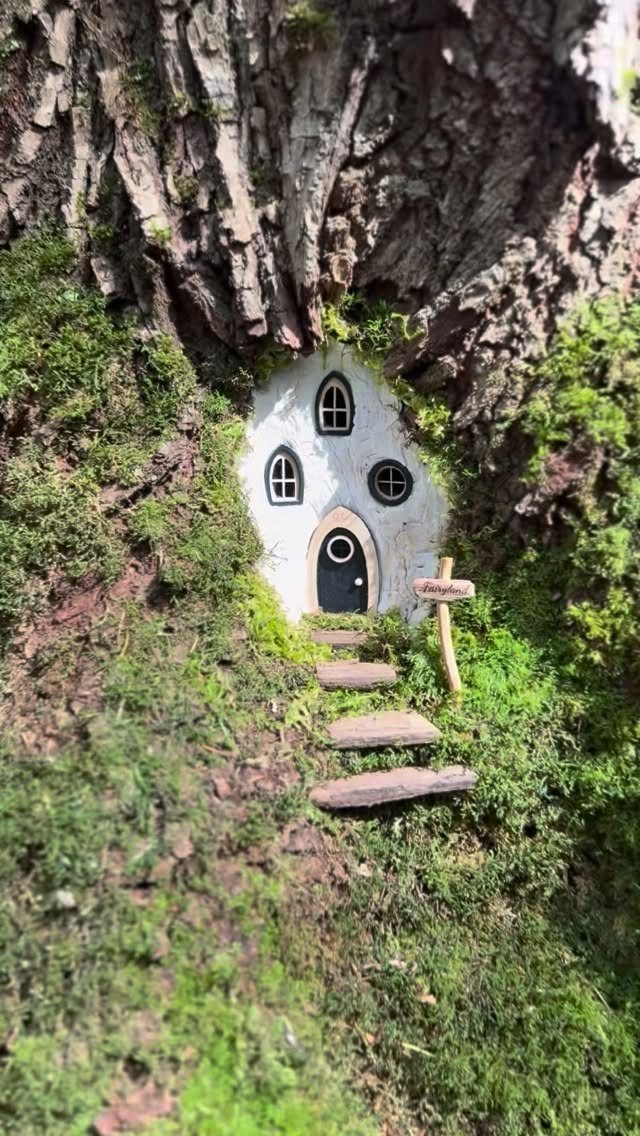
A fairy garden shrinks the scale so children can design the whole world. The planter or tree crevice becomes the landscape; pebbles are boulders, moss is lawn, and a tiny house with a sign finishes the story.
Weatherproof accessories last longer than painted wood, though part of the charm is swapping in found objects.
I would decide up front whether this stays portable or lives in one spot; moving a planted bowl is heavy, and fixed installations in tree bark commit the tree to the role.
Check that soil and moisture suit whatever else shares the container. A fairy garden dies fast when the moss needs shade and the surrounding flowers demand sun.
21. Wheelbarrow Garden
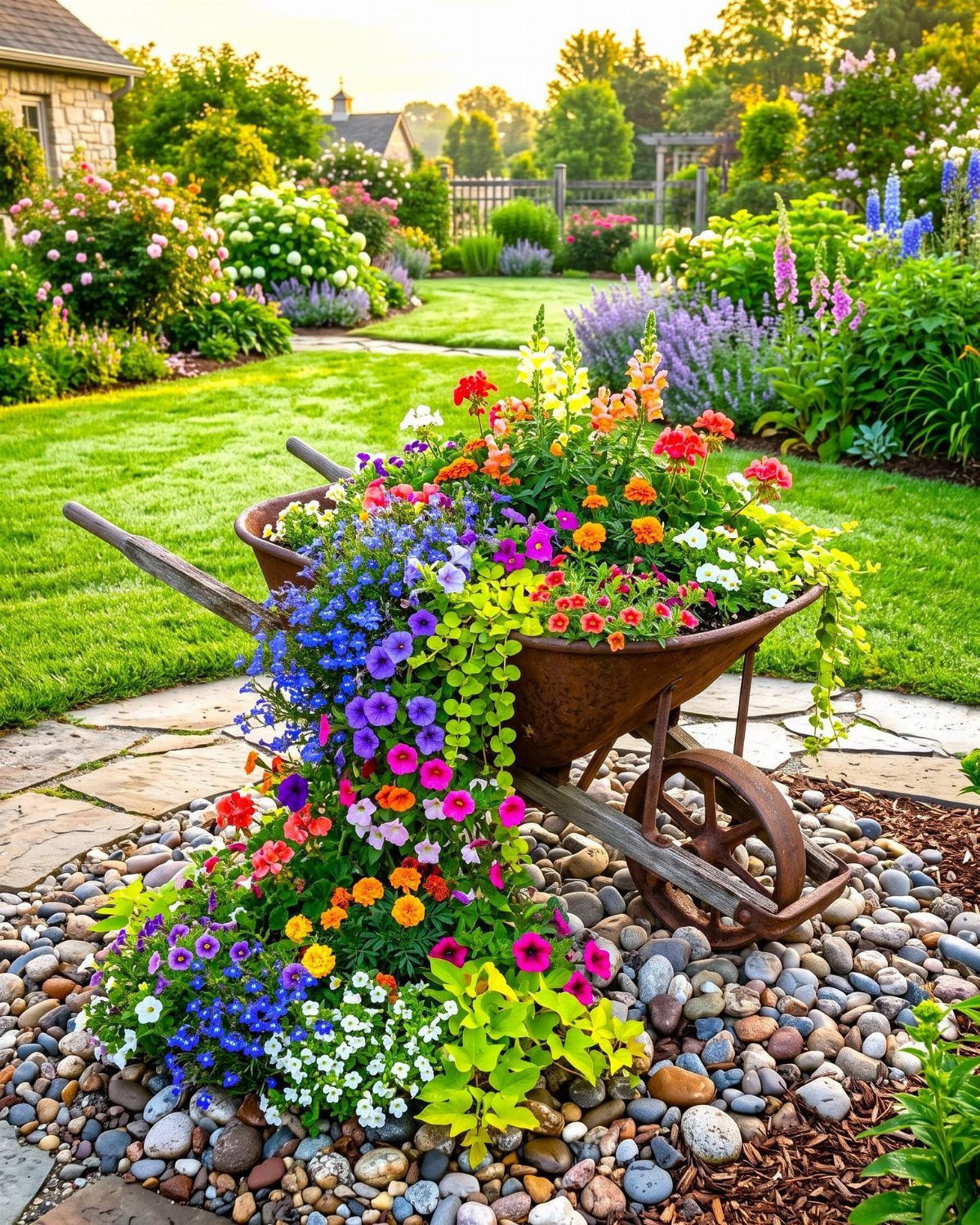
An old wheelbarrow with a rusted bed is already half a planter; the walls hold soil and the handles let you move it.
Drill drainage holes through the bottom so roots do not sit in water, then line with landscape fabric to keep soil from washing out with each rain.
The mobility is the real feature. Shift the whole garden to catch morning sun, move it off the patio when you need the space, or roll it to shelter before a frost.
I would pick trailing plants for the front edge so they spill over and hide the metal rim; petunias or calibrachoa both do exactly that.
A wooden-handled barrow needs checking for rot; metal handles last but heat up in full sun.
Planning and Layout Tips
Start with what your yard actually gives you, not the fire pit you saw on Pinterest. Map where sun falls for 6 hours or more, where afternoon heat collects, and where water pools after rain.
A yard that looks blank from the kitchen window needs structure before plants; one that feels boxed in needs layers that pull the eye outward.
Walk the paths you will use. A bench at the back loses its appeal if you have to thread around raised beds to reach it.
Place the sitting area first, then build planting and hardscape around how people move. In a small space, every feature competes for ground; the ones that stay should earn their square footage by getting used weekly, not admired once.
Maintenance Considerations
Low maintenance starts with material choice.
Raised containers keep soil contained and let you spot problems before they spread. Paved surfaces with planter islands remove the lawn entirely.
Native plants cut the fertilizer and replacement cycle because they already tolerate your local dry July and hard frost.
Smaller, shorter bloom is the trade; you are trading flash for reliability. Xeriscaping and artificial turf go further, though I find turf too hot underfoot in direct sun and too sterile against planting.
The sustainable choice and the low-effort choice often overlap, but not always: a gravel garden is both, while a pollinator bed of native perennials takes more planning up front and less work after year two.
Sustainable Gardening Practices
Sustainable design is mostly about letting the yard work with local conditions instead of against them. Rain gardens slow runoff and filter it through planting instead of sending it to the storm drain.
The environmental benefit is also a time benefit. A yard that matches your rainfall and soil needs less intervention: no supplemental watering, no replacing what winter killed, no fighting pests that natives evolved to handle.
Artificial turf and hardscape push this further, though they add heat and reduce drainage. I would balance the two: keep permeable ground where you can, and hardscape only the paths and sitting areas that get daily foot traffic.
Creating Privacy
Privacy fails when it overcorrects. A flat wall of Leyland cypress turns a yard into a green box; layered planting keeps the enclosure while letting air and light through.
Start with what you actually need to block: one neighbor’s second-story window, not every sightline. A trellis with a climbing vine, an airy shrub, or a few stems of tall grass can screen that angle without darkening the whole space.
Mix textures so the screen reads as garden, not defense. A metal arch with beans, a miscanthus bed, or a small tree with lower planting beneath it: each layer catches at a different height.
The fence line is the obvious place, but the most effective privacy often sits between you and the problem.
A partial screen near the seating area shelters where you sit without walling off the rest of the yard. Feeling sheltered matters more than feeling hidden.
Frequently Asked Questions
What is the 3-5-7 rule in landscaping?
The 3-5-7 rule means planting in odd-numbered groupings of 3, 5, or 7 of the same plant, which keeps the eye moving instead of locking onto pairs. 3 plants, repeated: something soft, something bright, something that holds its shape.
That ratio does most of the deciding for me. Fewer varieties means the bed looks planned instead of accidental, and I stop second-guessing every gap.
What are some new backyard ideas for 2026?
Vertical gardens, sustainable practices, and multi-functional spaces are where things are headed. Pergolas with adjustable slats that catch early sun and cut the 3 p.m. glare turn a bare corner into somewhere I actually sit.
What is the 70/30 rule in gardening?
The 70/30 rule suggests 70% plants and 30% hardscape. Stone and gravel outlast the seasons I kill things in, but leaves and bloom are what remind me I’m outside.
How do I make my backyard look nice for cheap?
Plants that already handle my August drought and January freeze mean no miracle-grow budget and no mid-summer funeral. One raised bed, packed shoulder-to-shoulder, yields more than the row spacing on the tag suggests.
Solar path lights and a $12 lantern string cover after-dark without an extension cord run. Cinder blocks and a couple of 2x10s, painted or left alone, make seating for six at the price of pizza night.